Buying priorities
Start with the sale format, then compare fibre on the same per-100g basis and check the exact pack and final recipe for allergen information.
| Priority |
What to check |
Your needs |
| Comparable fibre level |
Compare fibre per 100g as sold. A high-fibre claim requires at least 6g fibre per 100g or 3g per 100 kcal under the conditions published on legislation.gov.uk. |
I want to compare like with like rather than rely on broad health wording. Fibre per 100g makes different pack sizes and serving formats easier to assess. |
| Allergen and gluten suitability |
Read the current allergen statement and precautionary wording on the exact product. Check every added ingredient in the finished recipe as well. |
The oat product needs to fit the school’s arrangements and the intended audience. Gluten-free-labelled oats may be necessary for some recipes, but oats still require allergen declaration. |
| Preparation format |
Match the product to the event: baking ingredient, hot-water pot or microwave sachet. Confirm access to safe equipment before choosing a prepared-porridge format. |
A batch bake needs an ingredient that works in the tested recipe, while an on-the-day porridge service needs practical preparation facilities. |
| Packing information |
Confirm the school’s procedure before packing portions. Where a food business prepares prepacked-for-direct-sale food, the pack needs the food name, a full ingredients list and emphasised allergens, according to Department of Health and Social Care guidance. |
I need clear ingredient information for the final recipe, not only the oat packet, before portions are packed or sold. |
Joybuy product options
Joybuy product options for recipe-led oat bakes, oat-bran recipes and supervised prepared-porridge use at a school bake sale.
 No image available
Morrisons Free From Gluten Free Oats 1kg
A plain oat option for recipe-led baking where gluten-free-labelled oats are required.
- 1kg pack
- Described as 100% gluten-free oat flakes suitable for baking.
- Oats remain an allergen; check the current pack and school policy before use.
Joybuy
 No image available
Flahavan's Organic Porridge Oats 1kg
A plain-oat ingredient for batch recipes using a tested bake method.
- 1kg pack
- Described as 100% organic wholegrain oat flakes.
- Contains oats and is not presented as a gluten-free-labelled option.
Joybuy
 No image available
Scotts Porage Oats Original Porridge Oats 1kg
An unflavoured oat base for recipes that work with a thicker oatmeal texture.
- 1kg pack
- Described as 100% oatmeal with no additional ingredients.
- May contain wheat and barley; test the recipe before preparing sale portions.
Joybuy
 No image available
Mornflake Mighty Oats Original Oatbran 800g
An oat-bran route for recipes that can accommodate a bran-like ingredient.
- 800g pack
- Described as 100% oatbran with 19.4g fibre per 100g.
- Not suitable for wheat or barley allergy sufferers according to the stated manufacturing information.
Joybuy
 No image available
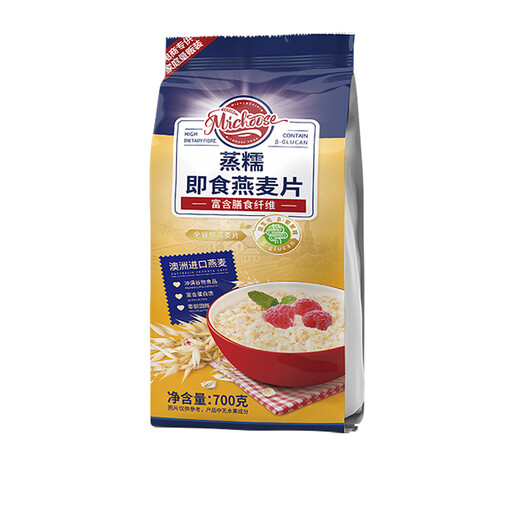
Steamed Instant Oatmeal 700g
A quick hot-water oatmeal option for a supervised prepared-porridge setting.
- 700g bag
- Described as ready after adding hot water and stirring for one minute.
- Check the current pack for allergen information and test suitability before using it in a bake recipe.
Joybuy
Frequently asked questions
What does “high fibre” mean on an oat product in the UK?
A food can make a high-fibre claim when it contains at least 6g of fibre per 100g or at least 3g per 100 kcal, under the conditions published on legislation.gov.uk. Compare products on the same basis, usually per 100g as sold, and do not treat the claim alone as evidence of a particular energy effect.
Are oats automatically suitable for a gluten-free school bake sale?
No. Use a product specifically labelled gluten-free where that is required. Food Standards Agency guidance states that gluten-free food must contain no more than 20mg/kg gluten, while oats still need allergen emphasis because oat allergy and gluten intolerance are different issues.
When do packed bake-sale portions need allergen labelling?
When a food business packages food at the same place where it is offered or sold before the consumer selects it, it may be prepacked for direct sale. Department of Health and Social Care guidance says the pack must then show the food name, a full ingredients list and emphasised allergenic ingredients; confirm how the individual sale is operated and follow the school’s policy.
Does a school need an allergy procedure even if every ingredient is labelled?
Yes, in England. The Department for Education says schools must publish an allergy safety policy for supporting pupils with medical conditions including allergies. Product labels remain essential, but they do not replace the school’s arrangements for known allergens and emergency response.


