Budget shoppers increasing everyday fibre
Compare fibre per 100g alongside pack size rather than relying on wholegrain wording alone. The NHS says adults should aim for 30g of fibre a day as part of a balanced diet.


For a noticeably higher fibre figure, compare the nutrition panel rather than assuming all wholegrain oats are alike: a bran-enriched porridge product can list more fibre per 100g than plain rolled oats. Plain oats remain a flexible everyday option, while oat-bran products, organic oats and jumbo oats are better chosen for their stated ingredients, texture or dietary requirements rather than as automatic fibre upgrades.
Compare fibre per 100g alongside pack size rather than relying on wholegrain wording alone. The NHS says adults should aim for 30g of fibre a day as part of a balanced diet.
Bran-enriched and oat-bran products can have higher stated fibre figures than plain rolled-oat options, so the ingredients list and nutrition panel matter.
Check for an explicit gluten-free label and read the current allergen statement. Food Standards Agency guidance notes that oats remain an allergen even when a food is labelled gluten-free.
Start with fibre per 100g, then check the ingredients and any dietary requirements that affect whether the product suits your household.
| Priority | What to check | Your needs |
|---|---|---|
| Fibre comparison | Compare fibre in grams per 100g across dry products. Check the stated portion size separately if you are comparing bowl-by-bowl use. | I want porridge that makes a useful contribution to my fibre intake without choosing on branding alone. |
| Meaning of “high fibre” | Under Regulation (EC) No 1924/2006, a high-fibre claim requires at least 6g of fibre per 100g or 3g per 100 kcal. Read the nutrition panel and ingredients together. | I want to know whether a high-fibre claim has a defined label meaning, rather than treating every oat product as equivalent. |
| Gradual changes | Use the stated serving guidance and increase fibre gradually if your usual intake is low. Keep fluids up and include varied fibre sources across the day. | I want to add more fibre in a way that feels manageable for my usual eating pattern. |
| Allergen and gluten-free checks | Choose only an explicitly gluten-free labelled product when that requirement applies. Check the current ingredients and may-contain statement for oats, wheat and barley. | I need the product to match a gluten-free requirement or a relevant cereal-allergy precaution. |
Wholegrain wording describes an ingredient choice, but plain rolled oats can list less fibre per 100g than a porridge product containing added bran.
For a high-fibre goal, compare dry-product fibre per 100g and inspect the ingredients list for wheat bran, oat bran or other added fibres.
A fibre-focused breakfast is only one part of overall dietary variety. A sudden increase in fibre without enough fluids can cause discomfort for some people.
Use porridge as one regular fibre source, include other fibre-rich foods across the day and increase intake gradually if needed. This follows NHS guidance.
A bran-enriched porridge containing wheat bran is a different choice from oats specifically labelled gluten-free. Oats also remain an allergen in their own right.
For coeliac disease or a gluten-free requirement, choose a currently labelled gluten-free product. For allergies, read the specific pack every time you repurchase.
A retailer own-label reference for comparing simple wholegrain oats with a bran-enriched porridge option.
A mainstream plain rolled-oat option for shoppers who want a simple wholegrain ingredient list and flexible preparation.
A specialist oat-bran choice for shoppers prioritising fibre concentration over a standard rolled-oat format.
An organic wholegrain rolled-oat option for shoppers who value an organic plain-oat format.
An organic jumbo-oat route for shoppers prioritising texture and organic ingredients.
A UK breakfast-cereal brand with ranges based around wholegrain oats, fruits, nuts and seeds.
Joybuy product options for plain oats, oat-bran porridge and gluten-free labelled oats within this topic.
 Image unavailable
A gluten-free labelled oat option for porridge, baking or other everyday oat uses.
Stated ingredients: 100% gluten-free oat flakes. Stated fibre: 8.6g per 100g and 3.4g per 40g portion. Contains oats; check the current allergen information if relevant.
 Image unavailable
An oat-bran route for shoppers prioritising a higher stated fibre concentration.
Stated ingredients: 100% oat bran. Stated fibre: 19.4g per 100g. The listing says it is not suitable for wheat or barley allergy sufferers.
Image unavailable
A plain wholegrain oat base for porridge, overnight oats and baking.
Stated ingredients: 100% wholegrain oat flakes. Stated fibre: 9.0g per 100g. The listing says it may contain traces of wheat.
 Image unavailable
A straightforward plain-oat choice for regular home porridge preparation.
Stated ingredients: 100% oatmeal. Stated fibre: 9.0g per 100g and 3.6g per 40g serving. The listing says it may contain wheat and barley.
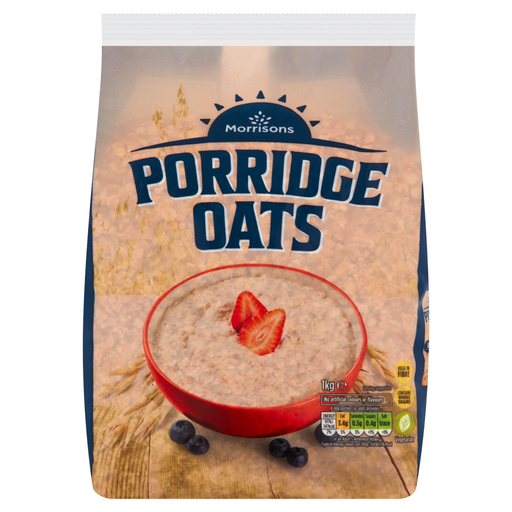 Image unavailable
A plain porridge-oat option for regular home use.
Stated fibre: 9.1g per 100g and 3.6g per 40g portion. The listing identifies oats and advises checking the current allergen statement where relevant.
Under Regulation (EC) No 1924/2006, a food may claim to be high in fibre only when it contains at least 6g of fibre per 100g or at least 3g per 100 kcal. Compare dry products using the fibre figure per 100g, as serving sizes and added milk or toppings can make comparisons less direct.
Plain oats can contribute fibre, but the amount varies by product. In the verified plain rolled-oat examples, fibre ranged from 8.1g to 9.0g per 100g, while Waitrose Porridge Oats with Wheatbran listed 13.8g per 100g.
No. If your usual diet is low in fibre, increase it gradually and drink plenty of fluids. NHS guidance also recommends getting fibre from a variety of foods rather than relying on one food type.
No. If you need gluten-free food, choose a product explicitly labelled gluten-free and review the current pack’s allergen information. Food Standards Agency material states that food labelled gluten-free must contain no more than 20mg/kg gluten as sold, while oats remain an allergen in their own right.
Keep oats in a cool, dry place and follow the pack instructions. Some products advise using an airtight container after opening, but storage directions can vary by pack.