Large households serving porridge most mornings
Choose a pack size that reduces repeat shopping, but compare fibre per 100g and per serving rather than assuming that a larger plain-oat bag contains more fibre.


Compare fibre per 100g before choosing: under the UK rules set out in Regulation (EC) No 1924/2006, a food can make a high-fibre claim when it contains at least 6g fibre per 100g or 3g per 100kcal. Bran-enriched oats and oat-bran porridge can provide more fibre per bowl, while larger plain-oat packs may be more practical for frequent breakfasts when their nutrition panel meets that threshold. Porridge can be one source of fibre, but NHS guidance advises getting fibre from a variety of foods.
Choose a pack size that reduces repeat shopping, but compare fibre per 100g and per serving rather than assuming that a larger plain-oat bag contains more fibre.
Bran-enriched oats and oat-bran porridge can have higher stated fibre figures than standard rolled oats. Compare the nutrition panel and keep fibre sources varied across meals.
Check the exact pack's ingredients and allergen declaration. Oats and products labelled gluten-free are not automatically suitable for every oat allergy, gluten intolerance or coeliac-disease requirement.
Start with the dry-product fibre figure, then compare the bowl size, oat format, pack volume and current allergen declaration.
| Priority | What to check | Your needs |
|---|---|---|
| Comparable fibre content | Compare fibre per 100g on dry-product labels. A high-fibre claim requires at least 6g per 100g or 3g per 100kcal under Regulation (EC) No 1924/2006. Then check the stated fibre amount for your usual portion. | I want to know whether a high-fibre claim is meaningful rather than relying on wholegrain wording or front-of-pack messaging. |
| Fibre in the wider diet | Use the stated fibre per serving to compare bowls of different sizes. Consider porridge alongside fibre from fruit, vegetables, pulses and other wholegrains. | I want breakfast oats to contribute to a varied diet without treating one porridge product as the whole answer. NHS guidance advises obtaining fibre from a variety of foods. |
| Family pack practicality | Check pack weight, stated portions and storage directions. Compare oat bran, rolled oats and jumbo oats because they have different textures and preparation expectations. | For frequent breakfasts, I need a pack that fits how quickly we use oats and can be kept cool, dry and appropriately stored after opening. |
| Allergen and gluten suitability | Read the ingredient list, may-contain statement and any gluten-free declaration on the current pack. Check whether wheat bran, nuts or other gluten sources are listed. | If someone in the household has an allergy or requires gluten-free food, I need the exact product declaration rather than an assumption based on the brand or oat format. |
Fibre figures differ substantially between products. For example, the reviewed Jordans jumbo oats list 8.1g fibre per 100g, while Mornflake Fibreful Oatbran Porridge lists 25.6g per 100g.
Use fibre per 100g as the main comparison measure, then check fibre for the bowl size your household actually eats.
Oat bran and chicory inulin make a different product from plain rolled oats, and the reviewed Mornflake oat-bran product carries several allergy-unsuitability statements linked to its manufacturing methods.
If your household usually eats traditional rolled oats, consider whether a bran-enriched rolled-oat product is a better fit and check the current allergen statement before buying.
Pack sizes in the reviewed examples range from 750g to 3kg, and a larger pack does not indicate a higher fibre density. Larger packs also need suitable storage after opening.
Estimate how many portions your household uses each week, then choose the largest pack you can store correctly and finish comfortably.
Poor storage or a pack that is not used in time can lead to avoidable food waste.
The Food Standards Agency notes that foods labelled gluten-free must contain no more than 20mg/kg gluten, while oats remain an allergen in their own right. Some reviewed products also declare possible nuts or other gluten sources.
Where a gluten-free product is required, choose one carrying the appropriate declaration and review the ingredient and allergen panel every time you repurchase it.
Relevant for specialist oat-bran porridge and large-format jumbo oats, including a reviewed 1.5kg Scottish jumbo-oat product.
A relevant own-label option for a 1kg porridge-oat product with added wheat bran and a stated fibre panel.
Relevant for large-pack plain wholegrain rolled porridge oats; the reviewed UK listing was a 3kg pack.
Relevant for organic jumbo rolled porridge oats with a high-fibre claim in a 750g pack.
Relevant for straightforward 100% wholegrain rolled oats and an oat beta-glucan message.
A named brand reference, but the reviewed product information relates to Fruit & Nut Granola rather than a comparable porridge-oat product.
Joybuy product options for large-household porridge breakfasts, including plain rolled oats and individually portioned sachets with stated fibre figures.
 Image unavailable
Two 1kg packs can suit frequent family breakfasts while allowing one unopened pack to be kept aside.
100% organic wholegrain oat flakes; 8.3g fibre per 100g and 3.3g per stated 40g serving. Store in a cool, dry place. Contains oats and is not presented as a gluten-free option.
 Image unavailable
A traditional-oat option for regular household breakfasts, with 25 stated portions per pack.
Listed as 100% oatmeal with 9.0g dietary fibre per 100g and 3.6g per stated 40g serving. Store cool and dry in an airtight container; may contain wheat and barley.
 Image unavailable
A standard 1kg pack for households that prefer to buy plain organic rolled oats more regularly.
100% organic wholegrain oat flakes; 8.3g fibre per 100g and 3.3g per stated 40g serving. Store in a cool, dry place. Contains oats and is not presented as a gluten-free option.
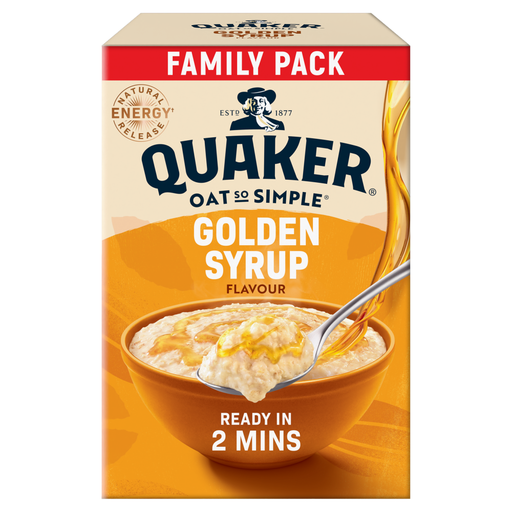 Image unavailable
Individually portioned sachets may simplify weekday breakfasts, with a stated two-minute microwave preparation time.
20 x 36g sachets; 7.3g dietary fibre per 100g and 2.6g per sachet. Contains sugar and natural flavourings, plus oats; may contain barley, wheat and soy.
 Image unavailable
A quick individual-portion option for busy breakfasts, although six sachets may need replacing frequently in a large household.
Six 38.5g sachets with stated 2½-minute microwave preparation; 9.0g fibre per 100g and 3.5g per sachet. Contains oats and is not presented as a gluten-free option.
Under Regulation (EC) No 1924/2006, a food may make a high-fibre claim only when it contains at least 6g fibre per 100g or 3g per 100kcal. Compare dry-product nutrition panels on this basis, then check the stated value for your usual bowl because preparation and portion size can differ.
No. NHS guidance says adults should aim for 30g of fibre daily as part of a healthy balanced diet and advises getting fibre from a variety of sources. Porridge can be one breakfast option alongside foods such as fruit, vegetables, pulses and wholegrains.
No. The Food Standards Agency states that food labelled gluten-free must contain no more than 20mg/kg gluten, and oats remain an allergen in their own right. Check the exact pack's ingredients, gluten-free statement and may-contain wording before purchase.
Follow the instructions on the pack. The reviewed Waitrose wheat-bran oats specify a cool, dry place and an airtight container once opened, a useful approach for larger packs that may remain open for several weeks.
No. Jumbo rolled oats make a thicker, more textured porridge, and the reviewed examples give around four to five minutes on the hob. Oat-bran porridge has a smoother style, so follow its own pack directions rather than using a standard jumbo-oat method.