Buying priorities for a late-night bowl
Start with fibre on a like-for-like dry-weight basis, then narrow the choice by ingredient format, dietary suitability and the preparation method you will use.
Oat-bran porridge
Choose it when: Fibre density is your main priority and you are comfortable with an oat-bran texture.
Consider: Bran products can have different ingredients and allergy warnings from plain rolled oats.
Oats with wheat bran
Choose it when: You want oat flakes with more fibre than a typical plain rolled-oat product.
Consider: Wheat-bran blends are not suitable for a gluten-free diet and are not a 100%-oat option.
Plain rolled oats
Choose it when: A straightforward oat ingredient and familiar porridge texture matter more than maximising fibre per 100 g.
Consider: “100% oats” does not by itself confirm gluten-free suitability.
| Priority |
What to check |
Your needs |
| Fibre level |
Compare fibre per 100 g first. Check fibre per portion separately, as serving sizes and preparation bases vary. In UK nutrition-claims rules, “high fibre” requires at least 6 g per 100 g or 3 g per 100 kcal. |
I want to compare dry oats fairly before deciding how much to prepare for supper. |
| Ingredient format |
Check whether the product is oat bran, oat flakes with added wheat bran, or plain rolled oats. Read the full ingredient list where a blend includes ingredients such as chicory inulin. |
I want a fibre-rich bowl, but the texture and ingredient format still need to suit me. |
| Gluten and allergens |
Look for a specific gluten-free label where needed. Review both ingredients and allergy statements; wheat bran excludes a gluten-free route, and ordinary oats may have cross-contact warnings. |
I need oats that match a gluten-free requirement or the allergen information I need to follow. |
| Preparation and serving basis |
Follow the method on the exact pack. Keep dry-oat values separate from nutrition prepared with water or milk, and check the portion size you plan to use. |
I want a simple evening bowl without comparing values prepared in different ways. |
Joybuy porridge-oat options
Joybuy product options for late-night porridge, including oat-bran, plain oat and gluten-free-labelled routes.
 No image available
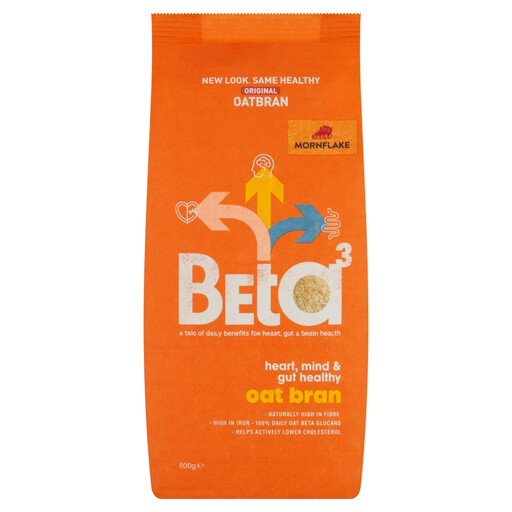
Mornflake Mighty Oats Original Oatbran 800g
A bran-based option for shoppers prioritising fibre in a late-night bowl.
The listing states 100% oat bran and 19.4 g fibre per 100 g. It carries a manufacturing warning for wheat and barley allergy sufferers; check the pack for preparation instructions.
Joybuy
 No image available
Quaker Oat So Simple Big Bowl Original 6 Pack 231g
A pre-portioned plain-oat option for a quick late-night bowl.
The listing states wholegrain rolled oats, 9.0 g fibre per 100 g and 3.5 g fibre per 38.5 g sachet. It gives a 2½-minute microwave method; compare dry-oat nutrition separately from values prepared with semi-skimmed milk.
Joybuy
 No image available
Morrisons Free From Gluten Free Oats 1kg
A gluten-free-labelled oat-flake route for shoppers who need that dietary specification.
The listing states 100% gluten-free oat flakes, 8.6 g fibre per 100 g and 3.4 g per 40 g portion. Check the pack for the preparation method and cooking time.
Joybuy
 No image available
Scotts Porage Oats Original Porridge Oats 1kg
A plain-oat choice for a thicker traditional porridge texture.
The listing describes 100% oatmeal, a thicker texture and 9.0 g dietary fibre per 100 g. It may contain wheat and barley, so it is not a gluten-free option; check the pack for cooking instructions.
Joybuy
 No image available
Flahavan’s Organic Porridge Oats 2kg (2 x 1kg)
A plain wholegrain oat option for a simple bowl where you choose the additions.
The listing states 100% organic wholegrain oat flakes, 8.3 g fibre per 100 g and 3.3 g per 40 g serving. It is not presented as specifically gluten free, so check the pack where this matters.
Joybuy
Frequently asked questions
What counts as “high fibre” on UK porridge oats?
Under the UK nutrition-claims rules set out in Regulation (EC) No 1924/2006, a food may make a “high fibre” claim when it contains at least 6 g of fibre per 100 g or at least 3 g per 100 kcal. Check the nutrition panel because oat products can have very different fibre levels.
Should I compare fibre per 100 g or per bowl?
Use both. Fibre per 100 g is the clearest way to compare dry products, while fibre per portion shows the contribution from the bowl you plan to make. Mornflake Fibreful Oatbran lists 25.6 g per 100 g and 10.2 g per 40 g portion, while Waitrose Porridge Oats with Wheatbran lists 13.8 g per 100 g and 5.5 g per 40 g serving prepared with water.
Are ordinary oats suitable for a gluten-free diet?
Do not assume so. Coeliac UK says that many standard oats can be contaminated with wheat, barley or rye, so choose oats specifically labelled gluten free when that is required. Coeliac UK also notes that a small number of people may still be sensitive to avenin in gluten-free oats.
How should I introduce a much higher-fibre porridge?
If you are increasing dietary fibre substantially, introduce it gradually and drink enough fluid. University Hospitals Dorset NHS Foundation Trust warns that a sudden increase can cause wind, bloating and stomach cramps, and that response to fibre is individual.
How can I prepare an oat-and-bran blend for supper?
Follow the instructions for the exact pack. Waitrose Porridge Oats with Wheatbran lists a 40 g portion with 300 ml water and a 4-to-5-minute hob method; microwave timing depends on wattage. Store oats as directed on the pack, using an airtight container after opening where specified.


