Who these oats may suit

People beginning a dietitian-guided low-FODMAP restriction phase

A plain rolled-oat base gives you fewer ingredients to assess than flavoured porridges, granolas or fibre-fortified mixes. Monash FODMAP describes the diet as a staged process, so use tested serving guidance and move through restriction, reintroduction and personalisation rather than treating restriction as permanent.

People with IBS increasing their fibre intake

Oat bran and added-wheat-bran products have more declared fibre than standard oats, but increase fibre progressively and monitor tolerance. NHS guidance notes that abrupt fibre increases can lead to wind and bloating, which can make symptoms harder to interpret.

Low-FODMAP shoppers who also have coeliac disease

Low-FODMAP suitability and gluten-free controls are separate checks. Coeliac UK advises that standard oats can be contaminated where wheat, barley and rye are handled, so choose oats explicitly labelled gluten free when this control is required.

Buying priorities

Start with the ingredient list and intended serving, then compare fibre values and any gluten-free requirement for the exact pack.

Priority What to check Your needs
Simple ingredients Look for plain oats without fruit, flavourings or added fibres. Check for onion, garlic, inulin, fructooligosaccharides (FOS) and galactooligosaccharides (GOS). Use current Monash FODMAP serving guidance for the oat form and portion. I want to tell whether symptoms relate to the oats, portion size, milk or toppings. A plain oat base leaves fewer variables in the bowl.
Fibre level Compare fibre per 100 g as well as per intended bowl. In the UK, a high-fibre claim requires at least 6 g fibre per 100 g or 3 g per 100 kcal. Increase fibre gradually if changing from standard oats to bran. I want more fibre without automatically choosing the highest figure. The fibre amount in my usual serving and my own tolerance both matter.
Gluten-free controls Check for an explicit gluten-free label when needed. Read the allergen statement on every pack, especially after a recipe or packaging change. Keep gluten-free labelling separate from low-FODMAP serving guidance. If I have coeliac disease, I need oats with appropriate gluten-free controls rather than assuming ordinary oats are suitable.

Common buying pitfalls

  • Equating more fibre with better IBS symptom control

    Oat bran and wheat-bran blends can provide more fibre per bowl, but a sudden increase can bring wind, bloating or cramps. Buckinghamshire Healthcare NHS Trust notes that wheat bran may worsen loose stools, abdominal pain or bloating for some people.

    Start with the oat type and fibre level you already tolerate, then increase gradually. Avoid moving straight from plain rolled oats to a bran-heavy product during a symptom-elimination trial.

  • Using an ingredient list as proof that a product is low FODMAP

    FODMAP suitability depends on serving size as well as ingredients. Monash FODMAP notes that onion, garlic, inulin, FOS and GOS can materially add to a food’s FODMAP load.

    Check the exact ingredient list, then use a tested food guide for the intended serving. Include the milk, fruit, sweeteners and toppings when assessing the whole bowl.

  • Buying ordinary oats when gluten-free controls are required

    Low FODMAP and gluten free address different dietary considerations. Coeliac UK explains that standard oats can be contaminated with wheat, barley and rye during production.

    If you have coeliac disease, choose oats explicitly labelled gluten free and recheck allergen and manufacturing information whenever the pack changes.

  • Assuming flavoured porridge or granola matches a brand’s plain oats

    Dried fruit, honey, golden syrup, chicory fibre, nuts, seeds and flavourings can change both FODMAP assessment and allergen considerations.

    Compare the exact product rather than relying on the brand name. During a strict phase, use a plain oat base and add toppings that you have assessed individually.

Relevant porridge-oat brand references

Quaker

Relevant for plain porridge oats and convenient sachet formats. Quaker Oat So Simple Original sachets on Joybuy list wholegrain oat flakes as the ingredient.

  • Plain versions can provide a short ingredient list for a quick breakfast.
  • Check the exact sachet or bag: flavoured packs should not be treated as equivalent to plain oats.

Mornflake

Relevant for standard oats, gluten-free oat options and oat-bran formats. Mornflake Beta³ Oat Bran is listed as 100% oat bran.

  • Mornflake Beta³ Oat Bran declares 19.4 g fibre per 100 g.
  • Higher fibre density does not establish that every serving suits a low-FODMAP plan or active IBS symptoms.

Flahavan's

Relevant for plain wholegrain rolled oats, quick oats and seed-and-oat products. Flahavan's Irish Porridge Oats list 100% wholegrain rolled oats.

  • Plain rolled oats are a straightforward base for separately assessing portions and toppings.
  • Multi-seed and pot products contain additional ingredients that need their own assessment.

Dorset Cereals

Relevant when considering oat-based muesli or granola rather than a plain porridge-oat base. Its range includes oats combined with nuts, fruit and seeds.

  • The range offers oat-based cereal formats beyond plain porridge.
  • Some granolas use honey or golden syrup, so inspect the recipe and serving rather than assuming a plain-oat fit.

Jordans

Relevant for organic plain rolled oats and for oat cereals with added ingredients. Jordans Organic Porridge lists organically produced wholegrain rolled oats.

  • Jordans Organic Porridge declares 8.1 g fibre per 100 g.
  • Other Jordans cereals may contain chicory root fibre, fruit or nuts, so select the exact porridge product.

Waitrose

Relevant for plain own-label rolled oats and a separate wheat-bran blend. Essential Waitrose Porridge Oats list wholegrain oat flakes as the ingredient.

  • Essential Waitrose Porridge Oats declare 9.9 g fibre per 100 g.
  • Waitrose Porridge Oats with Wheatbran contains 12% wheat bran, making it a different tolerance and gluten-related choice.

Joybuy porridge-oat options

Joybuy product options for a plain rolled-oat breakfast base, including one convenient plain-oat sachet format.

Morrisons Free From Gluten Free Oats 1kg

Morrisons Free From Gluten Free Oats 1kg

A plain breakfast base for shoppers who need gluten-free and wheat-free wording on the product.

100% gluten-free oat flakes. Declared fibre: 8.6 g per 100 g and 3.4 g per 40 g portion.

Check current Monash FODMAP serving guidance and assess milk, fruit and toppings as part of the full bowl.

Joybuy

Flahavan's Organic Porridge Oats 2kg

Flahavan's Organic Porridge Oats 2kg (2 x 1kg)

A plain oat option for keeping toppings and portion size separate during breakfast planning.

100% organic wholegrain oat flakes. Declared fibre: 8.3 g per 100 g and 3.3 g per 40 g serving.

This product is not labelled gluten free in the supplied product information; choose certified gluten-free oats if required for coeliac disease.

Joybuy
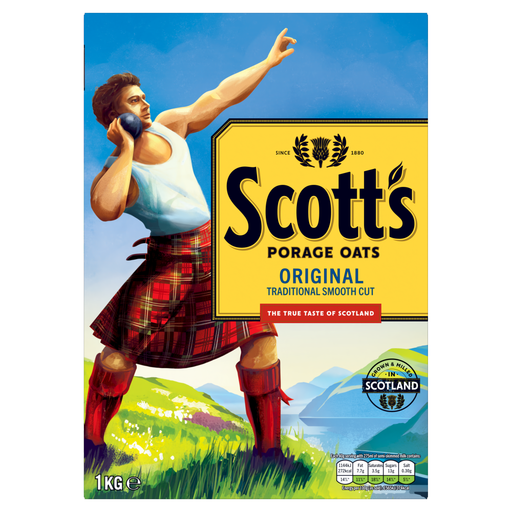
Scotts Porage Oats Original Porridge Oats 1kg

Scotts Porage Oats Original 1kg

A simple plain-oat route when you want to manage toppings separately.

100% Scott's oatmeal with no additional ingredients stated. Declared dietary fibre: 9.0 g per 100 g and 3.6 g per 40 g portion.

The supplied allergen statement says it may contain wheat and barley, so it is not a choice for gluten-free controls.

Joybuy

Quaker Oat So Simple Big Bowl Original 6 Pack 231g

Quaker Oat So Simple Big Bowl Original 6 Pack 231g

A convenient plain-oat sachet option when preparation speed is important.

Wholegrain rolled oats only are stated. Each sachet is 38.5 g; declared fibre is 9.0 g per 100 g and 3.5 g per sachet.

Check the pack for gluten-free controls if needed, and use current serving guidance before treating a full sachet as suitable for your plan.

Joybuy

Flahavan's Organic Porridge Oats 1kg

Flahavan's Organic Porridge Oats 1kg

A plain organic oat base for separately controlling the rest of the bowl.

100% organic wholegrain oat flakes. Declared fibre: 8.3 g per 100 g and 3.3 g per 40 g serving.

The supplied product information does not give a gluten-free designation; use certified gluten-free oats where coeliac disease requires them.

Joybuy

Frequently asked questions

Are plain rolled oats automatically low FODMAP?

No. An oat-only ingredient list does not by itself establish that your intended serving is low FODMAP. Monash FODMAP provides tested serving guidance and includes rolled oats in a recipe that uses 83 g split between two servings, so check the app’s current advice for the exact oat form and amount.

What does high fibre mean on a UK porridge label?

A UK high-fibre claim requires at least 6 g of fibre per 100 g or 3 g per 100 kcal, under the nutrition-claim conditions published on legislation.gov.uk. Compare the per-100-g figure with the fibre in the bowl you intend to eat.

Should I choose oat bran for the most fibre?

Choose oat bran when you want a more concentrated fibre source and tolerate it. Mornflake Beta³ Oat Bran declares 19.4 g fibre per 100 g, but NHS guidance advises increasing fibre gradually because sudden changes can cause wind, bloating and cramps.

Do I need gluten-free oats for a low-FODMAP diet?

Not for FODMAP management alone. If you have coeliac disease, use oats labelled gluten free because Coeliac UK notes that standard oats may be contaminated with wheat, barley or rye; discuss introducing oats with your healthcare team where appropriate.

How long should I stay in the strict low-FODMAP stage?

Monash FODMAP describes Step 1 as a 2-to-6-week phase, followed by challenges and personalisation if symptoms improve. NHS guidance says a dietitian may recommend a low-FODMAP diet for IBS, so seek dietetic support rather than maintaining broad restrictions indefinitely.