For the highest verified fibre density, Mornflake Fibreful Oatbran Porridge provides 25.6 g of fibre per 100 g, but its ingredients and allergen information need careful checking. Bran-enriched oats can offer more fibre per bowl than plain rolled oats, while plain options give you greater control over toppings and the rest of the lunch.
Who this may suit
Families preparing lunch at home during school holidays
For parents or carers who want a warm porridge-based lunch with a measurable fibre contribution. Compare fibre per prepared portion and include other fibre-containing foods across the day; NHS guidance recommends a variety of sources.
Families seeking a more fibre-dense porridge base
For households considering oatbran or wheat-bran blends to increase fibre per bowl, provided the child can eat the ingredients and the pack’s allergen information is suitable.
Families managing coeliac disease or food allergies
For buyers who need to check gluten-free labelling and the exact allergen statement. Coeliac UK advises that only oats labelled gluten free are suitable for people with coeliac disease.
What to check before buying
Start with fibre per 100 g for a like-for-like comparison, then check the stated serving, ingredients and current pack information for the child who will eat it.
| Priority |
What to check |
Your needs |
| Fibre per bowl |
Compare fibre per 100 g before comparing serving sizes. Then check the fibre in the stated portion: Mornflake Fibreful lists 10.2 g per 40 g portion, while Waitrose Porridge Oats with Wheatbran lists 5.5 g per 40 g serving with water. |
I want to see how much fibre a measured bowl contributes, rather than choosing on an oat or wholegrain description alone. NHS guidance gives approximate daily figures of 15 g for ages 2 to 5, 20 g for ages 5 to 11 and 25 g for ages 11 to 16. |
| Allergens and gluten-free status |
Read the ingredients, bold allergens and precautionary statements on the current pack. For coeliac disease, look specifically for gluten-free labelling rather than assuming ordinary oats are suitable. |
I need an oat product that matches the child’s dietary requirements. Coeliac UK says standard oats can be contaminated with wheat, barley or rye, so labelled gluten-free oats matter where this is required. |
| Lunch flexibility |
Choose plain oats if you want to decide the toppings and sides separately. Follow the pack’s preparation instructions and consider the child’s appetite when serving. |
A plain oat base lets me build the lunch around foods the child can eat and enjoys, while keeping fibre sources varied through the day. |
Common buying mistakes
-
Treating all oats as equally high in fibre
The verified products range from 8.1 g fibre per 100 g for Jordans Organic Jumbo Porridge Oats to 25.6 g per 100 g for Mornflake Fibreful Oatbran Porridge. An oat or wholegrain description does not show the fibre amount in a bowl.
Compare fibre per 100 g first, then the stated serving. Relate the portion to the child’s age and the rest of the day’s food rather than automatically choosing the most concentrated option.
-
Choosing a high-fibre blend without checking allergens
Oatbran blends and ordinary oat products can have different ingredients, allergen cautions and gluten-related statements. A product that is suitable for one household may not suit another.
Check the current pack for ingredients, allergens and precautionary statements each time you buy. For coeliac disease, choose oats explicitly labelled gluten free and follow clinical advice.
-
Assuming a plain oat bowl is a complete lunch
Porridge can contribute fibre, but NHS guidance recommends getting fibre from a variety of sources across a balanced diet.
Use plain oats when you want control over the meal, then choose suitable toppings or sides around the child’s dietary needs and allergy requirements.
-
Relying on a retailer webpage when allergies matter
Recipes and allergen information can change, and the pack is the product being served.
Use online nutrition panels to shortlist products, then confirm the current package’s ingredients, allergen declaration, best-before date and preparation instructions before serving.
Relevant brand references
Mornflake
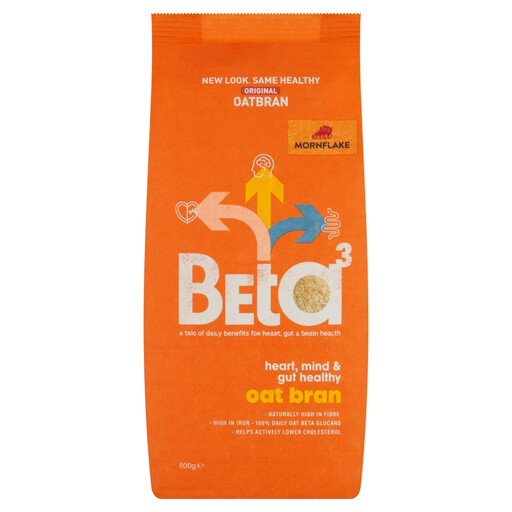
A specialist oat and oatbran range. Fibreful Oatbran Porridge is a fibre-dense option for buyers prioritising fibre per 100 g.
- The manufacturer lists 25.6 g fibre per 100 g and 10.2 g per 40 g portion for Fibreful Oatbran Porridge.
- Its ingredients and precautionary-allergen information need checking for the individual child.
Waitrose
An own-label range with both bran-enriched porridge oats and plain rolled oats.
- Porridge Oats with Wheatbran lists 13.8 g fibre per 100 g; Essential Porridge Oats lists 9.9 g per 100 g.
- Waitrose advises checking the physical pack because recipes can change.
Quaker
A mainstream plain rolled-oat and convenience-porridge brand, with Traditional Rolled Oats as a directly relevant plain-oat option.
- Traditional Rolled Oats lists 100% rolled oats and 9.0 g fibre per 100 g.
- Its label says it may contain wheat and barley, so it should not be assumed suitable for a gluten-free diet.
Jordans
An organic jumbo rolled-oat option for buyers who prefer organic wholegrain oats and a chunkier porridge texture.
- Organic Jumbo Porridge Oats lists 8.1 g fibre per 100 g and carries a high-fibre claim.
- The label states that it may contain other gluten sources and nuts.
Flahavan's
A wholegrain rolled-oat brand with standard, quick, organic and specialist porridge formats in its UK range.
- Irish Porridge Oats identifies 100% wholegrain rolled oats and states that a 40 g serving contains 1 g beta-glucan.
- Compare the current nutrition panel directly when fibre density is the deciding factor.
Joybuy product options
Joybuy product options for a high-fibre porridge lunch base, including oatbran, plain oats and one explicitly labelled gluten-free oat option.
 No image available
Mornflake Mighty Oats Original Oatbran 800g
A 100% oatbran porridge option for households prioritising fibre density and measuring a 45 g portion before adding sides or toppings.
Lists 19.4 g fibre per 100 g. The listing says it contains oats and is not suitable for people with wheat or barley allergy; check the current pack for gluten-free labelling and preparation instructions.
Joybuy
 No image available
Scotts Porage Oats Original 1kg
A plain 100% oatmeal base when you want to choose toppings and sides separately for the child.
Lists 9.0 g fibre per 100 g and 3.6 g per 40 g portion, with hob and microwave preparation stated. It may contain wheat and barley, so check the current allergen statement.
Joybuy
 No image available
Quaker Oat So Simple Big Bowl Original 6 Pack 231g
Pre-portioned wholegrain rolled-oat sachets for a quick hot lunch, with toppings still under the carer’s control.
Lists 9.0 g fibre per 100 g and 3.5 g per 38.5 g sachet. The stated microwave preparation time is 2½ minutes; check the current pack for gluten-free status and allergen information.
Joybuy
 No image available
Flahavan's Organic Porridge Oats 2kg
A 100% organic wholegrain oat-flake base for lunches where toppings and sides will be chosen separately.
Lists 8.3 g fibre per 100 g and 3.3 g per 40 g serving. The listing identifies oats as containing gluten; check the current pack for preparation instructions and suitability where gluten-free oats are required.
Joybuy
 No image available
Morrisons Free From Gluten Free Oats 1kg
An explicitly labelled gluten-free plain-oat route for households that need gluten-free labelling for porridge oats.
Lists 100% gluten-free oat flakes, 8.6 g fibre per 100 g and 3.4 g per 40 g portion. Check the current pack for preparation instructions and follow clinical advice where required.
Joybuy
Frequently asked questions
What does “high fibre” mean on a UK porridge-oat label?
Under the applicable nutrition-claim rules, a food may make a high-fibre claim when it contains at least 6 g of fibre per 100 g or 3 g per 100 kcal. Compare dry oat products per 100 g first, then check the stated serving size to understand the amount in one bowl.
How much fibre does a school-age child need in a day?
NHS guidance gives approximate daily fibre figures of 15 g for ages 2 to 5, 20 g for ages 5 to 11 and 25 g for ages 11 to 16. These are daily dietary context figures, not amounts to supply in one lunch; include a variety of fibre-containing foods through the day.
Are ordinary porridge oats suitable for a child with coeliac disease?
Do not assume so. Coeliac UK says that only oats labelled gluten free are suitable for people with coeliac disease because standard oats can be contaminated with wheat, barley or rye. Follow the child’s clinical advice where needed.
Can cooked porridge be saved and reheated for another lunch?
Follow the product pack first. Essential Waitrose Porridge Oats specifically says that prepared porridge should not be stored or reheated. Where food is reheated, Food Standards Agency guidance says it should be reheated thoroughly and only reheated once.


