Fibre-focused home cooks
Choose this route if you want to increase the fibre contribution of a Mexican-night menu and are happy to use oat bran or oats with added bran instead of relying only on standard rolled oats.


Choose oat bran when fibre density is the main priority: the reviewed Mornflake Fibreful Oatbran lists 25.6g fibre per 100g, while Mornflake Beta³ Oat Bran lists 19.4g per 100g. Choose plain rolled oats or oats with wheat bran when you want a more conventional, savoury-neutral ingredient, and keep beans, vegetables and other wholegrain foods central to the meal.
Choose this route if you want to increase the fibre contribution of a Mexican-night menu and are happy to use oat bran or oats with added bran instead of relying only on standard rolled oats.
Plain, minimally flavoured oats are easier to season or adapt in recipe experiments than sweetened single-serve porridge products.
Check the exact pack for gluten-free labelling and allergen information. Ordinary oats and oat-bran products are not automatically suitable for coeliac disease or every allergy.
Compare the nutrition panel and ingredients before choosing the oat format, then decide how it fits alongside the rest of the meal.
| Priority | What to check | Your needs |
|---|---|---|
| Fibre density | Compare fibre per 100g first; then check the stated portion and ingredients. The reviewed products range from 8.1g to 25.6g fibre per 100g. | I want to compare oat bran, rolled oats and added-bran blends on a like-for-like basis rather than relying on a front-of-pack impression. |
| Meal balance | Plan oats as an optional ingredient or accompaniment. Include pulses, vegetables and wholegrain foods in the wider menu. | I want oats to add variety to the meal without replacing the beans and vegetables that suit Mexican-style dishes. |
| Ingredients and texture | Look for plain rolled oats or plain oat bran if you want control over seasoning. Check for sugar, seeds and milk powder in mixed products. | I need a neutral base that can work in a savoury recipe rather than a sweetened or heavily mixed porridge format. |
| Allergen suitability | Read the current allergen statement and any cross-contact warning. For coeliac disease, choose only products specifically labelled gluten-free. | I need to account for wheat bran, milk, seeds, nuts or gluten cross-contact before serving oats to guests. |
The reviewed candidates range from 8.1g to 25.6g fibre per 100g. Wholegrain oats can differ substantially from specialist oat-bran products.
Compare fibre per 100g, then check the portion size and ingredient list before deciding whether the product suits the recipe.
Some fibre-focused products include sugar, seeds or milk powder, which can change flavour, texture and allergen suitability.
For a recipe where you want control over seasoning, choose a plain oat or plain oat-bran ingredient unless you specifically want those additions.
Standard oats can be contaminated with wheat, barley or rye, and oats with wheat bran are not a gluten-free alternative.
For coeliac disease or a medically necessary gluten-free diet, buy only a product specifically labelled gluten-free and review the current allergen label.
NHS guidance advises getting fibre from a variety of foods, and pulses and vegetables are directly relevant to a Mexican-style meal.
Build the menu around beans, vegetables and wholegrain choices first, then use oats or oat bran where their texture and flavour fit.
Mornflake offers oat-bran formats for shoppers comparing fibre density with conventional rolled oats.
Waitrose provides a comparison between basic rolled oats and a rolled-oat product with added wheat bran.
Jordans is a plain rolled-oat reference for shoppers who prefer a conventional chunky porridge texture.
Flahavan's offers plain wholegrain rolled oats as well as flavoured or mixed porridge formats.
Quaker is a conventional rolled-oat reference for a plain-oat comparison.
Dorset Cereals is relevant for wholegrain-oat cereal, granola, nuts, fruit and seed formats rather than as a direct plain-porridge-oat comparison.
Joybuy oat-bran and plain porridge-oat options for adding a neutral oat ingredient alongside beans and vegetables in a Mexican-night menu.
 No image available
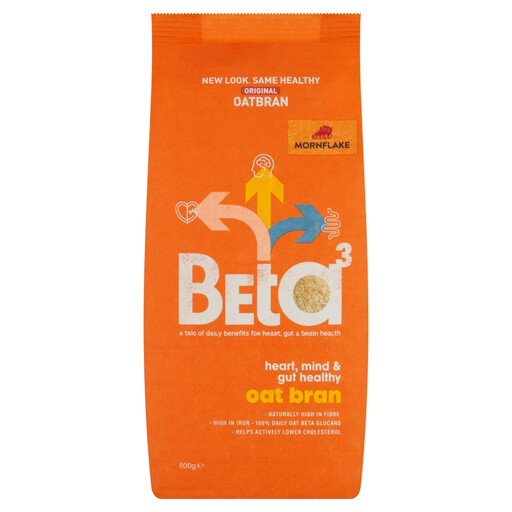
A plain oat-bran option for recipes where fibre density matters more than a conventional rolled-oat texture.
Listed as 100% oat bran, with 19.4g fibre per 100g and 3g beta-glucans per 45g portion. The listing says it is not suitable for wheat or barley allergy sufferers because of manufacturing methods; check the current pack if gluten-free labelling is required.
 No image available
A plain porridge-oat choice when you want a neutral ingredient for seasoning yourself.
The listing states 100% oatmeal, 9.0g dietary fibre per 100g and 3.6g per 40g portion. It may contain wheat and barley, so check the current pack for gluten-free suitability.
 No image available
A larger plain rolled-oat pack for households that want to season oats to suit different recipes.
Listed as 100% organic wholegrain oat flakes, with 8.3g fibre per 100g and 3.3g per 40g serving. The listing identifies oats as containing gluten; check the current pack where gluten-free labelling is needed.
 No image available
A plain rolled-oat option for cooks who want a conventional oat ingredient and flexible seasoning.
Listed as 100% organic wholegrain oat flakes, with 8.3g fibre per 100g and 3.3g per 40g serving. The listing identifies oats as containing gluten; check the current pack where gluten-free labelling is needed.
 No image available
An individually portioned plain-oat option when a measured microwave portion is more useful than loose oats.
Each sachet is listed as wholegrain rolled oats, with 9.0g fibre per 100g and 3.5g per 38.5g sachet. Six sachets may be less flexible than loose oats for a larger shared recipe; check the current pack for gluten-free labelling if needed.
Under the UK-retained nutrition-claims rules in Regulation (EC) No 1924/2006, a “high fibre” claim may be used only where a product contains at least 6g of fibre per 100g or at least 3g per 100 kcal. Compare the nutrition panel as well as the claim, as products can exceed the threshold by very different amounts.
No. The reviewed oat-bran products list higher fibre figures than the reviewed rolled-oat products, but oat bran can have a different texture, ingredient profile and allergy caution. Choose oat bran when fibre density is the priority; choose plain rolled oats when a neutral, conventional oat texture matters more.
No. NHS guidance recommends obtaining fibre from a variety of foods, including pulses such as beans, lentils and chickpeas, alongside vegetables and wholegrain foods. Use oats as an optional ingredient or accompaniment rather than replacing beans and vegetables in the meal.
Not automatically. Coeliac UK says that many standard oats are produced alongside wheat, barley and rye and may be contaminated. The Food Standards Agency states that food labelled gluten-free must contain no more than 20mg/kg gluten as sold, so choose a specifically labelled product when that requirement applies.
Check the exact current pack for cereals containing gluten, wheat-bran additions, milk, seeds, nuts and precautionary statements. For example, the reviewed Waitrose wheat-bran product contains wheat bran, Flahavan's High Fibre Pot contains skimmed milk powder and seeds, and the reviewed Jordans product carries a nut-handling warning.