Retirees looking to increase breakfast fibre
For people comparing fibre per serving instead of relying on wholegrain wording alone. NHS guidance says that dietary fibre intake should increase to 30g a day as part of a healthy balanced diet.


Compare fibre per 100g and per portion rather than assuming every wholegrain oat product has the same fibre content. Plain rolled oats can be a simple everyday base, while oat-bran and wheat-bran products can list more fibre per bowl; introduce a substantial increase gradually, keep up fluid intake and check current allergen and gluten-free information before buying.
For people comparing fibre per serving instead of relying on wholegrain wording alone. NHS guidance says that dietary fibre intake should increase to 30g a day as part of a healthy balanced diet.
For shoppers considering a higher-fibre breakfast who need to build up their intake gradually and drink plenty of fluids, as advised by Sandwell and West Birmingham Hospitals NHS Trust.
For people who need to distinguish ordinary oats from expressly gluten-free products and check for added wheat bran, nuts and cross-contact warnings.
Start with the fibre figure for the portion you expect to prepare, then check ingredients, allergen information and cooking instructions for the exact pack.
| Priority | What to check | Your needs |
|---|---|---|
| Fibre per bowl | Compare fibre per 100g and per stated serving. Check whether the product is plain rolled oats, oat bran or contains added wheat bran. | I want to know what one breakfast portion contributes, not just whether oats are described as wholegrain. |
| Gradual change | Check the stated portion size before moving to a bran-focused product. Keep preparation practical for a regular breakfast routine. | I am changing my breakfast fibre intake and want a portion I can introduce gradually while maintaining regular fluid intake. |
| Gluten and allergens | Look for an explicit gluten-free label where required. Read ingredients and allergy advice for wheat bran, nuts and cross-contact statements. | I need the exact pack to fit my dietary requirements; labels such as “100% oats”, “pure oats” or “organic” do not by themselves establish gluten-free suitability, according to Coeliac UK. |
| Preparation and texture | Read hob and microwave directions, serving size and ingredient list. Bran can change both texture and the ingredient profile. | I want porridge that suits how I normally cook breakfast, without overlooking the fibre and allergen checks that matter to me. |
Fibre values can differ markedly by product and portion. Quaker Traditional Rolled Oats lists 3.6g per 40g serving, Waitrose Porridge Oats with Wheatbran lists 5.5g per 40g serving with water, and Mornflake Fibreful Oatbran lists 10.2g per 40g portion.
Compare fibre per 100g and per realistic serving. If fibre per bowl is the priority, compare bran-focused products with standard rolled oats rather than relying on wholegrain wording.
A sudden switch to a bran-heavy breakfast can be uncomfortable for some people. Sandwell and West Birmingham Hospitals NHS Trust advises increasing fibre gradually and drinking plenty of fluids.
Begin with a manageable serving and build up if tolerated. Seek personalised advice where a medical condition or prescribed diet applies.
Coeliac UK notes that standard oats may be contaminated with wheat, barley or rye, and that “100% oats”, “pure oats” and “organic oats” do not establish gluten-free status.
Where gluten-free suitability is required, choose oats expressly labelled gluten free and read the current pack information for that product.
Higher-fibre products can contain ingredients that change suitability. Waitrose Porridge Oats with Wheatbran contains wheat bran, while Jordans Organic Porridge carries warnings about other gluten sources and nuts.
Read the ingredients and allergy statement on every pack, especially when moving from plain oats to bran, seed or flavoured blends.
Relevant for shoppers seeking an oat-bran porridge rather than standard rolled oats.
Relevant for a porridge made with wholegrain oat flakes and added wheat bran.
Relevant for shoppers looking for plain wholegrain rolled oats, including jumbo-oat formats.
Relevant for standard rolled oats in conventional hob or microwave formats.
Relevant for organic wholegrain rolled oats when organic sourcing is the main selection criterion.
Joybuy product options for comparing oat-bran, plain rolled-oat and explicitly gluten-free oat routes for regular porridge breakfasts.
 No image available
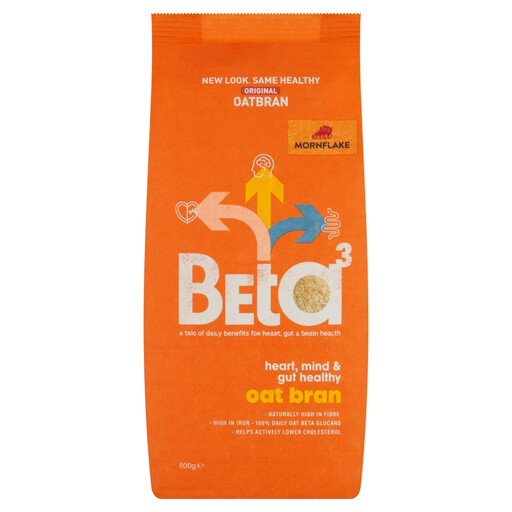
An oat-bran option for shoppers comparing fibre per 100g.
The listing states 100% oat bran and 19.4g fibre per 100g.
It is listed as unsuitable for wheat or barley allergy sufferers; check the pack for preparation instructions and introduce a large fibre increase gradually with adequate fluids.
 No image available
A measured wholegrain rolled-oat option for quick microwave breakfasts.
The listing states 38.5g sachets, microwave preparation in 2½ minutes, 9.0g fibre per 100g and 3.5g fibre per sachet.
Check the current pack if gluten-free suitability is required; plain or wholegrain oats alone do not establish it.
 No image available
An explicitly gluten-free oat-flake route where that suitability is required.
The listing describes 100% gluten-free oat flakes, a 40g portion and 3.4g fibre per 40g portion.
Check the current pack for cooking instructions and consider individual oat tolerance where relevant.
 No image available
A plain-oat option for shoppers who prefer no additional ingredients.
The listing states 100% oatmeal, a 40g serving and 3.6g dietary fibre per 40g portion.
It may contain wheat and barley, so it is not suitable where gluten-free or wheat/barley-allergy suitability is required; check the pack for cooking instructions.
 No image available
A plain organic wholegrain oat-flake option for a simple porridge base.
The listing states 100% organic wholegrain oat flakes, 8.3g fibre per 100g and 3.3g fibre per 40g serving.
The listing states that it contains oats (gluten); check the pack for preparation instructions if cooking method matters.
Compare the nutrition panel on the same basis: fibre per 100g, then fibre in the portion you expect to eat. Mornflake Fibreful Oatbran lists 25.6g per 100g and 10.2g per 40g portion, Waitrose Porridge Oats with Wheatbran lists 13.8g per 100g and 5.5g per 40g serving, and Quaker Traditional Rolled Oats lists 9.0g per 100g and 3.6g per 40g serving.
Plain rolled oats can be a fibre-containing breakfast base, and NHS guidance identifies porridge oats as a good source of fibre. If fibre from one bowl is the main priority, compare the portion value with oat-bran or wheat-bran-enriched options, which can list more fibre per serving.
Not necessarily. Sandwell and West Birmingham Hospitals NHS Trust advises increasing fibre gradually and drinking plenty of fluids when making a higher-fibre dietary change. Seek personalised advice from a clinician or dietitian if you have a medical condition or an individually prescribed diet.
No. Coeliac UK says standard oats may be contaminated with wheat, barley or rye, and descriptions such as “100% oats”, “pure oats” or “organic oats” do not prove gluten-free status. Choose an expressly gluten-free product where this is required and read the current pack information.
Yes. Added ingredients can change the allergy profile: Waitrose Porridge Oats with Wheatbran contains wheat bran, while Mornflake Fibreful Oatbran has manufacturer-stated exclusions for several allergy groups. Use the current on-pack ingredients and allergy statement for the exact product you are buying.