Empty nesters increasing everyday fibre
Adults who want an uncomplicated breakfast contribution towards the NHS guideline of 30g of fibre a day, while treating porridge as one part of a varied fibre intake.


Choose by the fibre figure per 100g and by a realistic dry serving, rather than assuming that all wholegrain oats provide the same amount of fibre. Oat-bran blends can provide a larger fibre contribution per bowl, while oats with added wheat bran and plain rolled oats offer different ingredient and preparation choices; check allergen wording and increase fibre gradually if changing your usual breakfast.
Adults who want an uncomplicated breakfast contribution towards the NHS guideline of 30g of fibre a day, while treating porridge as one part of a varied fibre intake.
People comparing the fibre in a realistic 40g dry portion, from oat-bran blends and oats with wheat bran to plain rolled or jumbo oats.
People who need to check the exact pack rather than assume oats are suitable, as ordinary oat products can carry gluten-related or cross-contact statements.
When it suits: Choose this route when a larger fibre contribution from one standard breakfast portion is the main aim.
What to weigh up: It is a specialised oat-bran and chicory-inulin blend rather than plain rolled oats, and its allergen warning can rule it out for some households.
When it suits: This is an option for conventional oat flakes with a higher stated fibre figure than the plain rolled-oat examples.
What to weigh up: Wheat bran is an ingredient, so check the current pack if a gluten-free product is required.
When it suits: Choose plain oats when a short ingredient list, familiar oat flavour and flexible toppings matter most.
What to weigh up: Compare the stated serving size as well as fibre per 100g, and do not assume a plain oat product is gluten-free.
| Priority | What to check | Your needs |
|---|---|---|
| Fibre per bowl | Compare fibre per 100g and per stated dry serving. Use the same dry weight when comparing two products. | I want to see what a normal breakfast portion contributes, not just whether the pack describes the oats as wholegrain. |
| Oat type and texture | Check whether the product is plain oats, oats with wheat bran, or an oat-bran blend with other ingredients. Consider the serving size alongside the ingredient list. | A simpler rolled-oat texture may matter more to me than the most concentrated fibre figure, or I may prefer the reverse. |
| Gradual change | If moving from a lower-fibre diet, increase fibre gradually and drink plenty of fluids. | I want a breakfast routine I can introduce steadily rather than making a sudden change to a concentrated fibre product. |
| Gluten and allergens | Read the current ingredients and allergen declaration. Where gluten-free status is needed, look for the specific gluten-free claim rather than assuming ordinary oats meet that requirement. | I need the exact product pack to fit my dietary requirements, including any oat, wheat, barley or cross-contact concerns. |
The verified examples range from 3.6g of fibre per 40g for Quaker Traditional Rolled Oats to 10.2g for Mornflake Fibreful Oatbran Porridge. A wholegrain statement alone does not show the fibre contribution of a serving.
Compare fibre per 100g and then use the stated figure for your intended dry portion. Keep the dry weight consistent when comparing products.
A high-fibre oat-bran blend may carry manufacturing-related allergy restrictions, while other products can contain wheat bran or may-contain declarations.
For coeliac disease, gluten-related requirements or food allergies, verify the current pack’s ingredients, gluten-free claim and allergen declaration before purchase.
The NHS advises adults to increase fibre to 30g a day and to obtain it from a variety of foods.
Use porridge as one regular fibre source and vary the rest of the day’s foods according to your dietary requirements.
A sudden change from a lower-fibre breakfast to a concentrated oat-bran product can cause digestive discomfort for some people.
Increase fibre gradually and maintain adequate fluid intake. Seek individual advice if you follow a prescribed diet, have a fluid restriction or have been advised to manage a digestive condition.
Relevant for shoppers prioritising a high stated fibre figure from a porridge-format oat-bran and chicory-inulin blend rather than plain oats.
Relevant for shoppers who want oat flakes with added wheat bran rather than a specialist oat-bran blend.
Relevant for a mainstream plain rolled-oat option with a 100% rolled-oat ingredient list and hob or microwave preparation.
Relevant for plain 100% wholegrain rolled oats with a stated beta-glucan contribution.
Relevant for shoppers who prefer organic jumbo or rolled oats and a high-fibre claim on a plain-oat product.
Joybuy product options for high-fibre porridge breakfasts, including oat bran, portioned rolled oats, gluten-free-labelled oat flakes and plain oat products for regular household use.
 No image available
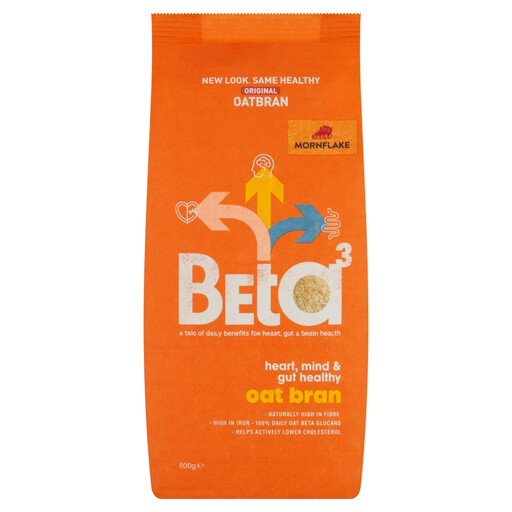
A concentrated oat-bran option for a repeatable high-fibre breakfast.
100% oatbran; 19.4g fibre per 100g; 3g beta-glucan per 45g portion.
Not suitable for wheat or barley allergy sufferers according to the stated manufacturing warning.
 No image available
Individual microwaveable sachets suit quick, repeatable breakfasts in a small household.
Wholegrain rolled oats; 9.0g fibre per 100g and 3.5g per 38.5g sachet; 2½-minute microwave preparation.
The 3.5g fibre figure is for a 38.5g sachet, so use like-for-like portions when comparing it with loose oats.
 No image available
A gluten-free-labelled plain-oat route for porridge or baking where that label is required.
100% gluten-free oat flakes; 8.6g fibre per 100g and 3.4g per 40g portion; 25 stated portions.
Oats remain an allergen, so check the current pack against individual dietary requirements.
 No image available
A plain oatmeal option for a regular porridge breakfast with a defined portion size.
100% oatmeal; 9.0g dietary fibre per 100g and 3.6g per 40g serving; 25 stated portions.
The product may contain wheat and barley, so it is not a confirmed gluten-free choice.
 No image available
A plain organic oat option for households that use porridge regularly and have room for two 1kg packs.
100% organic wholegrain oat flakes; 8.3g fibre per 100g and 3.3g per 40g serving.
The listing identifies oats as containing gluten, and the 2kg total pack may not suit every small household.
Under the UK rule reflected in Regulation (EC) No 1924/2006, a food may claim to be high in fibre when it contains at least 6g of fibre per 100g or at least 3g per 100kcal. Compare the nutrition table too, because products that qualify can still differ substantially in fibre per serving.
The NHS says adults should increase dietary fibre to 30g a day as part of a healthy, balanced diet. Porridge can contribute, but fibre should come from a variety of foods rather than one item alone.
No. If your current diet is low in fibre, increase it gradually and drink plenty of fluids so your gut can adjust. Seek individual clinical advice if you have been given a special diet or fluid restriction.
Do not assume so. In the UK, a gluten-free label applies to food containing no more than 20mg/kg gluten as sold; check for that specific claim and the current allergen statement. Oats also remain an allergen in their own right.