Home workers prioritising fibre at lunch
Compare fibre grams per stated serving rather than relying on front-of-pack wording. NHS, Mornflake and Waitrose product information provides useful serving and per-100g figures for this comparison.


Choose an oat-bran or bran-enriched porridge when fibre per bowl is your main priority: Mornflake Fibreful Oatbran Porridge lists 10.2g per 40g serving, while Waitrose Porridge Oats with Wheatbran lists 5.5g per 40g serving with water. Plain rolled oats offer a simpler ingredient base for custom lunches, while sachets suit shorter breaks but should be compared on the same dry or prepared basis.
Compare fibre grams per stated serving rather than relying on front-of-pack wording. NHS, Mornflake and Waitrose product information provides useful serving and per-100g figures for this comparison.
Plain wholegrain rolled oats can suit people who prefer a short ingredient list and want to choose their own savoury or sweet additions. Flahavan’s and Jordans list wholegrain rolled oats in their cited products.
Portioned oats can fit a short break when a microwave and suitable bowl are available. Quaker lists a two-minute microwave method for its cited Original sachets.
Start by comparing fibre on a consistent basis, then check preparation time, ingredients and allergen information for the exact pack.
| Priority | What to check | Your needs |
|---|---|---|
| Fibre per portion | Compare fibre per 100g and per stated serving. Check whether added oat bran, wheat bran or chicory inulin changes the fibre density. | I want to see how much fibre my usual bowl contributes, rather than relying on the words “high fibre” alone. |
| Lunch-break preparation | Check the stated microwave time, wattage and required bowl. For loose oats, check hob instructions and whether you can adjust the portion. | A quick microwave option may suit a short break, while loose oats give me more control over portions and toppings. |
| Ingredients and allergens | Read the full ingredients and current allergen statement. Check for wheat bran, chicory inulin, nut warnings and an explicit gluten-free claim where required. | I want either a simple rolled-oat base or a bran-enriched product that fits my dietary requirements. |
| The whole lunch | Use the stated serving size as a starting point. Compare dry and milk-prepared nutrition separately, and consider other meal components alongside the oats. | I am choosing porridge as part of lunch, not assuming that one cereal product alone determines my afternoon concentration. |
Plain rolled oats and bran-enriched products can have different fibre figures per serving. The cited Mornflake Fibreful product lists 10.2g per 40g, while Waitrose Porridge Oats with Wheatbran lists 5.5g per stated 40g serving with water.
Compare both fibre per 100g and fibre per stated serving before choosing a porridge for a high-fibre lunch.
Fibre and oat specifications do not establish that a particular porridge product will sustain work performance through the afternoon.
Choose the fibre level, portion and lunch additions that suit you rather than buying on a productivity promise.
Oat products can have different warnings, including wheat bran, possible gluten sources and nut-related manufacturing statements.
Read the current ingredients and allergen statement each time you buy. Choose an explicitly gluten-free product only when that is your requirement.
Some labels show dry oats, while others show a serving made with water or milk. Quaker’s cited sachet information includes separate values for the sachet and for preparation with semi-skimmed milk.
Compare dry products per 100g first, then compare prepared servings only when the liquid and portion size are the same.
A specialised oat-bran route, including Fibreful Oatbran Porridge rather than only standard rolled oats.
An own-label bran-enriched porridge-oat option sold in a 1kg pack.
Plain wholegrain Irish and organic rolled oats, including jumbo oats for a firmer texture.
Portioned microwaveable sachets and traditional oats for buyers who value lunch-break speed.
Organic and chunky wholegrain rolled-oat porridge for people who prefer a traditional oat format.
Relevant to oat-based muesli and granola rather than as a like-for-like plain porridge-oat option.
These Joybuy options focus on portioned microwave sachets and an oat-bran base for a working-from-home lunch.
 No image available
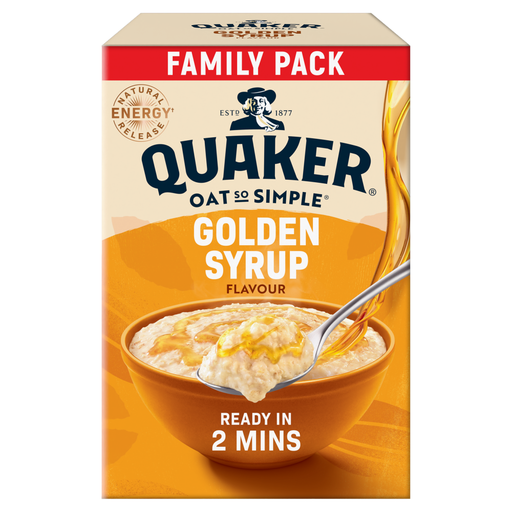
A portioned option for a short home-working lunch break where a microwave and bowl are available.
The dry mix lists 9.0g fibre per 100g and 3.5g per 38.5g sachet, with a stated 2½-minute microwave method. Nutrition prepared with semi-skimmed milk is listed separately, so compare products on the same basis. Check the current pack for gluten-related or other dietary requirements.
 No image available
A sachet format for a brief microwave lunch break when milk and a microwave-safe bowl are available.
Each portion is 36g and has a stated two-minute 900W microwave method. The dry mix lists 7.3g fibre per 100g and 2.6g per sachet; it also contains sugar and flavourings. It may contain barley, wheat and soya, so check the current pack if relevant.
 No image available
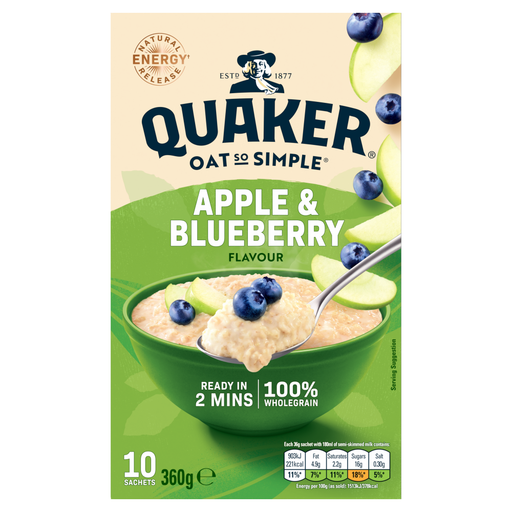
A fruit-flavoured portioned oat option with a stated two-minute microwave preparation route.
The dry product lists 7.2g fibre per 100g and 2.6g per 36g portion. It contains sugar and flavouring alongside oats, apple and blueberry, and may contain wheat, barley and soya.
 No image available
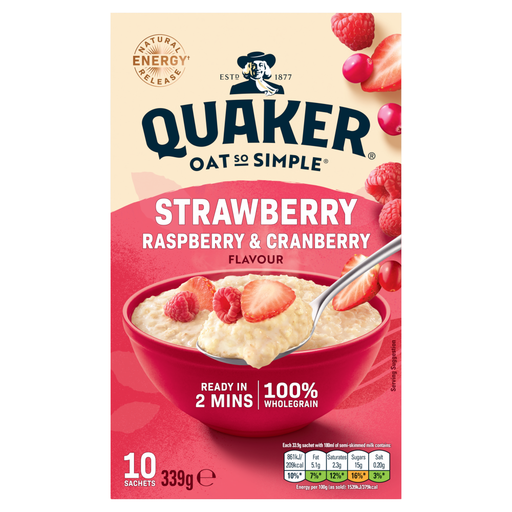
A portioned microwave choice for a short lunch break with the required bowl and milk.
The dry mix lists 7.2g fibre per 100g and a 33.9g sachet size, with a stated two-minute 900W microwave method. It contains sugar and flavourings, plus cereals containing gluten and oats; it may contain barley, soya and wheat.
 No image available
An oat-bran base for buyers who want to maximise fibre from the oat product and choose their own lunch additions.
The ingredient list contains Mornflake oat bran and the nutrition table lists 19.4g fibre per 100g. Check the pack for portion and cooking instructions, and note that it is not suitable for wheat or barley allergy sufferers due to manufacturing methods.
Use the nutrition panel rather than the product name alone. Worcestershire Acute Hospitals NHS Trust guidance states that a food may claim to be “high fibre” at at least 6g fibre per 100g or 3g per 100 kcal; compare products on the same per-100g and serving basis.
Porridge can contribute fibre, but it is only one part of a meal. NHS guidance says adults should aim for 30g of fibre a day as part of a healthy balanced diet, with fibre coming from a variety of foods such as fruit, vegetables, pulses and wholegrains where suitable.
Do not assume that they are. Ordinary oat products may carry gluten-related or cross-contact warnings, so choose an exact product labelled gluten-free if that is your requirement and check the current pack before buying.
Start with the product’s stated serving size, then build the meal around your needs. Fruit or other fibre-containing foods and a protein-containing accompaniment can make the wider lunch more varied, while allergies and individual dietary requirements still need to guide the choices.