What should you check before choosing?
Start with the session and when you plan to eat, then compare nutrition per bar and screen the exact pack’s ingredients.
| Priority | What to check | Your needs |
|---|
| Protein and carbohydrate |
Compare protein and carbohydrate per bar, not just the front-of-pack protein claim. Consider the session and what you have already eaten. |
I want a portable protein serving, but I need to assess carbohydrate separately for a longer or endurance-focused workout. |
| Timing and portion |
Check the bar’s size and leave time to assess how it sits before training. Myprotein’s UK pre-workout guidance suggests roughly 30–60 minutes for many snacks and more time for protein-rich flapjacks. |
If I am eating shortly before training, I would rather try the exact bar and portion in an ordinary session first. |
| Fibre and sweeteners |
Read fibre per bar, the ingredient list and any sweetener warning. Barebells UK lists 3.5 g fibre per 55 g Cookies & Cream bar and warns that excessive consumption may have laxative effects. |
A bar that is comfortable as an everyday snack might not suit me immediately before exercise. |
| Ingredients and allergens |
Inspect the exact flavour’s ingredients, allergen information and may-contain statement. Check these alongside, not instead of, any vegan claim. |
I need the particular pack to fit my dietary requirements; a brand name or protein figure cannot establish that. |
| Pack and availability |
Check whether the listing is for one bar or a multipack, then confirm the exact flavour and current stock before ordering. |
If I have not tried a flavour before, I would prefer a practical way to test it before making it a regular pre-workout snack. |
Which brands and ranges are relevant?
These ranges offer different bar formats and label details to compare; the suitability of any bar depends on its exact flavour and pack.
Grenade
Grenade describes its UK protein-bar range as high protein and low sugar, with Carb Killa and Soft Core among the listed products.
- The range includes multiple flavours and multipacks.
- Use the exact pack to compare protein, carbohydrate, fibre, sweeteners and allergens; a range description does not give those figures for every flavour.
PhD
PhD positions Smart Bar as a portable protein bar with low-sugar messaging.
- The Smart Bar page describes a substantial protein serving per bar.
- PhD’s page shows different protein and sugar figures in its header and description. Compare the current pack for the exact flavour rather than combining those figures.
Myprotein
Myprotein lists protein bars alongside other pre-workout snack formats, including oatbakes and flapjacks.
- The range gives shoppers formats to compare when a conventional protein bar is not the snack they want.
- Check the nutrition panel and your tolerance for the particular product; Myprotein’s timing advice is general brand guidance.
Barebells
Barebells offers confectionery-style protein bars, including Cookies & Cream.
- Barebells UK lists 20 g protein, 17 g carbohydrate and 3.5 g fibre per 55 g Cookies & Cream bar.
- That bar contains sweeteners and carries a warning about laxative effects from excessive consumption. Check its ingredients and allergen statements before use.
Quest
Quest describes its protein-bar range using protein, fibre and low-carbohydrate claims.
- Its range is relevant if you want to compare protein and fibre figures across bar formats.
- Check the nutrition, ingredients and allergen label of the exact bar offered for purchase rather than applying range-wide claims to every flavour.
Joybuy protein-bar options
These Grenade bars are portable protein-bar options for a pre-workout snack. Compare the exact flavour and pack against your timing, carbohydrate and ingredient needs; they do not represent every type of pre-workout snack.
 No image available
Grenade Oreo Protein Bars, 4 × 60 g
A four-bar pack if you want to try this flavour before making it a regular pre-workout snack. Check protein, carbohydrate, fibre, sweeteners and allergens on the exact pack, and try a portion before an important session.
 No image available
Grenade White Chocolate Salted Peanut Protein Bars, 12 × 60 g
A twelve-bar pack for someone considering this flavour for repeat use. Check the exact pack’s peanut and other allergen information, carbohydrate, fibre and sweeteners before deciding whether it suits your pre-workout routine.
 No image available
Grenade Peanut Butter Protein Bars, 12 × 60 g
This twelve-bar Peanut Butter pack is an option if you already know the flavour suits you. Read the exact pack’s allergen and sweetener information, and compare carbohydrate and fibre per bar with your planned session.
 No image available
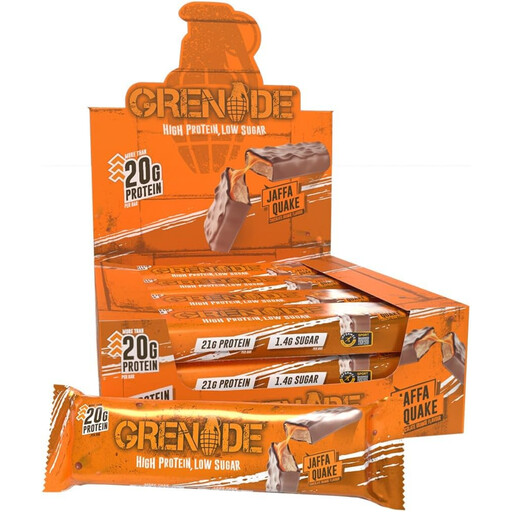
Grenade Jaffa Quake Protein Bars, 12 × 60 g
A twelve-bar pack in the Jaffa Quake flavour. If you plan to eat one before training, check the current label for its per-bar nutrition, sweeteners and allergens, then establish whether the portion suits your timing.
 No image available
Grenade Oreo Protein Bars, 12 × 60 g
This twelve-bar Oreo pack differs from the four-bar option in pack size. Before choosing it for regular pre-workout use, check the exact pack’s nutrition and ingredients and make sure the flavour and portion suit you.
Common questions
When should I eat a protein bar before training?
Allow enough time for the particular bar and portion to suit you. Myprotein’s UK pre-workout guidance suggests roughly 30–60 minutes for many snacks, while noting that protein-rich flapjacks may work better with more time. Try your chosen bar during an ordinary session before relying on that timing.
Is a bar with 20 g of protein enough for a workout?
The protein figure alone cannot answer that. For endurance exercise, the International Society of Sports Nutrition highlights adequate carbohydrate intake as a performance consideration; check carbohydrate per bar alongside the planned session and your preceding meals.
What should I check in a sweetened bar before exercise?
Read its fibre amount, sweeteners and any pack warning, then try the exact portion during ordinary training. Barebells UK, for example, warns that excessive consumption of its Cookies & Cream bar may have laxative effects.
Does a vegan protein bar settle allergen concerns?
No. Check the exact product’s ingredients and may-contain statement. Tesco Groceries lists TREK High Protein Choc Caramel as suitable for vegans but says it may contain cereals containing gluten, nuts, milk and sesame.
Should I try one bar before choosing a multipack?
An individual bar or smaller practical pack lets you check the flavour and how the portion suits you before committing to repeat use. Confirm the pack size and current stock for the exact product you intend to order.


