High-protein bars need not be the default snack at a children’s party: NHS guidance puts fruit and vegetables first for children’s snacks. If a packaged protein option has been requested, compare the protein and nutrition information per bar, then check the exact pack against every guest’s allergies before serving it. Peanut, soya and possible nut or milk exposure matter more to a shared snack table than a protein claim.
Who is this choice for?
The reason for offering a bar changes what you need to check: a general party table, a requested protein option and an allergy-sensitive guest list call for different decisions.
Hosts planning snacks for a mixed-age group
Offer a variety of foods rather than making adult-positioned protein bars the only snack. NHS guidance identifies fruit and vegetables as the first choice for children’s snacks and advises limiting packaged snacks.
Hosts asked for a packaged protein option
Compare the declared protein per bar alongside portion size, sugars and ingredients. Nature Valley Protein Peanut & Chocolate, TREK Cocoa Coconut and Eat Natural Dark Chocolate & Peanut declare 10g, 9g and 7.8g protein per bar respectively, according to their product information; those figures do not establish which is suitable for a particular child.
Hosts checking food allergies
Ask parents or carers about restrictions before buying. The named protein-bar examples contain or warn of possible exposure to ingredients including peanuts, other nuts, soya and milk; read the current label for the exact flavour you intend to serve.
What should you check before choosing?
Decide whether a protein bar is needed at all, then check the individual serving and its ingredients. A protein figure cannot settle the allergy or portion question.
| Priority | What to check | Your needs |
|---|
| Party-food mix |
Plan fruit and vegetable options alongside any packaged snacks. NHS guidance advises aiming for no more than two packaged snacks a day for children. |
I’m feeding a group, not trying to make extra protein the purpose of every snack. |
| Protein per bar |
Read grams of protein for one bar and its serving weight. Nature Valley UK lists 10g per Protein Peanut & Chocolate bar; TREK lists 9g per 50g Cocoa Coconut bar, and Eat Natural lists 7.8g per 40g Dark Chocolate & Peanut bar. |
If a higher-protein option has been requested, I want to compare the portion children would actually be offered, rather than the wording on the front of a pack. |
| Allergens |
Check the exact flavour’s ingredients and any “may contain” statement against guests’ restrictions. Eat Natural lists peanuts and soya in its Dark Chocolate & Peanut bar; TREK warns that Cocoa Coconut may contain peanuts, nuts and milk. |
Everyone sharing the table needs an option that fits their confirmed allergy requirements. I’ll keep the original wrapper available for parents or carers to inspect. |
| Sugars and portion |
Compare the nutrition panel per bar as well as per 100g. TREK lists 14g sugars per 50g Cocoa Coconut bar; Eat Natural lists 10g per 40g Dark Chocolate & Peanut bar. |
A protein label alone does not tell me how the sugars or serving sizes compare, so I want those figures before choosing a multipack. |
Common party-snack mistakes
-
Making protein bars the only snack
A protein message does not make a packaged bar the default choice for every child. NHS snack guidance puts fruit and vegetables first. In a November 2025 audit of 458 snack bars sold by ten major UK retailers, Action on Salt & Sugar found that 37% were high in sugars and 55% were high in saturated fat under UK front-of-pack thresholds; those are findings about the audited products, not every bar.
Build a varied party table and, if wanted, offer a clearly labelled bar as one optional packaged item.
-
Assuming every bar in a multipack suits every guest
The named TREK and Eat Natural examples contain or carry warnings about allergens relevant to some guests. A shared serving plate can also make it harder to identify which wrapper belongs to which bar.
Ask about allergies in advance, inspect the current pack for the exact flavour, keep wrappers available and take care to avoid cross-contact while serving.
-
Comparing “protein” wording instead of servings
Product names do not provide a like-for-like portion comparison. The Nature Valley, TREK and Eat Natural examples declare protein for bars weighing 40g, 50g and 40g respectively, according to their product information.
Compare the declared protein, sugars and serving weight for each individual bar, then check its ingredients before choosing a multipack.
-
Taking a protein claim as a child-suitability claim
A statement about protein does not answer whether a bar fits a child’s allergies, portion needs or the rest of the party food.
Treat the claim as a prompt to read the nutrition panel and ingredients, not as a substitute for checking the guest list.
Brand and product-line references
These named products illustrate different ingredients, portions and label checks. A brand name alone does not establish that another flavour has the same nutrition or allergen information.
Nature Valley
Nature Valley UK lists 10g protein and 4g fibre for its Protein Peanut & Chocolate bar.
- The declared protein figure can be compared per bar when a packaged protein option has been requested.
- It is peanut-based; check the current pack and the guest list before considering it for a shared party table.
TREK
TREK describes its 50g Cocoa Coconut protein flapjack as vegan and gluten-free, with 9g plant protein per bar.
- Those declared attributes give hosts specific label details to compare when vegan or gluten-free food has been requested.
- TREK lists 14g sugars per bar and warns that this flavour may contain peanuts, nuts and milk; check the full current ingredient list too.
Eat Natural
Eat Natural lists 7.8g protein and 10g sugars per 40g Dark Chocolate & Peanut bar.
- The per-bar figures make the serving straightforward to compare with the other named examples.
- Peanuts and soya appear in its ingredients, and its label warns of possible milk and several tree nuts.
Nakd
Nakd describes its fruit-and-nut bars as made without added sugar. A UK listing for its distinct Peanut Butter Protein bar describes 7g plant protein and lists several peanut ingredients.
- The named Peanut Butter Protein listing gives a per-bar protein figure to check against a requested portion.
- Do not transfer a fruit-and-nut bar’s claims to a protein bar. Check total sugars, serving size and peanuts on the exact pack.
Graze
A Tesco listing describes Graze Cocoa Vanilla Oat Boost as a 30g oat flapjack and gives 116 kcal per bar.
- Its stated 30g portion may be useful when comparing packaged serving sizes.
- Check protein on the exact pack before treating an Oat Boost bar as equivalent to a named protein-bar product.
Alpen
Alpen’s UK product pages describe its muesli range.
- If considering an Alpen bar, use the exact product name and pack to assess it.
- Do not assume a bar’s protein, portion or allergens from the brand’s muesli information.
Joybuy snack-bar options
These packaged bars are options to consider if a bar has been requested for the party. Their flavours and pack sizes differ; check each current label and guests’ allergies rather than treating the selection as a shared snack for everyone.
 No image available
Nature Valley Protein Peanut & Chocolate Bars, 8 × 40g
Consider this peanut-based flavour only after checking it against guests’ allergies. Nature Valley UK lists 10g protein per Protein Peanut & Chocolate bar; check the current pack for its full ingredients and nutrition information.
View on Joybuy
 No image available
Nature Valley Protein Salted Caramel Nut Bars, 4 × 40g
This nut-flavoured pack offers individual 40g bars. Check the exact pack for which nuts and other allergens it lists, as well as protein and sugars per bar, before offering it to party guests.
View on Joybuy
 No image available
TREK Salted Caramel Protein Flapjacks, 3 × 50g
The 50g bar size is useful to note when comparing portions. Check this Salted Caramel flavour’s own protein, sugars and allergen statements; figures and warnings for TREK Cocoa Coconut should not be assumed to apply to it.
View on Joybuy
 No image available
Nakd Peanut Delight, 4 × 35g
This peanut-named bar is not an option for guests who must avoid peanuts. For other guests, compare its 35g serving and current nutrition panel with any specifically requested protein bar rather than assuming the products serve the same purpose.
View on Joybuy
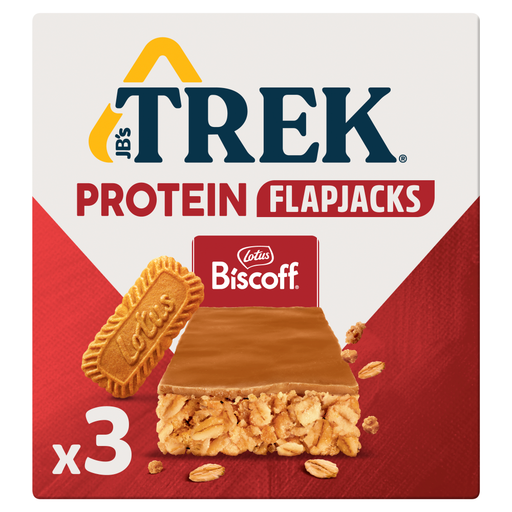 No image available
TREK Biscoff Flapjack, 3 × 50g
Check whether this 50g flapjack fits the guest list before serving it. Pay particular attention to wheat, soya and any nut or milk warnings on its current pack; do not apply the gluten-free description of TREK Cocoa Coconut to this different flavour.
View on Joybuy
Questions about serving snack bars
Should high-protein bars be the default party snack?
No. NHS guidance identifies fruit and vegetables as the first choice for children’s snacks and advises aiming for no more than two packaged snacks a day. If a protein bar has been specifically requested, offer it as an option only after checking the portion and guests’ dietary requirements.
How should I check allergens before serving wrapped bars?
Ask parents or carers about allergies before buying, then read the ingredients and any “may contain” warning on the exact flavour and pack you will serve. Keep its wrapper available for inspection and take care to avoid cross-contact when putting food out.
Does “no added sugar” settle the choice?
No. It does not tell you the total sugars per bar or whether its ingredients fit the guest list. Read the current nutrition panel for the individual serving and check allergens separately.


