Home workers adding something to lunch
If meetings leave little time to prepare food, a portioned bar can sit alongside lunch or serve as a snack later. Compare the nutrition per bar rather than relying on the word “protein” on the wrapper.


For a working-from-home lunch, choose by the protein in the bar you will eat, then check its sugars, saturated fat, fibre and allergens. TREK lists 15–16g protein per 55g bar for the two High Protein flavours considered here; Nature Valley lists 10g protein and 4g fibre for its gluten-free Peanut & Chocolate bar. A bar can be a convenient part of lunch, but it need not be the whole meal.
A bar is easiest to choose once you know whether protein quantity, a dietary requirement or a quick addition to lunch matters most.
If meetings leave little time to prepare food, a portioned bar can sit alongside lunch or serve as a snack later. Compare the nutrition per bar rather than relying on the word “protein” on the wrapper.
TREK lists its Choc Peanut Butter and Biscoff High Protein bars as vegan, with 15g and 16g protein respectively per 55g bar. Both require an allergen check: vegan does not mean free from soya or other relevant ingredients and cross-contact risks.
Nature Valley identifies its Protein Peanut & Chocolate bar as gluten-free, with 10g protein and 4g fibre per bar. Its peanut-based recipe makes the exact pack and allergen information essential checks.
Start with the exact flavour and serving size, then compare the rest of the nutrition panel and ingredients. The figures below describe named products, not every bar in a brand’s range.
| Priority | What to check | Your needs |
|---|---|---|
| Protein per bar | Compare grams in the portion you will eat. TREK lists 15g per 55g Choc Peanut Butter bar and 16g per 55g Biscoff bar; Nature Valley lists 10g for Peanut & Chocolate. | If protein quantity is my main reason for buying a bar, I want the per-bar figure, not just “protein” in its name. |
| Other nutrition | Read sugars, saturated fat, salt and energy alongside protein, using the same per-bar basis. Eat Natural lists 10g sugars and 5.6g saturated fat per 40g Dark Chocolate & Peanut bar. | For a bar alongside lunch, I want to see how its full nutrition panel fits with the other food I am having. |
| Fibre and portion | Check fibre in the stated portion. TREK lists 15g per 55g Choc Peanut Butter bar and 12g per 55g Biscoff bar; Nature Valley lists 4g for Peanut & Chocolate. | A fibre figure helps me compare bars, but I also need to know whether I am comparing a 40g, 50g or 55g portion. |
| Ingredients and allergens | Check the exact flavour’s ingredients and “may contain” statements on the current pack. Gluten-free and vegan describe different requirements and do not settle other allergen questions. | Before choosing a bar for a dietary requirement, I need its own pack information—not the label for another flavour. |
| Role in lunch | Consider what else you will eat. The UK government’s Eatwell Guide describes food-group balance across a day or week, rather than requiring every meal to match the guide’s proportions. | If the bar is taking the place of my usual lunch, I want to consider what other foods belong in the meal. |
The named products here range from Eat Natural’s 7.8g per 40g bar to TREK Biscoff’s 16g per 55g bar. A standard TREK Protein Flapjack and a TREK High Protein bar also have different stated amounts.
Compare protein grams for the exact bar and portion before deciding whether it meets your lunch plan.
TREK Original Oat lists 12g sugars per bar, while Eat Natural Dark Chocolate & Peanut lists 10g sugars and 5.6g saturated fat per bar. A protein figure does not describe these other measures.
Read the per-bar values for sugars, saturated fat, salt, energy and fibre together.
TREK Choc Peanut Butter is listed as vegan but contains soya and peanuts. Nature Valley’s gluten-free Peanut & Chocolate bar is peanut-based.
Use the current pack for the exact flavour to check ingredients and “may contain” statements.
A portioned bar is convenient, but that alone does not establish how it fits with the variety of foods described in the UK government’s Eatwell Guide.
Consider the rest of your lunch, such as fruit or vegetables and another substantial component, rather than making the bar the entire meal by default.
Brand names cover different bar ranges; compare the exact product and flavour rather than carrying one range’s nutrition or dietary description over to another.
TREK has separate High Protein bars and Protein Flapjacks, with different stated protein amounts.
Its Protein Peanut & Chocolate bar is a gluten-free, peanut-based option.
Dark Chocolate & Peanut is a nut-based bar with a stated protein quantity.
Graze describes its snack range in terms of plant protein, fibre or vitamins and minerals, depending on the snack.
A Kellogg's press release described a Special K Protein Cereal Bar made with plant-based ingredients including soy and seeds.
Alpen’s named product information here concerns its muesli range.
These Joybuy options are Nature Valley and KIND protein bars that may fit a working-from-home lunch or snack. They are not a comparison of every high-protein bar discussed above; check each pack for the nutrition and allergens that matter to you.
 No image available
A peanut-and-chocolate bar to consider alongside lunch. Nature Valley lists 10g protein and 4g fibre per bar for Peanut & Chocolate and describes it as gluten-free; check the pack’s full allergen information before choosing it.
 No image available
A salted-caramel-and-nut flavour for a portioned lunch addition. Compare its own per-bar protein and nutrition panel with other flavours, and check the exact pack’s ingredients and allergens.
 No image available
An eight-bar pack of the Peanut & Chocolate cereal-bar flavour. Nature Valley lists 10g protein and 4g fibre per bar and describes the flavour as gluten-free; check the pack if peanuts or other allergens are a concern.
 No image available
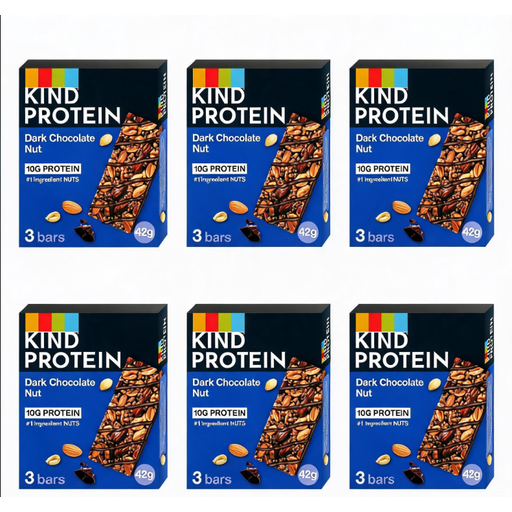
A dark-chocolate-and-nut bar option for lunch or a later snack. Use this variant’s pack to compare protein and fibre per 42g bar and to check its full nut and other allergen information.
 No image available
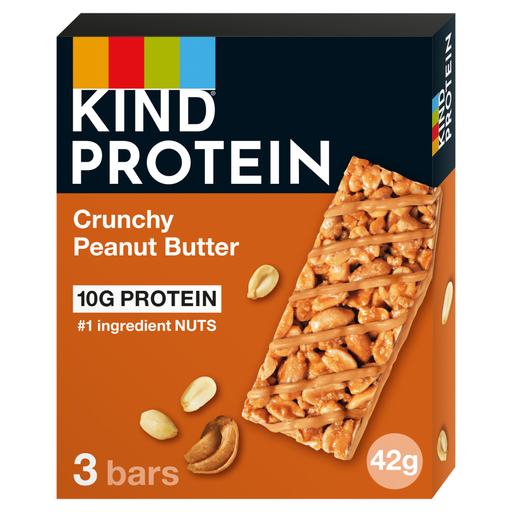
A crunchy peanut-butter bar to compare with other portioned lunch additions. Read its own protein and nutrition values per 42g bar, and check the pack’s peanut and other allergen information.
No. Compare the grams per bar on the exact product: TREK lists 10g per 50g Original Oat Protein Flapjack, while its Choc Peanut Butter and Biscoff High Protein bars list 15g and 16g respectively per 55g bar.
A bar can be part of lunch, but do not assume it supplies everything you want from the meal. The UK government’s Eatwell Guide describes variety across food groups over a day or week; consider what other foods you will have with the bar and during the rest of the day.
No. TREK Choc Peanut Butter is listed as vegan but contains soya and peanuts, while Nature Valley’s gluten-free Peanut & Chocolate bar is peanut-based. Read the ingredients and “may contain” statements on the current pack of the exact flavour.
No. TREK lists 10g protein per 50g Original Oat Protein Flapjack, compared with 15g per 55g Choc Peanut Butter High Protein bar and 16g per 55g Biscoff High Protein bar. Choose by range and flavour, then check the rest of each bar’s nutrition panel.