Hosts serving protein-conscious guests
Compare protein per bar, rather than treating every cereal bar with protein in its name as equivalent. Pack size matters too if you need a portion for each guest.


For a Christmas party centred on protein, check the amount per bar and the exact pack’s high-protein wording: Nature Valley lists 10g protein for its Peanut & Chocolate Protein bar. If vegan and gluten-free suitability matters more, TREK’s Protein Flapjacks offer a different snack option, but a protein-containing name alone does not establish a high-protein claim. In either case, keep each bar’s allergen information available to guests.
The useful choice depends on whether guests need a particular protein amount, a stated dietary option or clear allergen information.
Compare protein per bar, rather than treating every cereal bar with protein in its name as equivalent. Pack size matters too if you need a portion for each guest.
Look for the relevant statement on the exact flavour. TREK’s Protein Flapjack variety pack is described by Ocado as vegan and gluten-free; check each wrapper’s ingredients and allergen information before serving.
A protein bar should not go into an unlabelled shared bowl. Joybuy’s Nature Valley Peanut & Chocolate listing identifies peanuts, soya and milk as ingredients and says the bar may contain nuts.
Start with the exact bar’s protein and dietary labelling, then compare the serving information and pack format against your guest list.
| Priority | What to check | Your needs |
|---|---|---|
| Protein claim | Read protein per bar and the exact pack’s claim. The annex published by legislation.gov.uk defines 'high protein' as at least 20% of a food’s energy coming from protein; grams alone do not give that proportion. | I’m serving bars specifically for their protein content, so I want to distinguish a high-protein claim from a bar that simply contains protein. |
| Allergens | Check ingredients and 'may contain' statements for each flavour. Keep its wrapper or ingredient information with the bar when serving. | Guests need to identify what they can choose without guessing from a vegan, gluten-free or protein label. |
| Serving values | Compare protein, sugars and saturated fat per bar, noting the bar’s weight. Eat Natural lists 7.8g protein and 10.0g sugars per 40g Dark Chocolate & Peanut Protein Bar. | I want to compare the portions I’ll actually put out, not rely on a front-of-pack description. |
| Party format | Confirm the pack count, individual wrapping and dietary statements on the exact product. Check each flavour separately in a variety pack. | Separately identifiable bars will make it easier to keep ingredient information beside the snacks and plan enough portions. |
A bar can provide several grams of protein without meeting the high-protein definition in the annex published by legislation.gov.uk.
If the high-protein claim is central to your choice, check the exact flavour’s current pack rather than judging it by the product-range name.
Ingredients and precautionary allergen statements can differ between bars. The Food Standards Agency explains that precautionary labelling communicates possible unintended allergen presence.
Keep wrappers or ingredient information beside each option, and keep separately identified alternatives apart from a mixed bowl.
A protein or plant-based description does not tell you the rest of a bar’s nutrition values. Serving sizes may differ between products, too.
Compare the values per bar on the exact flavours you plan to serve, alongside protein and allergens.
The flavour, pack count or listing you noted earlier may not be the one available when you order.
Check the current product, quantity, best-before date and on-pack ingredients before finalising the party food.
These ranges illustrate different protein-bar and cereal-bar formats; a brand name alone does not establish the nutrition or suitability of every flavour.
Nature Valley lists Peanut & Chocolate in its Protein range, with 10g protein and 4g fibre per bar.
TREK lists Protein Flapjacks with 9g plant protein and a separate High Protein Bars range with 15g plant protein.
Eat Natural’s Dark Chocolate & Peanut Protein Bar is a nut-led alternative to an oat flapjack.
Graze describes its snack range using attributes that include plant protein and fibre.
Alpen has Protein Bar listings, including Berries & Yoghurt and Chocolate variants.
Kellogg's presents Special K as a cereal-and-snack range.
These Nature Valley Protein multipacks are options for serving Peanut & Chocolate or Salted Caramel Nut bars at a Christmas party. Compare the flavour, pack count and current allergen label for the guests you’re serving.
 No image available
For guests choosing a protein-labelled cereal bar, Nature Valley lists 10g protein for Peanut & Chocolate. Joybuy identifies peanuts, soya and milk in this flavour and says it may contain nuts; keep that information with the bars.
 No image available
This 4 × 40g pack offers a different Nature Valley Protein flavour for the party. Check its current protein claim, ingredients and allergen statement separately from Peanut & Chocolate before setting it out.
 No image available
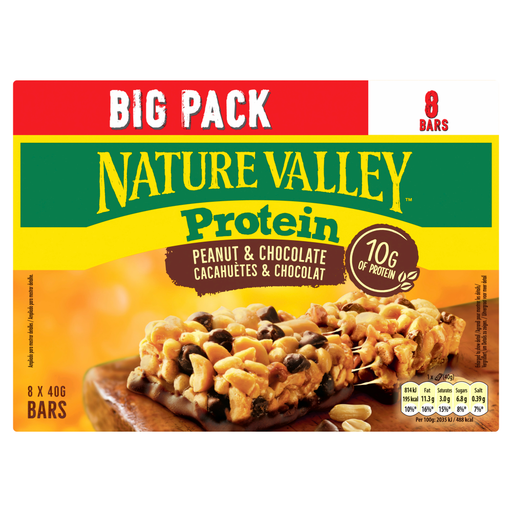
The eight-bar pack provides more portions than the four-bar packs shown here. Check the current nutrition and allergen information on this exact pack before serving it to guests.
The annex published by legislation.gov.uk defines the high-protein claim as at least 20% of the food’s energy coming from protein. Protein grams on their own do not show that proportion, so check the claim and nutrition information for the exact bar.
Keep each option identifiable and its allergen information available rather than mixing unwrapped bars. Joybuy’s Nature Valley Peanut & Chocolate listing identifies peanuts, soya and milk and says the bar may contain nuts; other flavours need their own label checks.
No. Vegan and gluten-free statements address different questions from a high-protein claim. TREK lists 9g plant protein for its Protein Flapjacks; check the exact flavour’s claim and nutrition information if high protein is the reason for buying it.
Compare sugars and saturated fat per bar, the serving weight, ingredients and pack count. That lets you assess the portions you plan to serve without relying on protein wording alone.