Choose a high-protein cereal bar by checking its current ingredients and precautionary allergen statement against the allergen you need to avoid; compare protein per bar only among suitable options. Nature Valley Protein Peanut & Chocolate contains peanut, soya and milk, while Eat Natural Peanut & Dark Chocolate contains peanuts and soya, so neither is a general recommendation for food-allergy shopping.
Who is this for?
Shoppers managing a food allergy
If you need to avoid a particular ingredient or manage cross-contact risk, start with the current pack’s ingredient list and precautionary allergen statement. A protein figure cannot establish whether a bar meets your requirements.
Shoppers who can eat peanuts, soya and milk
If these ingredients fit your requirements, you can compare protein per bar in products such as Nature Valley Protein Peanut & Chocolate and Eat Natural Peanut & Dark Chocolate. Check each pack for other ingredients and any precautionary warning, including one about tree nuts.
Shoppers considering a plant-based flapjack
If you are looking at a TREK protein flapjack, check its exact ingredients and allergen statement rather than relying on a vegan description. The TREK Biscoff listing from Tesco identifies oats and soya protein crispies.
What should you check first?
Filter out bars that do not meet your allergen requirements before comparing their protein figures or dietary labels.
| Priority | What to check | Your needs |
|---|
| Ingredients |
Read the current pack’s full ingredient list and emphasised allergens. Check the exact flavour and pack size you intend to buy. |
I need to rule out any bar that lists the ingredient I must avoid before considering its protein content. |
| Precautionary warnings |
Look for statements such as “may contain”. The Food Standards Agency explains that these warn of possible unintentional allergen presence through cross-contact. |
A listed ingredient is not my only concern: I also need to assess precautionary wording against my individual allergy-management plan. |
| Protein per bar |
Compare grams for the serving you will eat, noting bar size. Nature Valley UK describes about 10g per 40g Protein Peanut & Chocolate bar; Eat Natural UK lists 7.8g per 40g Peanut & Dark Chocolate bar. |
Once a bar meets my allergen requirements, I want to know how much protein one bar provides, not just what its front-of-pack wording says. |
| Dietary labels |
Check what a gluten-free or vegan claim addresses, then read the separate ingredient and allergen information. Nature Valley’s gluten-free Protein Peanut & Chocolate bar contains peanut, soya and milk. |
A dietary label may matter to me, but I cannot use it as a substitute for checking my particular allergen. |
Common buying mistakes
-
Choosing the protein figure before reading the allergens
Nature Valley’s Protein Peanut & Chocolate bar contains peanut, soya and milk. A protein comparison is useful only after you have ruled out bars that conflict with your allergen requirements.
Check ingredients and precautionary warnings first; compare protein per bar among the options that remain.
-
Relying on a pack bought previously
A familiar product name does not replace the ingredient information on the pack you are buying now, particularly if you switch flavour, size or multipack.
Read the current pack each time rather than relying on an earlier purchase or an online listing.
-
Treating “gluten free” or “vegan” as an all-allergen claim
Nature Valley Protein Peanut & Chocolate is described as gluten free but contains peanut, soya and milk. Tesco’s vegan TREK Biscoff flapjack listing identifies oats and soya protein crispies.
Use these labels for the dietary question they address, then check the ingredients and warnings for the allergen that matters to you.
-
Clearing a product using a partial online description
An ingredient summary does not necessarily give you the complete precautionary allergen wording needed for your decision.
If the online details are incomplete, inspect the current pack or seek current product information from the manufacturer before treating the bar as suitable.
Brand and product references
These examples illustrate different ingredients and protein figures; a brand name alone cannot establish whether a particular bar meets an allergy requirement.
Nature Valley
Nature Valley UK describes its Protein Peanut & Chocolate bar as gluten free and providing about 10g protein per 40g bar.
- Its protein figure is stated per bar, making the serving size clear.
- It contains peanut, soya and milk and may contain tree nuts, according to Nature Valley UK.
Eat Natural
Eat Natural UK lists 7.8g protein per 40g Peanut & Dark Chocolate Protein Bar.
- The stated serving figure can be compared with other bars of the same size after allergen checks.
- The product contains peanuts and soya and may contain milk and tree nuts.
TREK
Tesco describes the TREK Lotus Biscoff Protein Flapjack as vegan, with 9g plant protein per 50g bar.
- The listing identifies oats and soya protein crispies, which are relevant ingredients to check.
- Check the exact current pack’s full allergen and precautionary information before deciding whether it meets your requirements.
Kellogg's
Waitrose & Partners lists 8g protein per Kellogg's High Protein Almond & Dark Chocolate cereal bar.
- The retailer gives a per-bar protein figure.
- Its listed ingredients include peanuts, almonds, milk, cashews and hazelnuts.
Alpen
Weetabix Cereals lists 1.7g protein per 28g serving of Alpen Fruit & Nut Bar.
- The stated protein amount provides a serving-based point of comparison.
- The official product information says it is not suitable for people with milk or other nut allergies.
Graze
Graze describes oat flapjacks and snacks made with nuts. Assess an exact product rather than assuming these ranges share one ingredient or protein profile.
- Check the particular pack’s ingredients, warnings and protein per serving before comparing it with a protein bar.
Cereal bars and flapjacks on Joybuy
These options include TREK flapjacks and Nature Valley protein bars. For each flavour, use the current pack’s allergen information to decide whether it belongs on your shortlist before comparing servings.
 Image unavailable
TREK Salted Caramel Protein Flapjacks, 3 x 50g
If a flapjack suits the type of snack you want, check this salted caramel variant’s current ingredients and precautionary allergen statement against your requirements before comparing its protein per bar.
View on Joybuy
 Image unavailable
TREK Cocoa Oat Protein Flap Jacks, 3 x 50g
For this cocoa oat variant, inspect the current pack’s complete ingredient and precautionary information if you need to avoid an allergen. The pack size is 3 x 50g; compare protein using the figure for one bar.
View on Joybuy
 Image unavailable
Nature Valley Protein Salted Caramel Nut Bar, 4 x 40g
The salted caramel nut variant needs its own allergen check: do not apply the ingredient details for Nature Valley’s Peanut & Chocolate bar to this flavour. Read the current pack before comparing protein for one 40g bar.
View on Joybuy
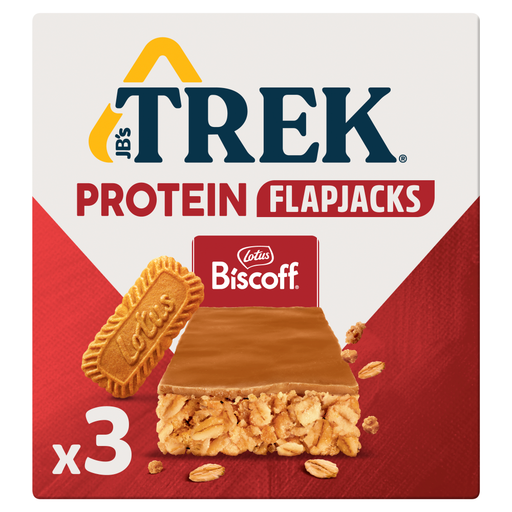 Image unavailable
TREK Biscoff Flapjack, 3 x 50g
Tesco describes the TREK Lotus Biscoff Protein Flapjack as vegan, with 9g plant protein per 50g bar, and identifies oats and soya protein crispies. Check this exact pack’s full ingredients and precautionary warnings before deciding whether it meets your allergen requirements.
View on Joybuy
 Image unavailable
Nature Valley Protein Peanut & Chocolate Cereal Bars, 8 x 40g
Nature Valley UK describes about 10g protein per 40g bar. Its product information identifies peanut, soya and milk and warns that it may contain tree nuts; check the current pack before deciding whether this bar meets your requirements.
View on Joybuy
Questions about allergens and cereal bars
Can I rely on an online listing when buying for someone with a food allergy?
Use a listing to consider a product, but check the current pack’s ingredients and allergen warnings before buying or serving it. A previous purchase or the information for a different flavour cannot establish what is on the pack in front of you.
Does “gluten free” mean a protein bar is suitable for other food allergies?
No. Nature Valley UK describes Protein Peanut & Chocolate as gluten free, but states that it contains peanut, soya and milk and may contain tree nuts. Check each allergen relevant to you separately.
What does “may contain” mean on a cereal bar?
The Food Standards Agency says precautionary allergen labelling warns that an allergen could be unintentionally present through cross-contact. Assess that warning using your individual allergy-management advice; the absence of an allergen from the main ingredients list does not cancel a relevant precautionary statement.
Must UK food businesses provide allergen information?
Yes. The Food Standards Agency says food businesses must provide allergen information for both prepacked and non-prepacked food. For a packaged cereal bar, read the current label’s ingredients and allergen information when deciding whether it meets your requirements.


