Day hikers planning food for a longer walk
Look at the bar alongside the rest of the food you will carry. The Ramblers advises taking carbohydrate-containing snacks during longer walks, so a protein-focused bar need not be your only option.


Choose a protein-focused bar if you want it as one portable part of your hiking food, but do not pick by protein grams alone. Compare the amount per bar with its serving size, other nutrition information and allergens; for longer walks, the Ramblers’ walking-food advice also recommends taking carbohydrate-containing snacks rather than relying on a protein bar as your only food.
The useful checks change with the length of your walk, the bar format you prefer and the ingredients you need to avoid.
Look at the bar alongside the rest of the food you will carry. The Ramblers advises taking carbohydrate-containing snacks during longer walks, so a protein-focused bar need not be your only option.
Check the exact range and pack rather than the brand alone. TREK describes its Protein Flapjacks as plant-based and its protein-bar range as gluten-free, but those descriptions do not settle every ingredient or allergen question.
Read the ingredients and any precautionary allergen wording on the bar you will pack. The cited Nature Valley, Kellogg’s and Eat Natural products illustrate why a protein-focused choice can still contain nuts, milk or soya.
Start with protein per stated bar, then check how the bar fits your walking food and ingredient requirements.
| Priority | What to check | Your needs |
|---|---|---|
| Protein per bar | Read the grams of protein and serving weight for the exact product. Tesco lists 10g per 40g Nature Valley Peanut & Chocolate bar; TREK states 9g per Protein Flapjack but 15g for its separate High Protein range. | I want to know what one bar provides, rather than assuming every bar bearing the same brand name has the same protein amount. |
| Walking food | Check the carbohydrate and energy information on the pack, and consider what other food you are carrying. The Ramblers’ advice for longer walks includes carbohydrate-containing snacks. | On a longer walk, I want food options beyond a single protein bar. |
| Ingredients | Read the current ingredients, emphasised allergens and any precautionary allergen wording. Do not treat a vegan or gluten-free description as a substitute for those checks. | A bar needs to fit the ingredients I can eat, even if its protein figure or dietary description appeals to me. |
| Portion and format | Check the number of bars, weight of each bar and whether the listed nutrition applies to one bar or a different serving. Compare a flapjack with a cereal bar on those stated portions. | I would like a pack and bar size that work for the walks I have planned. |
Protein amounts differ between the cited products and even between TREK’s Protein Flapjack and High Protein ranges. Alpen’s Fruit & Nut panel, for example, lists 1.7g per 28g serving, while TREK states 9g per Protein Flapjack.
Compare protein and serving weight on the exact bar, then read the rest of its nutrition panel.
Choosing a bar for its protein figure alone leaves out the other food you may need to plan and carry. The Ramblers’ walking advice includes carbohydrate-containing snacks during longer walks.
Plan the bar alongside other foods and drinks you can carry and consume on your walk.
The cited protein-focused bars include products containing peanuts, other nuts, milk or soya, as well as products with precautionary allergen wording.
Check the current physical pack against the ingredients you need to avoid, including any “may contain” statement.
A listing may describe a different pack or recipe from the item in front of you. That matters when you are comparing portions or checking ingredients.
Confirm the pack size, nutrition and allergen information on the bar you actually buy.
These examples describe particular bars or ranges, not every product made by each brand.
Tesco lists 10g protein per 40g Peanut & Chocolate Protein Cereal Bar.
TREK describes its Protein Flapjacks as plant-based and states 9g protein per flapjack.
Waitrose & Partners lists 9g protein per High Protein Almond & Salted Caramel bar.
Tesco lists 8g protein per 40g serving of the Maple Syrup, Pecans & Peanuts protein bar.
Graze’s snack range includes products it describes in terms of plant protein or fibre; those descriptions do not give a protein figure for every bar or bite.
Weetabix Cereals lists 1.7g protein per 28g serving of Alpen Fruit & Nut.
These Joybuy options cover Nature Valley protein bars and TREK protein flapjacks. Compare the exact flavour and pack size, particularly when choosing between a cereal-bar format and an oat flapjack.
 No image available
A four-bar pack to consider if you prefer the Peanut & Chocolate flavour in 40g portions. Tesco lists 10g protein per 40g bar for this flavour; check the current pack for its nutrition and allergen information, including peanuts, milk and soya.
 No image available
A four-bar pack in the Salted Caramel Nut flavour for comparison with the other Nature Valley format here. Check its own nutrition panel for protein per bar; the product information identifies peanuts, almonds, milk and soya as ingredients to consider.
 No image available
An eight-bar pack of 40g Peanut & Chocolate cereal bars if you want more of the same flavour on hand. Joybuy’s listing states 10g protein per bar and says the bars contain milk, peanuts and soya and may contain tree nuts.
 No image available
Three 50g flapjacks for hikers considering an oat-based alternative to a cereal bar. TREK states 9g plant protein for its Protein Flapjack range; check this flavour’s pack for its own nutrition and ingredients, including soya.
 No image available
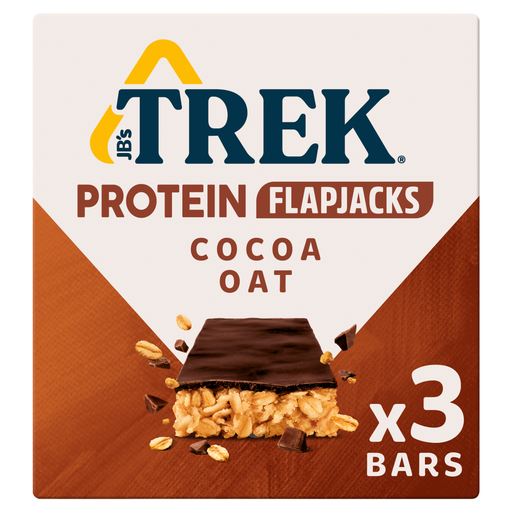
A three-pack of 50g cocoa oat flapjacks to compare with the salted caramel version. TREK states 9g plant protein for its Protein Flapjack range; read this pack’s nutrition and allergen information, particularly if you avoid soya.
No. Protein per bar helps you compare products, but the Ramblers’ advice for longer walks also includes carbohydrate-containing snacks. Check the bar’s serving size, other nutrition information, ingredients and how it fits the rest of the food you will carry.
Tesco lists 10g per 40g Nature Valley Peanut & Chocolate bar and 8g per 40g serving of Eat Natural Maple Syrup, Pecans & Peanuts. Waitrose & Partners lists 9g per Kellogg’s Almond & Salted Caramel bar, while TREK states 9g per Protein Flapjack. Check the precise product and portion before comparing them.
No. Those descriptions do not rule out ingredients such as peanuts or soya, or precautionary warnings for other allergens. Read the ingredients and allergen information on the exact pack you intend to eat.
Check how many bars the pack contains and the weight and nutrition serving for each bar. Then compare the current ingredients and allergen wording: a familiar flavour or brand name is not a substitute for reading the pack you are buying.