What matters when choosing a bar?
Decide whether low fat is a firm requirement, then compare products on the same per-100g basis before considering the size of each bar.
| Priority | What to check | Your needs |
|---|
| Fat content |
Read total fat per 100g. Business Companion lists no more than 3g per 100g for a low-fat claim on solid foods; also check fat in the portion you plan to eat. |
I need a bar that meets a strict low-fat benchmark, rather than one that merely has a small-looking per-bar figure. |
| Protein |
Compare protein per 100g and per bar. Check the bar’s weight so that different portion sizes do not distort the comparison. |
If protein is my main reason for choosing a bar, I still want to see how much fat comes with that serving. |
| Full nutrition panel |
Look at energy, sugars and saturated fat alongside protein and total fat, using both per-100g and per-serving figures. |
A protein claim alone does not tell me whether the whole bar fits what I plan to eat. |
| Ingredients and allergens |
Check the exact pack’s ingredients, highlighted allergens and any ‘may contain’ statement, especially for nuts, soy, milk and cereals containing gluten. |
Before choosing a flavour, I need to know whether its ingredients and allergen information fit my restrictions. |
Brand and product-line references
These figures describe the named products, not every bar made by each brand; check the current pack for the flavour you choose.
Nature Valley
Nature Valley UK lists 10.2g protein per 40g bar for Protein Peanut & Chocolate.
- Its listed protein content is 25.6g per 100g.
- The same product lists 28.3g fat per 100g and contains peanut, soy and milk ingredients; it may contain tree nuts.
Graze
Tesco lists 9.0g protein per 54g portion for the Graze Cocoa Vanilla protein flapjack.
- The 54g portion offers an oat-flapjack format for shoppers considering a larger bar.
- Tesco lists 13g fat per portion and 25g fat per 100g for this product.
Eat Natural
Tesco lists 8.0g protein per 40g bar for Eat Natural Maple Syrup, Pecans & Peanuts.
- The named bar is a nut-led option with a stated per-serving protein figure.
- It lists 42.2g fat per 100g, contains peanuts and pecans, and may contain other tree nuts and milk.
Kellogg’s
Kellogg’s UK lists 1.7g fat and 1.4g protein per 27g Special K Red Berry Bar.
- The stated fat amount per bar is smaller than in the cited protein-oriented examples, which also have different serving sizes.
- At 6.3g fat per 100g, this bar exceeds Business Companion’s low-fat claim benchmark for solid foods; its stated protein is 5.3g per 100g.
Joybuy product options
These options include protein snack bars and a Nature Valley cereal bar. Compare the current nutrition and allergen information for each flavour before choosing one for a low-fat eating plan; a protein or low-sugar name does not establish low fat.
 No image available
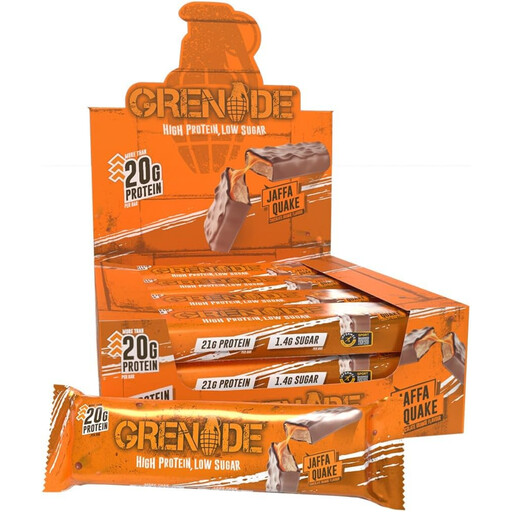
Grenade Jaffa Quake Protein Bar, 12 x 60g
A high-protein, low-sugar-labelled snack bar in a 12 x 60g pack. Check the flavour’s current fat per 100g and allergen statement against your requirements.
 No image available
Grenade Oreo Flavour Protein Bar, 4 x 60g
This high-protein, low-sugar-labelled flavour comes as four 60g bars. Compare its current per-100g fat figure and ingredients with the other flavours rather than assuming they have the same recipe.
 No image available
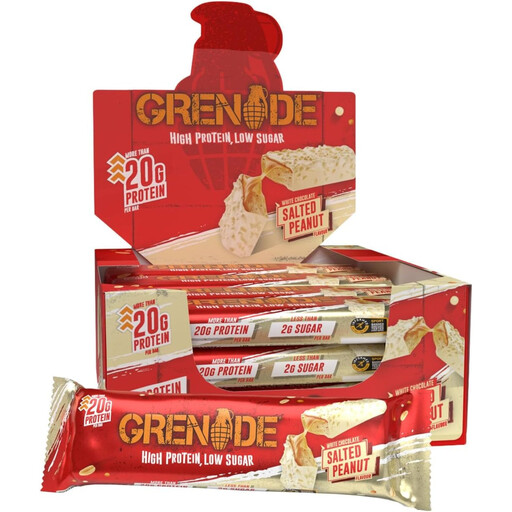
Grenade White Chocolate Salted Peanut Flavour Protein Bar, 12 x 60g
This high-protein, low-sugar-labelled option comes as twelve 60g bars. Check its current fat declaration and peanut-related allergen information before selecting it.
 No image available
Nature Valley Protein Salted Caramel Nut Bar, 4 x 40g
A nut bar in four 40g portions for shoppers considering a protein-labelled cereal snack. Check this Salted Caramel variant’s own nutrition and allergen declaration; figures for Nature Valley Peanut & Chocolate do not describe it.
 No image available
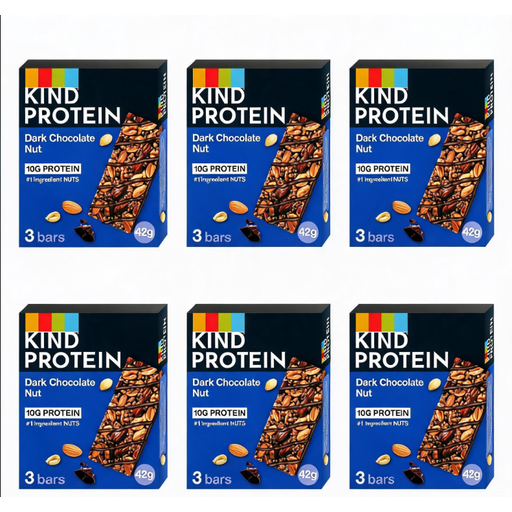
KIND Protein Dark Chocolate Nut Bars, 3 x 42g x 6pcs
A protein-labelled dark chocolate nut bar in the stated 3 x 42g x 6pcs configuration. Compare its current fat per 100g and read the nut and other allergen information for this exact product.
Questions about protein and low-fat bars
Does a protein cereal bar automatically suit a low-fat diet?
No. Nature Valley UK lists 28.3g fat per 100g for Protein Peanut & Chocolate, while Tesco lists 25g for Graze Cocoa Vanilla protein flapjack and 42.2g for Eat Natural Maple Syrup, Pecans & Peanuts. Each exceeds the 3g-per-100g limit that Business Companion lists for a low-fat claim on solid foods, despite supplying protein.
Is 10g of protein in a bar enough reason to choose it?
Not on its own. Compare the bar’s protein with its fat, energy and portion size, as well as the rest of what you plan to eat. The British Nutrition Foundation notes that, on average, people in the UK already consume more than enough protein and recommends obtaining it from a range of foods.
Which allergens matter when choosing a protein-oriented bar?
Read the exact pack for peanuts, tree nuts, soy, milk and cereals containing gluten, as relevant to your restrictions. The cited Nature Valley Peanut & Chocolate product contains peanut, soy and milk and may contain tree nuts; other flavours and brands need their own label check.
Can I rely on an online nutrition listing?
Use it to compare options, but check the current physical pack when nutrition or allergens are decisive. Product recipes and declarations can change, and the figures for one flavour should not be transferred to another.


