Runners needing a portable snack after training
If a meal is not convenient after a session, a bar containing both carbohydrate and protein is one snack option. It does not replace considering the rest of your food and drink across the day.


For marathon training, a high-protein cereal bar makes more sense as a portable snack before or after a session than as the main fuel during a run. University College London Hospitals NHS Foundation Trust says carbohydrate-only snacks can be sufficient during activity lasting 60 minutes to two hours. Compare carbohydrate and protein per whole bar, and try your choice in training before relying on it near an event.
If a meal is not convenient after a session, a bar containing both carbohydrate and protein is one snack option. It does not replace considering the rest of your food and drink across the day.
When you have not eaten a meal before a session, compare the whole bar’s carbohydrate, protein, fat and fibre. Try it during ordinary training to see whether its size and ingredients suit you before running.
Protein content alone cannot establish dietary suitability. Check the exact flavour’s ingredient list, gluten statement, declared allergens and any “may contain” warning on the current pack.
Start with when you plan to eat the bar, then compare nutrition per whole bar and check whether its ingredients suit you.
| Priority | What to check | Your needs |
|---|---|---|
| Training moment | Decide whether the snack is for before or after training, or for eating during a run. For activity lasting 60 minutes to two hours, University College London Hospitals NHS Foundation Trust says carbohydrate-only snacks can be sufficient during exercise. | I need something I can carry after a session, but I would choose during-run fuel for its carbohydrate rather than its protein claim. |
| Whole-bar nutrition | Compare serving size, protein and carbohydrate per bar, not just per 100g. Check sugars too if that distinction matters to your choice; the reviewed examples include both 36 g and 40 g bars. | A bar’s protein figure catches my eye, but I also want to know how much carbohydrate I get from the portion I will actually eat. |
| Fat and fibre | Read both figures per bar and consider how close to running you plan to eat it. Test your choice during training rather than assuming a nut-based or higher-fibre bar will feel comfortable near a run. | If I am eating shortly before setting off, I want a snack I have already tried in a similar session. |
| Ingredients and allergens | Check the current pack for gluten statements, declared allergens and precautionary warnings. A gluten-free claim does not mean a bar is free from nuts, soya or milk. | I need the exact flavour to fit my dietary requirements; another bar from the same range may have different ingredients. |
A protein-focused bar is not necessarily the carbohydrate-led snack you want during a longer run. University College London Hospitals NHS Foundation Trust says carbohydrate-only snacks can be sufficient for activity lasting 60 minutes to two hours.
Choose during-run snacks by the carbohydrate they supply and by what you have tried in training; assess a protein bar separately as a before- or after-training snack.
Bar sizes and nutrition figures differ. A front-of-pack protein figure does not tell you how much carbohydrate, fibre or sugar the whole serving contains.
Read the nutrition panel for the exact flavour and compare figures per bar alongside its serving size.
Some reviewed gluten-free protein bars contain peanuts, almonds, soya or milk. Nature Valley’s Protein + Fibre Coconut & Almond bar, by contrast, contains wheat and barley gluten.
Read the current pack’s ingredients, allergen declaration and “may contain” statements rather than applying one variant’s label to another.
Nut pieces, fat and fibre may affect how comfortable an individual bar feels close to exercise.
Try one option during an ordinary training session before deciding whether to carry or eat it near a longer run.
Its reviewed Protein bars and Protein + Fibre Coconut & Almond bar have different per-bar nutrition and ingredient lists.
The reviewed peanut-based protein bars offer two distinct nutrition profiles.
Trek Salted Caramel Protein Flapjacks appear in a 3 x 50g pack on a Joybuy product listing.
Kellogg's Special K range includes snack products, including a protein cereal bar described in its brand materials.
These protein bars and flapjacks are options to consider for portable snacks around marathon training. Compare each exact pack with your planned eating time and dietary requirements; the list is not a selection of during-run fuels.
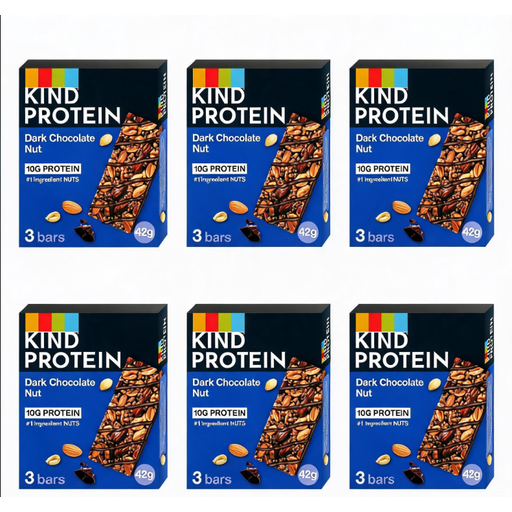 No image available
Consider this nut-bar pack if you want a portable snack around training. Compare protein, carbohydrate, fat and allergens on the current pack before choosing when to eat a bar.
 No image available
The three 50 g flapjacks offer a portioned option for a snack around training. Check the exact pack’s carbohydrate, protein, fat and allergen information, particularly if you plan to eat one before running.
 No image available
This cocoa-and-oat variant comes as three 50 g flapjacks for portable snacking around sessions. Read its own nutrition and allergen panels rather than assuming they match the Salted Caramel variant.
 No image available
For a protein-containing snack around training, this pack contains four 40 g bars. Nature Valley lists around 10 g protein and 4 g fibre per bar and labels this variant gluten free; check the current pack for its carbohydrate figure and peanut, soya, milk and other-nut warnings.
 No image available
This four-bar pack offers a portioned protein snack for around training. The Joybuy product listing gives 10.4 g protein per 40 g bar; Nature Valley labels the variant gluten free and lists around 4 g fibre. Check the current pack’s carbohydrate and allergen information, including its nut ingredients.
Do not choose one for a run solely because it is high in protein. University College London Hospitals NHS Foundation Trust says carbohydrate-only snacks can be sufficient during activity lasting 60 minutes to two hours. Check the carbohydrate per bar and try any planned during-run snack in training.
Check the carbohydrate, protein, fat and fibre in the whole bar, then consider how soon you will run and what you have previously found comfortable. If you have not eaten a meal, a carbohydrate-and-protein snack is one option before exercise, but trial the exact bar in training.
No single protein figure establishes that a bar covers your whole post-run snack or meal. The UK Sports Institute emphasises a varied, balanced approach to food; consider the bar’s carbohydrate alongside what else you will eat and drink after the session.
Read the current ingredient list, allergen declaration, gluten statement and any “may contain” warning for the exact flavour. GOV.UK explains that food labels provide information used to judge whether a food is safe to eat; gluten-free reviewed bars can still contain nuts, soya or milk.