Hosts serving wrapped snacks
Individual bars make portions easy to identify. Keep their wrappers available so guests can check the ingredients and allergen statements for themselves.


Choose by the nutrition information for one bar, rather than the word ‘protein’ on the front: the reviewed bars differ in weight as well as protein content. Nature Valley’s reviewed Peanut & Chocolate bar is presented as high in protein, while TREK’s reviewed Original Oat flapjack offers a vegan, gluten-free option; neither choice removes the need to check the exact pack’s ingredients and allergen statements before serving guests.
Individual bars make portions easy to identify. Keep their wrappers available so guests can check the ingredients and allergen statements for themselves.
Look at the grams of protein and the weight of one bar together. A product called a protein bar does not, by its name alone, establish that it meets the UK condition for a ‘high protein’ claim.
Check the exact flavour and pack. Myprotein describes the reviewed TREK Original Oat flapjack as vegan and gluten free; Tesco describes the reviewed Nature Valley Peanut & Chocolate bar as gluten free and vegetarian. Those descriptions should not be extended to every variant.
Start with the portion you intend to serve, then compare its nutrition information and whether its ingredients work for your guest list.
| Priority | What to check | Your needs |
|---|---|---|
| Protein per bar | Read protein grams alongside the stated bar weight. Legislation.gov.uk’s latest available UK annex to Regulation (EC) No 1924/2006 sets at least 20% of a food’s energy from protein as the condition for a ‘high protein’ claim; the word ‘protein’ in a name is not that claim. | I want to know what one wrapped portion provides, not just whether the pack has protein wording on it. |
| Full nutrition panel | Compare energy, sugars and saturated fat per bar, as well as protein. Check the bar weights before treating per-bar figures as like-for-like. | A bar’s protein figure is only part of my choice; I also want to see what the serving contains overall. |
| Ingredients and allergens | Check the current pack for ingredients and precautionary allergen statements. Keep each flavour identifiable if several bars are served. | Guests need to be able to tell which bar they are picking up and check it against their own requirements. |
| Dietary suitability | Look for vegan, vegetarian or gluten-free information on the exact variant. Check its allergen statement separately; a dietary description does not replace it. | If I need a vegan or gluten-free option, I want the chosen flavour’s label to confirm it. |
| Flavour and pack | Choose between nut-and-chocolate, caramel and oat-flapjack formats, then confirm the number and weight of bars in the pack. | I want flavours guests will recognise and enough individual portions for the gathering. |
The two are not interchangeable. The UK annex published by legislation.gov.uk requires at least 20% of a food’s energy to come from protein for a ‘high protein’ claim; protein grams alone do not establish that proportion.
If that claim matters to you, check the wording on the exact product, then compare protein and energy for one bar.
Bar sizes and the rest of the nutrition panel differ. In its November 2025 review of 458 snack bars from 10 major UK retailers, Action on Salt & Sugar classified 37% as high in sugars and 55% as high in saturated fat under UK front-of-pack thresholds; those are proportions of products reviewed, not of shoppers.
Compare energy, sugars and saturated fat on the labelled serving alongside protein, and note the serving weight.
The reviewed recipes include peanuts, other nuts, soya or milk, and some carry precautionary statements. Without a clear match to the original pack, a guest cannot readily check a bar’s information.
Leave bars in their wrappers, or keep each type clearly separated with its original packaging beside it.
A product page may not reflect what can be bought for the party: Tesco’s reviewed Kellogg’s listing stated that it was out of stock, while Alpen’s UK information identifies former bars that are no longer made.
Check the current product, pack size and availability before deciding how many portions to buy.
These brand references describe particular bars or ranges, not every product sold under each name.
Nature Valley UK lists Protein bars in several flavours, including Peanut & Chocolate and Salted Caramel Nut.
The reviewed High Protein Almond & Salted Caramel snack bar is a 35g nut-bar option.
The reviewed Original Oat Protein Flapjack offers an oat-based format alongside the nut bars.
Its Dark Chocolate & Peanut Protein Bar is a 40g nut-and-chocolate option.
Graze offers snack formats including oat flapjacks, but a specific cereal bar needs its own nutrition-panel check for this comparison.
Alpen is a familiar cereal brand, but its current UK site centres on muesli rather than establishing a current high-protein bar choice.
These Joybuy listings cover nut-based protein bars and oat flapjacks that could be served as individual party snacks. Compare each exact pack’s nutrition and allergen information before choosing for guests.
 No image available
A four-pack of 40g bars for individually portioned snacks. Tesco lists 10g protein per bar for this pack and describes it as gluten free and vegetarian. Check the current wrapper for peanuts, milk, soya and any precautionary allergen statement.
 No image available
A salted-caramel nut alternative in four 40g bars. Nature Valley UK includes this flavour in its Protein range; compare the exact pack’s per-bar nutrition and check its nut, milk and soya information before serving.
 No image available
Three 50g oat-flapjack portions offer a different format from a nut bar. If choosing for vegan or gluten-free guests, confirm those descriptions and the precautionary allergen statement on this Salted Caramel pack; figures for TREK Original Oat should not be applied to it.
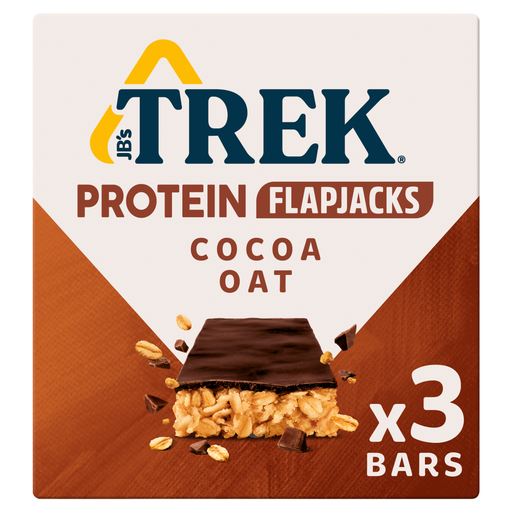 No image available
A cocoa-flavoured flapjack pack with three 50g bars. Read this variant’s own protein, energy and sugars per bar, and check its dietary and allergen wording if guests have specific requirements.
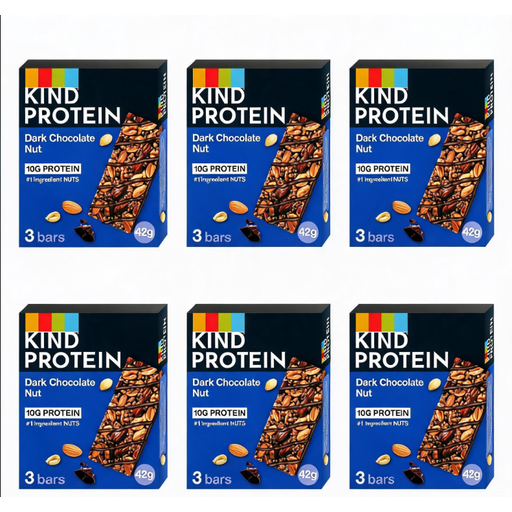 No image available
A dark-chocolate nut-bar option with 42g bars; confirm the pack configuration when ordering. Use this variant’s own nutrition panel to compare protein per bar, and check its ingredients and allergen statement before putting it out for guests.
Under the UK annex to Regulation (EC) No 1924/2006 published by legislation.gov.uk, at least 20% of the food’s energy must come from protein for a ‘high protein’ claim. A bar can contain protein without meeting that claim condition, so check the exact product wording and nutrition panel.
Start with protein per bar when planning individual party portions, then use per-100g figures if you want to compare bars of different weights on the same weight basis. The reviewed examples include 35g, 40g and 50g bars.
Do not assume a protein bar is suitable. The reviewed Nature Valley, Kellogg’s and Eat Natural products include peanuts or other nuts, while the reviewed TREK Original Oat listing warns of possible peanut and nut traces. Keep exact wrappers available and let guests check the current product information.
No conclusion about sugars or energy follows from the word ‘protein’. Compare the full nutrition panel on the exact bar: Myprotein lists 217kcal and 12.2g sugars for the reviewed 50g TREK Original Oat flapjack, while Eat Natural lists 220kcal and 10g sugars for its reviewed 40g Dark Chocolate & Peanut bar.
Keep each bar identifiable, preferably in its original wrapper, so guests can read the current ingredients and allergen statement. The Food Standards Agency says food businesses must provide allergen information for prepacked and non-prepacked food and drink; for a party purchase, the actual pack is the practical information to keep beside the snacks.