Hosts serving a mixed-age group
Choose portions that can stay in their wrappers so guests or their parents and carers can read the exact ingredients and allergen information. Check any child-use warning before putting a bar on a shared table.


For a birthday party, start with individually wrapped bars that identify the protein amount per bar, then check each exact pack against guests’ allergies and dietary needs. TREK says its High Protein Bars contain 15 g plant-based protein per bar, while Nature Valley describes around 10 g in its Protein Chocolate & Coffee bar; neither figure establishes that a bar suits every guest, particularly at a mixed-age party.
The right party selection depends as much on who will eat the bars as on the protein figure.
Choose portions that can stay in their wrappers so guests or their parents and carers can read the exact ingredients and allergen information. Check any child-use warning before putting a bar on a shared table.
Compare protein per bar, not just a protein-themed name. TREK describes 15 g per High Protein Bar, whereas Kellogg’s lists 1.4 g per Special K Red Berry bar; these are different products, not interchangeable protein options.
A plant-based label can help narrow the choice, but it is not an allergen screen. The listing for TREK Original Oat Protein Flapjack describes it as vegan and carries may-contain warnings for sesame, peanuts, other nuts and milk.
Set the protein requirement, screen the exact flavour for guest suitability, then decide whether its portion and ingredients fit the party.
| Priority | What to check | Your needs |
|---|---|---|
| Protein per bar | Read the protein amount for one bar and its serving size. For a high-protein claim, legislation.gov.uk lists a criterion of at least 20% of the food’s energy from protein; grams alone do not express that proportion. | I want each guest’s portion to match a genuinely protein-led snack plan, rather than choosing by the word “protein” on the front of the pack. |
| Allergens | Read the full ingredients and any may-contain statement for the exact flavour. Check peanut, other nuts, milk and soy where relevant, and retain the wrapper for guests to consult. | With several guests eating from one table, I need to know which bars each person can have before setting them out. |
| Dietary labels | Check vegan, vegetarian or gluten-free statements on the current product, then read its allergen declaration separately. A dietary label does not rule out other allergens or cross-contact warnings. | A plant-based or gluten-free option matters to some guests, but I cannot use that label as a blanket assurance for everyone. |
| Age and flavour fit | Check any child-use warning and the ingredients of the chosen flavour. Nature Valley’s Protein Chocolate & Coffee bar, for example, is a coffee-flavoured option. | If children are coming, I want bars whose pack guidance and flavour make sense for the people I am serving. |
| Individual portions | Compare the pack count and grams per bar with the number of guests. Keep different flavours in their original wrappers so their declarations remain identifiable. | I need enough clearly identifiable portions without treating a larger bar or multipack as a different protein amount per serving. |
Protein amounts differ substantially between products: Kellogg’s lists 1.4 g per Special K Red Berry bar, while TREK states 15 g per High Protein Bar. Those amounts describe different bars and do not, by themselves, establish the share of energy from protein.
Decide what you need per portion, then check the current nutrition declaration and any high-protein claim for the exact bar.
A bar can meet a dietary preference and still present an allergen issue. The listing for TREK Original Oat Protein Flapjack describes it as vegan and gluten-free but also carries may-contain warnings for several allergens.
Ask about guests’ allergies, check ingredients and may-contain statements, and keep the wrapper with each bar.
Nature Valley’s Protein Chocolate & Coffee bar is coffee-flavoured and its product information identifies peanut, soy and milk ingredients. That affects whether it belongs on a particular party table regardless of its protein content.
Screen ingredients and age suitability first, then choose flavours from the bars that fit your guests.
A brand name does not identify the ingredients, protein amount or warnings of every variant. A listing is also no substitute for the pack being served.
Check the exact flavour and pack before purchase and again before serving, especially if you have substituted a product.
These examples show why the exact bar matters; mentioning a brand does not mean all its products have the same protein or allergen profile.
TREK distinguishes its Protein Flapjacks from its High Protein Bars.
Its Protein Chocolate & Coffee cereal snack bar is a 40 g portion described by Nature Valley as providing around 10 g protein.
Dark Chocolate & Peanut is a peanut-led bar for a party where that ingredient is suitable for the guests.
A retailer listing describes a vegan Peanut Butter Protein Oat Bar.
Special K Protein branding should not be applied to every Special K cereal bar.
These options include Nature Valley cereal bars and Grenade protein bars. For a mixed-age birthday party, check each bar’s current ingredients and child-use guidance rather than choosing on protein positioning alone.
 No image available
The 4 × 40g format provides portions for a protein-focused snack table. This variant’s product information identifies peanuts, soy and milk, with a warning for other nuts; check those details against guests’ allergies before serving.
 No image available
This is another 4 × 40g portioned option, with a different flavour and allergen profile. Its product information identifies peanuts, almonds, soy and milk, so check this exact variant rather than applying the Peanut & Chocolate bar’s declaration.
 No image available
The 12 × 50g pack is a different format from the four-bar Nature Valley packs. The product guidance says this bar is not recommended for children; it also identifies milk and soy and contains bovine collagen, so do not use it as a vegetarian option or put it out for children.
 No image available
This 12 × 50g Golden Caramel pack calls for an age check before party use: its product information says it is not suitable for children. It also identifies milk and soy and contains bovine collagen, making it unsuitable for vegetarians.
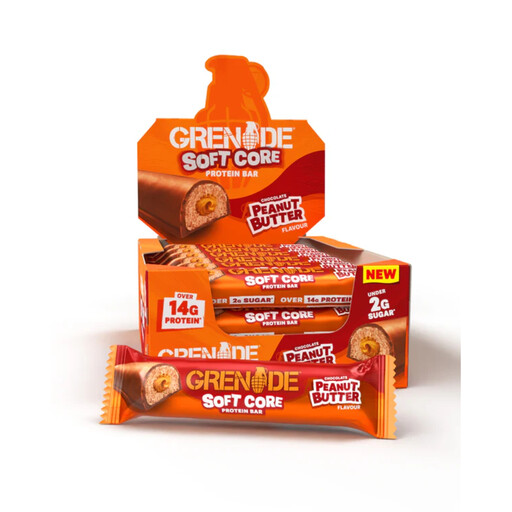 No image available
This Peanut Butter variant comes in a 12 × 50g pack. Its product information says it is not recommended for children and identifies peanuts, milk and soy; it also contains bovine collagen, so it is not a vegetarian party option.
The high-protein claim criterion listed by legislation.gov.uk is that at least 20% of the food’s energy comes from protein. Check the exact bar’s current nutrition declaration; a protein amount in grams is useful for comparing portions but does not, on its own, establish that energy proportion.
Check guests’ allergies and the declaration on every exact flavour first, and keep wrappers available. Nature Valley identifies peanut, soy and milk in its Protein Chocolate & Coffee bar and warns that it may contain tree nuts; a protein figure does not resolve those suitability questions.
No. The listing for TREK Original Oat Protein Flapjack describes it as vegan but carries may-contain warnings for sesame, peanuts, other nuts and milk. Read the complete current declaration against the needs of the particular guest.
Use the declaration on the pack you will serve, particularly if its flavour or format differs from the listing you first viewed. Kellogg’s advises checking pack ingredients and nutrition information for its Special K Red Berry bar.