Students filling a move-in snack cupboard
Individually portioned bars can be useful during unpacking or between lectures. If protein is the reason for choosing one, compare the nutrition for the whole bar rather than its front-of-pack name.


For a student move-in snack, compare protein with the energy in each bar rather than relying on the word ‘protein’ on the wrapper. Tesco Groceries lists 10.4g protein and 198 kcal per 40g Eat Natural Peanuts, Almonds & Salted Caramel bar: protein provides about 21% of its energy, above the 20% high-protein criterion stated in the annex to Regulation (EC) No 1924/2006 on legislation.gov.uk. Check the current pack for allergens, sugars and portion size before stocking a shared cupboard.
Individually portioned bars can be useful during unpacking or between lectures. If protein is the reason for choosing one, compare the nutrition for the whole bar rather than its front-of-pack name.
Check the exact variant for its dietary declaration and protein quantity. A vegan flapjack, a gluten-free nut bar and a bar labelled ‘high protein’ answer different questions.
Read the current ingredients and precautionary-allergen statement before bringing a multipack into a shared kitchen. A familiar flavour or brand name cannot replace that check.
Start with the nutrition for one bar, then check dietary declarations and allergens on the exact pack you intend to keep or carry.
| Priority | What to check | Your needs |
|---|---|---|
| Protein and energy | Compare protein grams and kcal for the same bar-sized serving. The annex to Regulation (EC) No 1924/2006 on legislation.gov.uk specifies at least 20% of energy from protein for a high-protein claim; a ‘protein’ product name alone does not establish this. | I want a bar whose protein amount makes sense alongside its total energy, not just a prominent number on the wrapper. |
| Dietary fit and allergens | Check the protein source, any vegan or gluten-free declaration, and the full allergen statement for the exact variant. Do not treat vegan status as an allergen-free declaration. | If I am sharing a kitchen or choosing for a particular dietary requirement, I need the current pack to fit that requirement. |
| Sugars, fibre and portion | Read sugars and energy per bar, and fibre where the label gives it. Compare serving sizes as well as per-100g figures when bars differ in weight. | A bar with protein still needs to suit the kind of snack I plan to keep in my cupboard or bag. |
| Pack size | Check how many bars the pack contains and the weight of each. Read the current label before buying several packs of a flavour or recipe you have not tried. | For move-in week, I may want a few individually portioned snacks without committing to a large supply first. |
A protein amount on the front of a wrapper does not, by itself, show what share of the bar’s energy comes from protein.
Use protein grams and total kcal for the same serving. For the high-protein criterion stated in the annex to Regulation (EC) No 1924/2006 on legislation.gov.uk, multiply protein grams by 4 kcal and divide by total kcal; the result must be at least 20%.
Snack bars with a protein focus can differ in sugars. Action on Salt & Sugar’s November 2025 review of 458 snack bars from 10 major retailers reported that 37% were high in sugars.
Compare sugars, protein and energy for the portion you would eat rather than choosing from one nutrient claim.
Dietary descriptions do not replace an ingredients check. Nature Valley UK identifies peanut, soy and milk in its Peanut & Chocolate protein bar and warns that it may contain tree nuts.
Read the exact bar’s current allergen panel before buying it for yourself or putting it in a shared snack cupboard.
Nut bars and oat flapjacks differ in ingredients and texture, while recipes and pack information can change.
Check a current pack’s flavour, ingredients and dietary declarations before stocking several packs.
A multipack may leave you with unused bars if its flavour, texture or ingredients do not suit you.
Compare the named products and ranges, rather than assuming every bar from a brand has the same nutrition or dietary status.
Nature Valley UK describes its Protein Peanut & Chocolate bar as providing around 10g protein per 40g bar.
The Peanuts, Almonds & Salted Caramel Protein Packed bar is a fruit-and-nut option with nutrition listed by Tesco Groceries.
TREK has distinct Protein Flapjack and High Protein Bar ranges for shoppers comparing plant-based bars.
Graze Cocoa Vanilla Oat Boost is an oat-flapjack option to consider when comparing sugars as well as protein.
Alpen Protein Bar Berries & Yogurt appears in a Tesco Groceries product listing.
These Nature Valley Protein multipacks offer two flavours and different pack sizes for a student move-in snack cupboard. Check the nutrition and allergen information on the exact pack when deciding between them.
 No image available
A four-bar pack to consider if you want smaller move-in cupboard stock. Check this Salted Caramel Nut variant’s current protein, energy and allergen declarations before choosing it for a particular dietary need.
 No image available
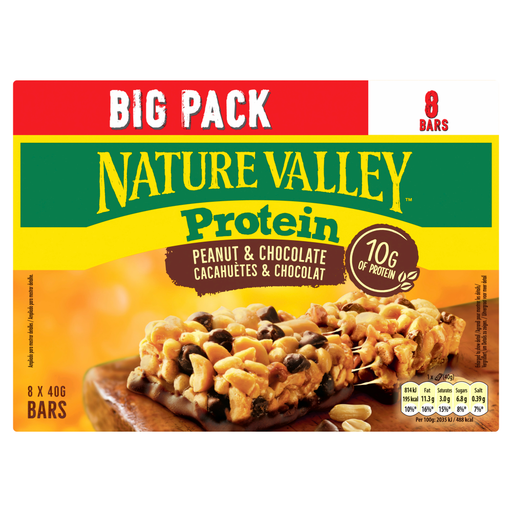
An eight-bar pack of the Peanut & Chocolate flavour for keeping individually portioned snacks on hand. Nature Valley UK describes this flavour as providing around 10g protein per 40g bar and lists peanut, soy and milk ingredients, with a tree-nut precaution; use the current pack for the final nutrition and allergen check.
No: the name alone does not establish the protein-to-energy ratio. The annex to Regulation (EC) No 1924/2006 on legislation.gov.uk gives a high-protein criterion of at least 20% of the food’s energy from protein, so check protein grams and kcal for the same serving on the current label.
A bar can serve as a convenient snack, but do not treat its protein claim as a substitute for planning varied meals. NHS guidance describes eating across food groups, including starchy foods, fruit and vegetables, dairy or alternatives, and protein foods.
Read the current ingredients and precautionary-allergen statement for each variant. Nature Valley UK lists peanut, soy and milk in its Protein Peanut & Chocolate bar and warns that it may contain tree nuts; another flavour or brand needs its own check.
Use the pack in hand for the final nutrition, ingredients, allergen and best-before checks. Product information can change, so compare the label on the bars you have bought rather than relying solely on an earlier listing.