Hosts planning a protein-led snack table
If the protein amount per guest matters, compare individual bags rather than assuming any crisp made from pulses will meet the brief. Sealed packs also make it easier to check what each guest is served.


Choose purpose-made protein crisps if the birthday-party snack table needs a substantial declared amount of protein in each guest’s bag: Applied Nutrition lists 15g per 50g bag, while EatProtein lists 11g per 25g bag. The checked lentil and potato crisps provide smaller amounts per stated serving or pack, but can offer different flavours and formats. For guests with dietary restrictions, check each flavour’s ingredients and allergen statement rather than relying on its crisp type.
If the protein amount per guest matters, compare individual bags rather than assuming any crisp made from pulses will meet the brief. Sealed packs also make it easier to check what each guest is served.
Check every flavour separately before setting out vegan, vegetarian, gluten-free or allergen-aware choices. EatProtein says its checked crisps use soy protein concentrate; Tyrrells says its Sour Cream & Onion Lentil Crisps contain milk and may contain soya and gluten.
Potato crisps may suit a spread where familiar flavours matter more than protein. The checked Walkers and Seabrook individual packs declare 1.6g and 1.9g protein respectively, so compare them on the needs they are intended to meet rather than treating them as protein-led snacks.
Decide how much protein the crisps need to contribute per guest, then check the portion format and each flavour’s suitability for the people attending.
| Priority | What to check | Your needs |
|---|---|---|
| Protein per portion | Compare protein for the bag or serving you intend to offer, alongside its weight. Applied Nutrition declares 15g per 50g bag; EatProtein lists 11g per 25g bag. Tyrrells lists 3.9g per 30g serving of its checked Lentil Crisps. | I want to know how much protein each guest’s actual portion contributes, not just the figure per 100g. |
| Protein claims | Look for a claim on the exact product and flavour rather than assuming a lentil or chickpea base makes it high in protein. Legislation.gov.uk lists a threshold of at least 20% of a food’s energy from protein for a “high protein” claim. | A protein-led party theme matters to me, so I need to distinguish a stated high-protein product from crisps that simply contain some protein. |
| Ingredients and allergens | Read the full ingredients and allergen statement for every flavour. Check vegan, vegetarian or gluten-free wording on the particular pack; a shared base ingredient does not establish suitability. | Some guests need separate choices, and I do not want to assume that all flavours in a range have the same ingredients. |
| Serving format | Check whether the label describes an individual bag, a stated serving or a larger sharing pack. Plan the number of portions using the amount you expect to serve. | Individual bags would make portions straightforward; if I use sharing packs, I need to work out the portions myself. |
| Salt and other label details | Compare salt on a consistent basis, such as per pack or per 100g. Walkers lists 0.17g salt per 25g Lightly Salted pack. Do not use protein alone to determine a product’s broader nutrient profile or HFSS classification. | I may want a lower-salt choice alongside other flavours, without assuming that a protein claim answers every nutrition question. |
The amount served matters: Applied Nutrition declares 15g protein per 50g bag, while Walkers Lightly Salted declares 1.6g per 25g pack. A pulse-based name alone does not establish a high-protein claim.
Compare the protein stated for the portion guests will receive. If protein is central to the snack table, use that figure to choose the main crisp option and treat other types as flavour alternatives.
Ingredients can differ even within a crisp type. Tyrrells says its Sour Cream & Onion Lentil Crisps contain milk and may contain soya and gluten; EatProtein says its checked protein crisps use soy protein concentrate.
Ask guests about allergies, read each flavour’s packet and keep the original packaging available when serving.
Department of Health & Social Care guidance describes England’s HFSS promotion and placement restrictions as applying to affected retailers, including online retail. The Department for Education’s school-food guidance addresses food provided in state-funded schools in England. Neither scope should be turned into a UK-wide rule for every birthday party.
For a private party, use the products’ labels and guests’ requirements to make the selection. If food is being supplied by a school or another institution, check the rules for that nation and setting.
These named ranges illustrate different crisp types; the figures and dietary statements apply to the specified products, not every flavour a brand makes.
Its Protein Chips are a purpose-made option for comparing protein in an individual party bag.
Its protein-crisp range offers another individual-bag format for a protein-led selection.
Its checked Lentil Crisps offer a pulse-based alternative when protein is not the sole reason for choosing crisps.
Lightly Salted is a potato-crisp reference for hosts comparing salt as well as party portions.
The checked Sea Salted potato crisps are a conventional flavour with stated dietary suitability.
These lentil and hummus chips offer pulse-based choices for the birthday-party spread. If protein per guest is the deciding factor, compare the nutrition label for the portion you will serve rather than treating either sharing pack as an individual high-protein bag.
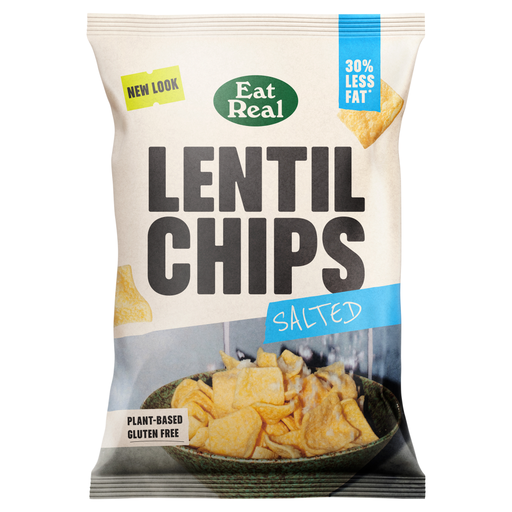 No image available
A lentil-chip choice for guests who want a pulse-based crisp. This is a 95g pack; check its nutrition and allergen label against the portions you plan to serve.
 No image available
A hummus-chip option for adding another flavour to the party spread. The pack is 110g; check its stated serving size, protein and allergen information before dividing it into portions.
Start with protein per bag or the portion you will serve. Applied Nutrition declares 15g per 50g bag and EatProtein lists 11g per 25g bag, while Tyrrells lists 3.9g per 30g serving of its checked Lentil Crisps. Legislation.gov.uk lists a separate threshold for a “high protein” claim: at least 20% of the food’s energy must come from protein.
The Department of Health & Social Care’s England guidance addresses promotion and placement of certain foods by affected retailers, not what a private host may put on a party table. If the food is being provided in a school, check the applicable requirements separately: the Department for Education’s school-food guidance concerns state-funded schools in England and should not be assumed to apply across the UK.
Read the ingredients and allergen statement on each flavour and keep the packets available beside the food. Do not assume that a pulse-based crisp is suitable for every guest: Tyrrells says its Sour Cream & Onion Lentil Crisps contain milk and may contain soya and gluten, while EatProtein says its checked range uses soy protein concentrate.
Choose whether guests will receive individual bags or portions from sharing packs, then plan around the portions you intend to serve. For protein comparisons, use the label’s figure for that bag or serving; a per-100g figure is not the amount each guest receives unless their portion is 100g.