Who this choice is for
The useful distinction is whether you want a savoury crisp snack or a snack that contributes substantial protein.
Crisp buyers following a high-protein diet
Keep crisps as a savoury snack if you enjoy them, but check protein in the portion you will eat rather than treating a per-100g figure as the amount in a bag. If protein is the purpose of the snack, consider a protein food instead.
Shoppers comparing salt
Compare salt per 100g across flavours, then check the amount in your portion. A larger bag can change how much salt you eat even when its per-100g figure looks similar to another product’s.
Shoppers comparing energy and fat
Check energy and fat for the portion alongside protein. Walkers lists 96kcal, 2.8g fat and 1.3g protein for a 22g pack of Oven Baked Sea Salt, illustrating why a baked option should still be assessed for protein separately.
What to check on the pack
Compare per-100g figures across products first, then use the pack information to assess the amount you expect to eat.
| Priority |
What to check |
Your needs |
| Protein contribution |
Compare protein per 100g, then per bag or planned portion. Tyrrells lists 6.9g per 100g and 2.8g per 40g pack for Lightly Sea Salted. |
If I want the snack to contribute substantial protein, crisps will not take the place of a protein food. |
| Salt |
Read salt per 100g and per portion. NHS inform classifies more than 1.5g salt per 100g as high and 0.3g or less as low. |
I want to see how much salt is in the amount I will eat, particularly if I choose a larger bag or eat crisps often. |
| Energy and fat |
Compare energy and fat for similar amounts, not just differently sized packs. Check protein separately: a lower-fat format need not provide more of it. |
A smaller portion or a baked snack may suit my preference, but I still want to know what that portion contributes. |
| Ingredients and allergens |
Read the ingredients, allergen declaration and suitability statement on the exact flavour and pack. Do not transfer a claim from another flavour. |
If I need a vegan or gluten-free product, or must avoid an allergen, the precise variant matters more than the brand name. |
Brand and product-line references
These examples refer to named products, not every flavour or pack sold under each brand.
Walkers
Lightly Salted and Oven Baked Sea Salt offer two different comparisons: a conventional crisp and a baked potato snack.
- Walkers lists 6.4g protein and 0.67g salt per 100g for Lightly Salted.
- Its Oven Baked Sea Salt lists 5.9g protein per 100g; the baked format does not make it a higher-protein choice than Lightly Salted.
Tyrrells
Lightly Sea Salted is a conventional potato crisp worth comparing when both protein and salt figures matter.
- Tyrrells lists 6.9g protein and 0.65g salt per 100g for Lightly Sea Salted.
- It also lists 519kcal per 100g; compare the portion you intend to eat rather than judging it by protein alone.
KETTLE Chips
Flavour and dietary suitability vary by product; Sea Salt & Balsamic Vinegar is one documented example.
- KETTLE Chips states that Sea Salt & Balsamic Vinegar is vegan and gluten-free.
- That product lists 4.3g protein and 1.6g salt per 100g. Its suitability statements do not describe its protein contribution.
Seabrook
Sea Salted is a stated 31.8g bag option with product-specific vegan and gluten-free suitability statements.
- Seabrook lists 1.9g protein and 0.4g salt per 31.8g bag.
- Its per-100g figures are 5.9g protein and 1.3g salt; check which measure matches your comparison.
Pipers
Anglesey Sea Salt provides a named option for shoppers checking a simple salt flavour and product-specific dietary suitability.
- Pipers states that Anglesey Sea Salt is suitable for vegetarians and vegans and is gluten-free.
- It lists 5.1g protein and 0.94g salt per 100g; use those figures rather than assuming the flavour name predicts its nutrition.
REAL Hand Cooked Crisps
Sea Salt & Black Pepper is a named hand-cooked flavour with manufacturer nutrition figures.
- REAL lists 6.8g protein per 100g for Sea Salt & Black Pepper.
- The same product lists 1.12g salt per 100g. Check the exact pack for ingredients and allergens even though REAL describes its range as vegetarian and gluten-free.
Potato crisps on Joybuy
These potato-crisp options cover lightly salted, sea salt, Salt & Shake and cheese-and-onion packs. Compare each pack’s current nutrition and allergen information with the portion you plan to eat; none should be assumed to supply substantial protein from its flavour or format alone.
 No image available
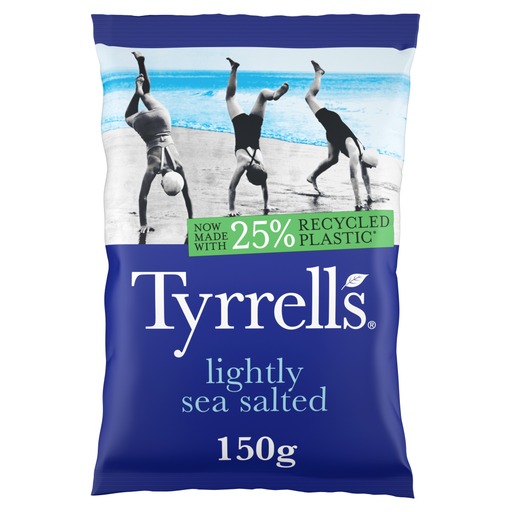
Tyrrells Hand-Cooked English Crisps Lightly Sea Salted 150g
A 150g lightly sea-salted pack for a crisp snack alongside a high-protein eating pattern. Check the nutrition and allergen information on this exact pack, and calculate figures for the amount you expect to eat rather than applying Tyrrells’ stated 40g serving unchanged.
View on Joybuy
 No image available
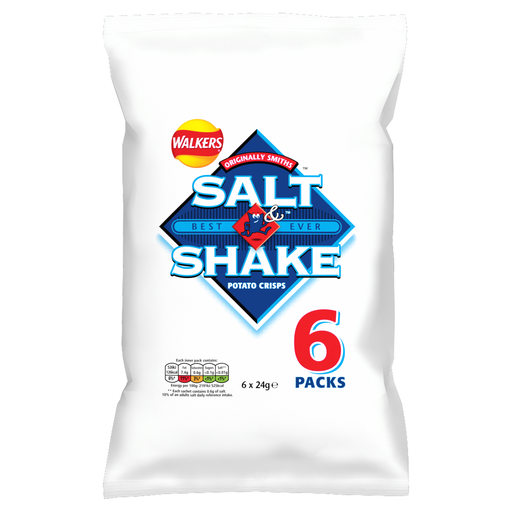
Walkers Salt & Shake Crisps 6 x 24g
The 6 x 24g format gives a bag size to use when assessing a portion. If seasoning is supplied separately, account for the amount you add when checking the salt in the crisps you eat.
View on Joybuy
 No image available
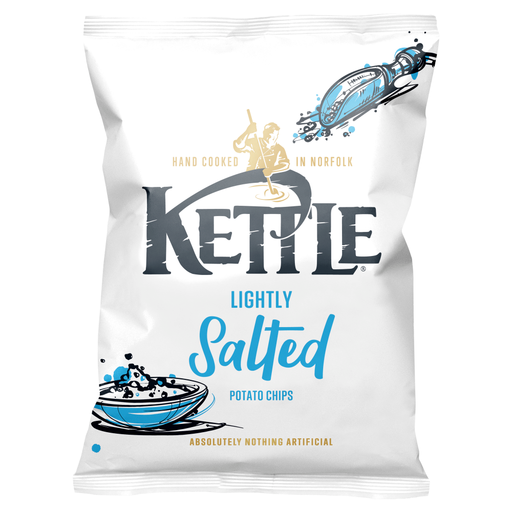
Kettle Chips Lightly Salted 130g
For this 130g lightly salted pack, compare protein and salt per 100g, then consider how much of the bag you will eat. The flavour description alone does not establish a low-salt classification.
View on Joybuy
 No image available
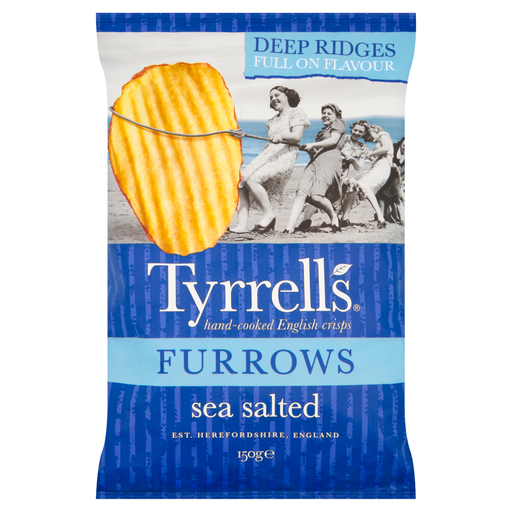
Tyrrells Furrows Sea Salt Crisps 150g
A 150g sea salt variant for shoppers who want to compare another Tyrrells crisp. Check this variant’s own protein, salt and allergen information rather than transferring figures from Tyrrells Lightly Sea Salted.
View on Joybuy
 No image available
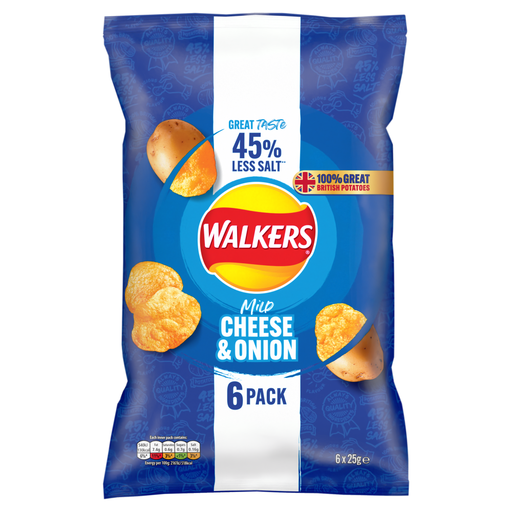
Walkers 45% Less Salt Mild Cheese & Onion 6 x 25g
This flavoured multipack contains six 25g bags. Check the salt and protein figures for this exact flavour and the allergen declaration; a comparative salt claim does not tell you the amount in a bag on its own.
View on Joybuy
Questions about crisps and protein
Are potato crisps a substantial source of protein for a snack?
The stated packs examined here provide 1.3g to 2.8g protein each, so choose a protein food if protein is the snack’s main purpose. Cambridge University Hospitals NHS Foundation Trust identifies meat, fish, eggs, dairy, pulses, tofu and Quorn as protein-rich food options; crisps can instead be a savoury accompaniment.
Which nutrition figures should I compare first?
Compare protein, salt, energy and fat per 100g to assess different crisps on the same weight basis. Then check the amount in the portion you will eat: the NHS explains that labels provide per-100g information and may also give per-portion figures.
What does a high-salt figure mean on a UK food label?
NHS inform classifies more than 1.5g salt per 100g of food as high and 0.3g or less as low. It gives a maximum of 6g salt a day for adults and children aged 11 and over; the salt in your actual portion matters as well as the per-100g comparison.
Does lightly salted mean low salt?
Not necessarily. Tyrrells lists 0.65g salt per 100g for Lightly Sea Salted and Walkers lists 0.67g per 100g for Lightly Salted; both exceed NHS inform’s low-salt threshold of 0.3g or less per 100g. Read the number on the exact pack rather than relying on the description.
Do vegan or gluten-free crisps provide more protein?
Those suitability statements do not establish protein content. KETTLE Chips lists 4.3g protein per 100g for its vegan, gluten-free Sea Salt & Balsamic Vinegar product, while Seabrook lists 5.9g per 100g for its vegan, gluten-free Sea Salted product. Compare nutrition and check suitability for the exact flavour.


