Who these choices suit
The useful pack size depends on whether the nuts are going into a bag or a kitchen cupboard.
Students carrying a snack
A single pack gives you a defined amount for travel or study. M&S declares 10g protein in its 30g Protein Packed Nut and Seed Mix; the KP Original Salted Peanuts listing declares 15g in a 50g pack. Check the pack size alongside the protein figure.
Students stocking a cupboard
A larger peanut pack can be portioned at home rather than carried whole. Before choosing one, consider where you will keep it after opening and whether you will use it within the label’s storage guidance.
Students checking salt or allergens
Protein figures alone cannot settle this choice. Marks & Spencer lists 0.03g salt per 100g for its Roasted Peanuts, while the KP Original Salted Peanuts listing gives 1.2g per 100g. Allergen declarations also differ between mixes, plain peanuts and seasoned products, so use the exact pack label.
What to check before choosing
Start with the amount you expect to eat, then compare labels on the same basis. Pack size, salt and ingredients may change which option works for moving in.
| Priority | What to check | Your needs |
|---|
| Protein per portion |
Compare protein per 100g, then protein in the pack or portion you would eat. M&S declares 34.4g per 100g and 10g per 30g pack for its nut-and-seed mix; the KP Original Salted Peanuts listing declares 30g per 100g and 15g per 50g pack. |
If I am taking one pack to a lecture, its per-pack figure matters as much as its per-100g figure. |
| Pack and storage |
Check whether the product is a single snack pack or a larger pack you must portion. Follow its post-opening instructions: Sainsbury’s says to store its 550g Salted Peanuts airtight and consume them within seven days of opening. |
A cupboard pack suits me if I have a container for it and expect to use it within the stated storage period. |
| Salt and energy |
Read salt per 100g and for the amount you plan to eat. Marks & Spencer declares 0.03g salt per 100g for its Roasted Peanuts; the KP Original Salted Peanuts listing declares 0.60g salt and 308kcal in its 50g pack. |
I want to compare the snack I would actually eat, not choose on protein alone. |
| Ingredients and allergens |
Check the exact product’s ingredients, allergen declaration and precautionary statements. A nut-and-seed mix, plain peanuts and seasoned peanuts need not have the same ingredients. |
In a shared kitchen, I need to know which pack is suitable for the people who might eat it; a familiar brand name is not enough. |
Brand and retailer references
These examples refer to particular product lines, not to every nut snack sold under each name.
M&S
Marks & Spencer lists both a 30g Protein Packed Nut and Seed Mix and a separate 300g Roasted Peanuts pack.
- Its mix declares 34.4g protein per 100g and 10g per pack; its Roasted Peanuts declare 26.7g protein and 0.03g salt per 100g.
- The mix is not plain peanuts and carries additional allergen suitability warnings. Check its ingredients and the separate roasted-peanut label before choosing.
KP
The KP Original Salted Peanuts 50g listing is a small-pack example for students who want a defined snack to carry.
- The listing declares 15g protein in the 50g pack.
- It also declares 0.60g salt per pack and says the product may contain other nuts, milk, soya and gluten. KP products in other flavours or sizes need their own label checks.
ASDA
ASDA Salted Peanuts 500g is an example of a larger cupboard pack for self-portioning.
- ASDA declares 28g protein per 100g and lists peanuts, rapeseed oil and salt as ingredients.
- The same product declares 0.80g salt per 100g, contains peanuts and may contain nuts.
Sainsbury’s
Sainsbury’s Salted Peanuts 550g is another larger-pack option rather than a ready-portioned snack.
- The product declares 25.9g protein per 100g and lists peanuts, rapeseed oil and salt.
- It declares 0.73g salt per 100g and advises airtight storage and consumption within seven days after opening. Check its allergy warning on the current pack.
Tesco
Tesco Dry Roasted Peanuts 550g provides a seasoned, larger-pack alternative to plain salted peanuts.
- Tesco declares 25.7g protein per 100g for this product.
- Its seasoning adds ingredients to check; the product declares 0.99g salt per 100g and may contain other nuts.
Joybuy product options
These options include peanut packs for a student cupboard, a multipack with smaller bags and a seed-and-berry mix for adding to food. The seed mix is not a nut snack; compare each product’s pack and label with the way you plan to use it.
 No image available
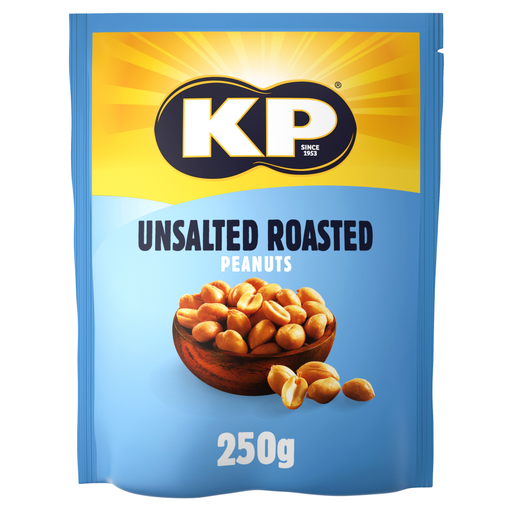
KP Snacks Unsalted Roasted Peanuts 250g
A 250g peanut pack to portion from a cupboard rather than carry as one snack. Check the current nutrition and allergen label, and follow its instructions after opening.
View on Joybuy
 No image available
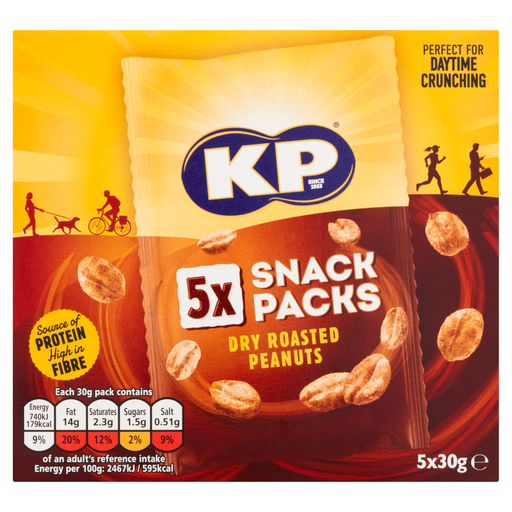
KP Snacks Dry Roasted Peanuts 5 × 30g
Five 30g bags provide separate portions for carrying. Check the nutrition and allergen information for this exact multipack rather than applying figures from a different KP pack size.
View on Joybuy
 No image available
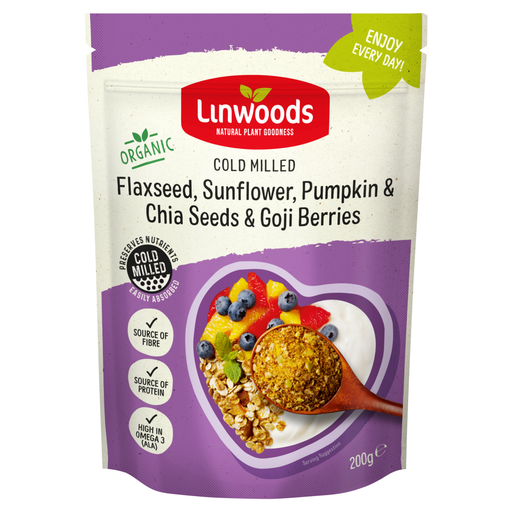
Linwoods Flaxseed, Sunflower, Pumpkin & Chia Seeds & Goji Berries 200g
This is a seed-and-berry mix, not a pack of nuts. Consider it if you want an ingredient to add to food; check its label for nutrition, allergens and storage instructions.
View on Joybuy
 No image available
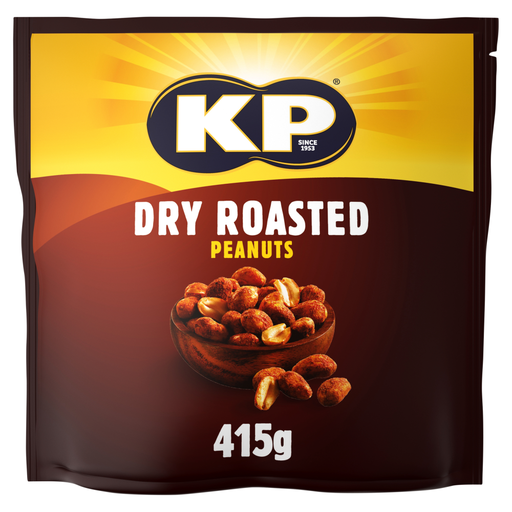
KP Snacks Dry Roasted Peanuts 415g
A larger seasoned peanut pack to portion yourself. Joybuy’s listing declares 27.7g protein and 1.3g salt per 100g, and identifies peanuts and wheat as allergens; check the current pack before sharing it.
View on Joybuy
 No image available
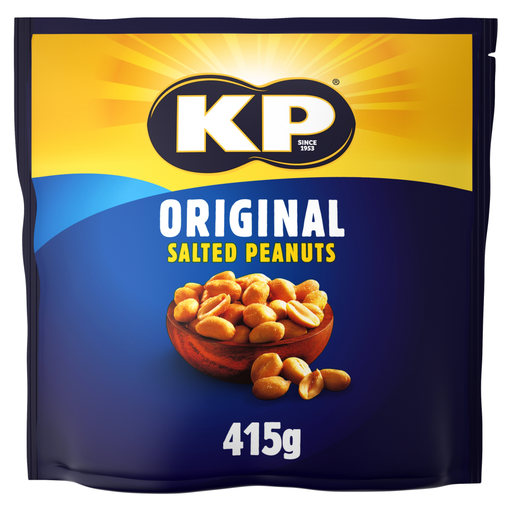
KP Snacks Original Salted Peanuts 415g
A larger salted-peanut pack for self-portioning. Check protein and salt on this 415g product’s own label: figures for the separately listed 50g KP pack should not be assumed to apply to it.
View on Joybuy
Frequently asked questions
Does “high protein” tell me how much protein I’ll get from a pack?
No. The protein grams for the amount you eat are a separate figure to check. M&S declares 10g in its 30g Protein Packed Nut and Seed Mix, while the KP Original Salted Peanuts listing declares 15g in its 50g pack; compare salt, energy, ingredients and allergens as well.
Should I buy a large peanut pack or individual snack packs for moving in?
Choose an individual pack if you want a defined amount to carry; choose a larger pack if you can portion and store it as directed. For example, Sainsbury’s tells buyers of its 550g Salted Peanuts to store them airtight and consume them within seven days after opening.
Are peanuts and tree nuts the same allergen?
No. The Food Standards Agency identifies peanuts as legumes, distinct from tree nuts. That distinction does not establish whether a particular snack is suitable for someone with an allergy: check the exact pack’s ingredients, allergen declaration and precautionary statements.
How can I compare salt in protein-containing nut snacks?
Compare salt per 100g first, then consider how much you would eat. Marks & Spencer declares 0.03g per 100g for its Roasted Peanuts, while the KP Original Salted Peanuts listing declares 1.2g per 100g. The products also differ in pack size and ingredients.
Is an online listing enough to decide whether a nut snack is suitable for an allergy?
No. Read the current physical pack before eating or sharing it, including ingredients and precautionary statements. Peanut, nut-and-seed and seasoned products can have different declared allergens, even when their protein figures look similar.


