People stocking a shared tin
Individually wrapped bars let colleagues see the ingredients and allergen information for the exact product they pick. A mix of formats can also be more useful than several flavours of one nut-based bar.


For a shared office biscuit tin, compare protein per bar with sugars, fibre and the allergens in each flavour; keep the wrappers on so colleagues can assess the bars for themselves. Nature Valley’s 40g Protein bars list about 10g protein each, while its Coconut & Almond Protein + Fibre bar lists 7g protein and 5.9g fibre per 36g bar. TREK protein flapjacks offer an oat-based format, but their nutrition and ingredients need checking by flavour.
A shared tin needs clear choices for the people using it, rather than one bar chosen solely for its protein claim.
Individually wrapped bars let colleagues see the ingredients and allergen information for the exact product they pick. A mix of formats can also be more useful than several flavours of one nut-based bar.
Protein per bar is a starting point. The serving size, fibre, sugars and energy on the same nutrition panel help distinguish bars that look similar on the front of the pack.
Nut-based protein bars can also contain milk or soya, and recipes within a range can differ. Keeping each wrapper intact makes it easier to check the particular flavour before choosing it.
Start with the amount in one bar, then read the rest of that bar’s label before deciding which formats belong in the tin.
| Priority | What to check | Your needs |
|---|---|---|
| Protein per bar | Compare labelled protein and serving size together. Nature Valley UK lists 10.4g per 40g Salted Caramel Nut bar and 10.2g per 40g Peanut & Chocolate bar; its Coconut & Almond Protein + Fibre bar lists 7g per 36g bar. | When I take one bar from the tin, I want to know how much protein that actual portion provides, not just the amount per 100g. |
| Fibre and sugars | Read both lines per bar. Nature Valley UK lists 4.4g fibre and 6.9g sugars for Peanut & Chocolate, compared with 5.9g fibre and 4.8g sugars for Coconut & Almond Protein + Fibre; the bars also differ in size and protein content. | If fibre or sugars matter to my choice, I want to compare them alongside protein rather than assume a protein-labelled bar meets those preferences. |
| Allergens | Check the exact flavour’s ingredients, allergen declaration and precautionary wording. Joybuy’s Nature Valley Salted Caramel Nut listing names peanuts, almonds, milk and soya; its Peanut & Chocolate listing names peanuts, soya and milk and says it may contain nuts. | I need to be able to identify ingredients in the bar I choose. In a communal tin, keeping its individual wrapper matters more than a general label on the container. |
| Dietary claims | Look for a statement on the exact pack rather than applying a claim to the whole range. The Nature Valley Protein + Fibre Coconut & Almond recipe includes wheat and barley; TREK flapjack ingredients may vary by flavour, according to Tropicana Wholesale. | If I need a gluten-free or vegan option, I want to check that particular recipe before taking a bar from a mixed tin. |
| Bar format | Check the labelled portion and pack count: the examples here include 36g Protein + Fibre bars, 40g Nature Valley Protein bars and 50g TREK Protein Flapjacks. Compare nutrition per whole bar as well as per 100g. | A smaller nut bar or a larger oat-based flapjack may suit different snack preferences; I want the portion on the label to match what is actually stocked. |
The protein figure does not describe the bar’s full nutrition panel. Bars with different serving sizes can also look alike when only their per-100g figures are compared.
For each shortlisted flavour, read protein, fibre, sugars, saturated fat, salt and energy per bar before comparing options.
Colleagues lose immediate access to the ingredients and allergen declaration for the bar they are about to take. The Nature Valley Protein examples include peanuts alongside other declared allergens.
Leave individual wrappers on. If the office needs an alternative to nut-based bars, identify and label that product separately after checking its own allergen information.
Recipes differ even within a brand: Nature Valley’s Coconut & Almond Protein + Fibre bar contains wheat and barley, and Tropicana Wholesale notes that TREK Protein Flapjack ingredients may vary by flavour.
Check the precise product name and wrapper when stocking a mixed case, especially where someone relies on a gluten-free or vegan claim.
These brand references describe particular ranges or stated product information; they do not establish that every bar from a brand meets the same protein or dietary requirements.
Nature Valley UK publishes per-bar nutrition for its Protein and Protein + Fibre ranges, making it possible to compare specific flavours and portion sizes.
TREK’s range includes protein flapjacks as an oat-based alternative to the nut-bar format.
Graze offers a broader snack range for a tin intended to hold more than protein-focused bars.
These Joybuy options cover Nature Valley nut-based Protein bars and Grenade Soft Core bars for a protein-focused office tin. Check each flavour’s wrapper before sharing it, particularly when colleagues have allergen or dietary requirements.
 Image unavailable
Consider this nut-based format when protein per individual bar is the main comparison. Nature Valley UK lists 10.4g protein per 40g bar. Joybuy’s product information declares peanuts, almonds, milk and soya; keep the wrapper available in a shared tin.
 Image unavailable
This is another 40g nut-bar option when comparing protein per serving. Nature Valley UK lists 10.2g protein, 4.4g fibre and 6.9g sugars per bar. Joybuy’s allergen information names peanuts, soya and milk, and says the product may contain nuts.
 Image unavailable
The 50g bar format gives the office a different portion size from the 40g Nature Valley options. Milk and soya are flagged in the product information; check the wrapper’s full allergen and nutrition panels before adding it to a shared tin.
 Image unavailable
This 50g flavour is an option for a tin with more than one bar format. Milk and soya are flagged in the product information. Read this flavour’s own nutrition and allergen panels rather than applying details from another Soft Core bar.
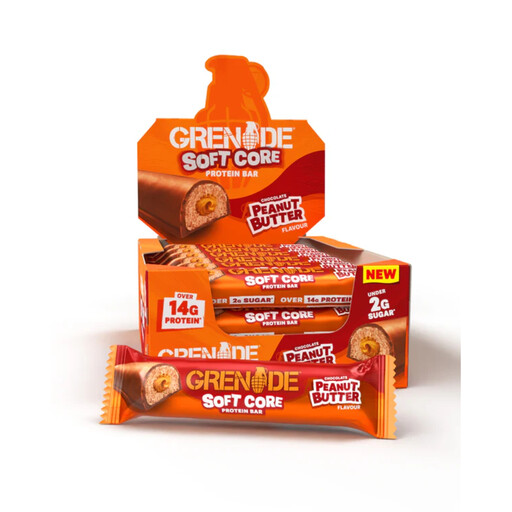 Image unavailable
Choose whether this 50g peanut-flavour bar belongs in the tin only after considering the people sharing it. Peanut, milk and soya are flagged in the product information; retain the wrapper so colleagues can check the complete declaration.
No. Read the nutrition panel for the actual bar, including sugars, fibre, saturated fat, salt and energy, as well as protein. Portion size matters when comparing a 36g bar with a 40g or 50g option.
Yes, keep them unopened in their individual wrappers. That leaves the product name, ingredients, allergen information and best-before date available to the colleague choosing each bar.
No. Suitability depends on the precise recipe: Nature Valley’s Coconut & Almond Protein + Fibre bar contains wheat and barley, and TREK Protein Flapjack ingredients may vary by flavour. Check the claim and ingredients on each exact pack, particularly for a mixed tin.