Protein-focused snack shoppers
If protein is the reason for choosing popcorn, compare grams per portion as well as per 100 g. A protein-led name does not establish that the food meets the UK threshold for a high-protein claim.


For a TV-night snack, do not assume that popcorn with “protein” in its name qualifies as high in protein. Myprotein Protein Popcorn lists 3.8 g protein per stated serving, but its declared figures put protein at about 16.7% of energy—below the 20% threshold for a UK high-protein claim set out on legislation.gov.uk. If flavour, a savoury option or a sharing format matters more, compare ordinary popcorn by the portion you intend to eat and check the current pack for allergens.
If protein is the reason for choosing popcorn, compare grams per portion as well as per 100 g. A protein-led name does not establish that the food meets the UK threshold for a high-protein claim.
If you prefer savoury popcorn or pay attention to declared sugars, compare flavours on the same per-100 g basis. Check allergen statements separately from vegan suitability.
For a bag shared during a programme, decide how much each person is likely to eat. A nutrition panel’s stated serving may be smaller than the portion you put in a bowl.
Start with protein per intended portion, then compare flavour, pack size and dietary suitability.
| Priority | What to check | Your needs |
|---|---|---|
| Protein | Compare protein per 100 g and per intended portion. For a UK high-protein claim, legislation.gov.uk sets a threshold of at least 20% of the food’s energy from protein. | I’m choosing popcorn for its protein, so the amount in the portion I will eat matters more than a protein-led product name. |
| Portion size | Check the bag weight against the nutrition panel’s serving size. Compare energy, protein, sugars and salt for the amount you plan to serve. | A small bag suits a snack for one; for a sharing bag, I want to know what each serving adds up to. |
| Flavour and sugars | Compare sugars per 100 g across savoury and sweet-and-salty flavours, then check the figures for your portion. | I’d choose a savoury flavour if I want to avoid the sweetness of sweet-and-salty popcorn; otherwise, flavour may matter more to me than protein. |
| Dietary suitability | Read the current ingredients and allergen statement. Check vegan or gluten-free wording independently of any “may contain” warning. | If someone sharing the snack has an allergy, I need the pack’s allergen information rather than relying on the flavour or a vegan label. |
The two are not equivalent. Myprotein lists 18 g protein and 430 kcal per 100 g; those declared figures put protein at about 16.7% of energy, below the UK high-protein claim threshold published on legislation.gov.uk.
Read both the protein and energy figures if the high-protein claim is central to your choice, and compare protein per serving for the snack you will eat.
A stated serving of Myprotein Protein Popcorn is 21 g, while the checked PROPER Sweet & Salty serving is 30 g. Their per-100 g figures do not describe the same eating occasion.
Decide whether you are opening one portion or sharing a larger bag before comparing the nutrition values for that amount.
Myprotein Protein Popcorn contains whey protein isolate and lists milk and soya. The checked PROPER Lightly Sea Salted popcorn carries a milk “may contain” statement despite its vegan suitability wording.
For an allergy or intolerance, read the ingredient and allergen statements on the current physical pack before serving.
Its Sweet and Salty Protein Popcorn is a protein-enriched option made with whey protein isolate.
The checked range includes savoury Lightly Sea Salted and Sweet & Salty popcorn.
The checked Sweet 'N Salt product is an 80 g sweet-and-salty bag.
Its popcorn range includes sweet and savoury flavours; the checked Sweet & Salt pack is 23 g.
These Lightly Sea Salted popcorn options offer a choice between small individual bags and a larger bag. Compare their current pack labels if protein content or allergens will determine your purchase.
 No image available
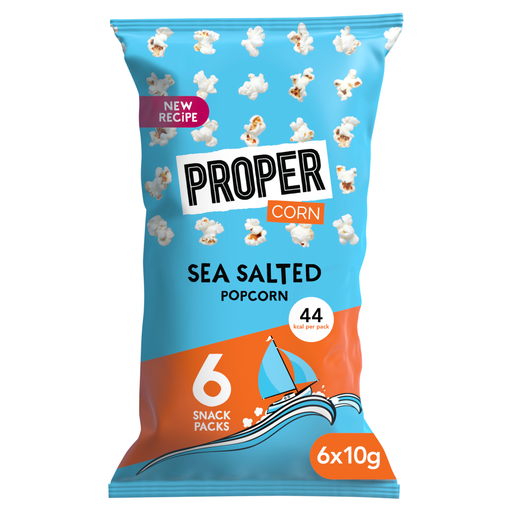
The 6x10g format lets you open one small bag for a TV snack. Check the current pack for protein per bag and any allergen precaution.
 No image available
The 70g bag can be divided for sharing during a TV programme. Compare the portion you serve with the current nutrition and allergen information on the pack.
No, not on its declared figures. Myprotein lists 18 g protein and 430 kcal per 100 g, putting protein at about 16.7% of energy; legislation.gov.uk states that a high-protein claim requires at least 20% of the food’s energy to come from protein.
Myprotein lists 3.8 g per stated serving. The checked retailer labels list 2.3 g for a 30 g PROPER Sweet & Salty serving, 1.6 g for a 20 g quarter-pack of Metcalfe's Sweet 'N Salt and 1.4 g for a 23 g Tyrrells Sweet & Salt pack. Compare the amount you will actually eat.
The checked PROPER Lightly Sea Salted product lists 0.6 g sugars per 100 g, according to Waitrose & Partners. Check the current pack for the values and portion size relevant to the format you buy, as well as its milk “may contain” statement if that matters to you.
Read the current pack’s ingredients, allergen statement and serving guidance. Myprotein Protein Popcorn lists milk and soya, while the checked PROPER Lightly Sea Salted product may contain milk; also watch for hard, unpopped kernels when serving.