Choose plain, single-ingredient oats when avoiding added sugar and choosing your own protein source matter most, but recognise that oats alone provide a modest amount of protein per serving. An unflavoured protein-enriched sachet can offer more protein in a quick format, yet its sugars value, ingredients and allergens still need checking. Under UK nutrition-claim rules published on legislation.gov.uk, “sugar-free” applies only where sugars do not exceed 0.5g per 100g or 100ml.
Who this suits
High-protein breakfast planners avoiding added sugar
Use plain, single-ingredient oats as a base when you want to choose the protein addition yourself. The checked plain-oat servings provide a modest amount of protein, so the rest of the breakfast needs planning separately.
Busy shoppers who need protein porridge sachets
A pre-portioned protein porridge can suit quick breakfasts when you are happy with a formulated product and check dry-serving nutrition, sugars and allergens before buying.
Label-conscious shoppers comparing sugar claims
Compare “sugar-free”, “no added sugar” and naturally occurring sugars carefully rather than treating these terms as interchangeable.
Buying priorities
Plain 100% rolled oats
Choose this when: You want control over the protein source, portion and allergens while keeping the oat ingredient list simple.
Trade-off: Oats on their own provide a modest protein contribution, so a compatible protein component must be added separately.
Unflavoured protein-enriched sachets
Choose this when: A higher protein figure in a pre-portioned, quick-cook format matters more than a single-ingredient product.
Trade-off: Added protein can introduce allergens, and dry-product figures should not be compared with values for porridge made with milk.
Flavoured high-protein porridge
Choose this when: Flavour is more important than keeping added sugars out of the product.
Trade-off: A protein claim does not show whether a particular flavour contains sugar, so check the exact pack.
| Priority |
What to check |
Your needs |
| Sugar claim |
Read sugars per 100g and the ingredient list. UK nutrition-claim rules published on legislation.gov.uk set the sugar-free maximum at 0.5g sugars per 100g or 100ml. |
I want to avoid added sugar without assuming that “no added sugar” means the product qualifies as sugar-free. |
| Protein amount |
Compare protein on the same dry-serving basis. Check whether the protein comes from oats only or from ingredients such as soy or wheat protein. |
I need to know whether the oats contribute enough protein for my breakfast plan or whether I need a protein-enriched option or separate addition. |
| Format and flavour |
Check whether the product is plain or flavoured, and read the specific flavour’s ingredients and dry nutrition panel. Do not use one variant’s label for another. |
I want a quick sachet or convenient format without making assumptions about its sugar content. |
| Allergens |
Check the current allergen statement, protein source and any cross-contact wording. Choose specifically labelled gluten-free oats where that is required. |
I need a porridge that fits my soy, wheat, barley or gluten-related requirements. |
Common buying mistakes
-
Treating “no added sugar” as proof that a porridge is sugar-free
Plain oats can contain naturally occurring sugars above the legal threshold for a sugar-free claim. For example, the checked plain-oat products have sugars values above 0.5g per 100g despite simple oat-only ingredient lists.
Use the sugars value per 100g as the first filter when sugar-free wording is important, rather than relying on front-of-pack wording alone.
-
Assuming every high-protein porridge is the lower-sugar choice
Protein-enriched and flavoured products can include sugar. The checked Quaker Golden Syrup Protein sachet lists sugar as an ingredient and 7.2g sugars per 43g dry sachet; the checked Flahavan’s High Protein Plain Sachet also lists sugar.
Compare the exact flavour and format, not only the product family name or protein claim. If avoiding added sugar is central, inspect the ingredient list first.
-
Comparing prepared-with-milk nutrition with dry oats
Milk changes protein, sugars, energy and fat totals. A protein-sachet label may show both dry and prepared values, while plain oats may be listed dry or prepared with water.
Compare dry products with dry products first, then assess the finished breakfast using the same milk, water and toppings.
-
Overlooking added-protein allergens and oat cross-contact warnings
Protein additions can introduce soy or wheat, while ordinary oats may carry manufacturing warnings relevant to wheat, barley or gluten-related requirements.
Check the current pack’s allergen statement whenever you change product or flavour, and select a specifically labelled gluten-free product where needed.
Relevant brand references
Quaker
UK porridge options spanning traditional oats, microwaveable sachets, protein sachets and gluten-free oats.
- Quaker Rolled Porridge Oats are listed as 100% wholegrain oats, with 11g protein and 1.1g sugars per 100g according to Waitrose & Partners product information.
- Quaker Oat So Simple Protein Original lists soy protein, while the checked Golden Syrup Protein flavour lists sugar as an ingredient and higher sugars per sachet.
Mornflake
A UK oat miller with plain organic and jumbo rolled-oat products for shoppers seeking a single-ingredient base.
- The checked Organic Porridge Oats and Jumbo Oats list 100% oats, with 4.6g and 4.8g protein respectively per 40g serving.
- Mornflake states that its checked Organic Porridge Oats are not suitable for wheat or barley allergy sufferers because of manufacturing methods.
Flahavan’s
A porridge-oat brand with organic plain oats and high-protein porridge lines.
- Its Organic Porridge Oats are described by the brand as 100% organic wholegrain rolled oats.
- The checked High Protein Plain Sachet lists sugar, milk protein and maltodextrin in addition to oats, so “high protein” does not establish no-added-sugar suitability.
Jordans
Offers both plain organic porridge and a protein-oat line using wheat protein.
- Jordans Organic Porridge is listed with organically produced wholegrain rolled oats.
- Jordans Protein Oats use wheat protein, and the Organic Porridge page warns that the product may contain other gluten sources and nuts.
Waitrose
A UK retailer own-label route for standard porridge oats alongside a broader porridge-and-oats range.
- Essential Porridge Oats list wholegrain oat flakes only, 12.2g protein and 0.9g sugars per 100g according to Waitrose & Partners.
- The 0.9g-per-100g sugars figure is above the UK sugar-free threshold, and Waitrose & Partners advises shoppers to recheck pack information because recipes can change.
Joybuy product options
Joybuy options for a convenient, flavoured high-protein porridge route. Both products need a close label check if keeping sugars low is a priority.
 No image available
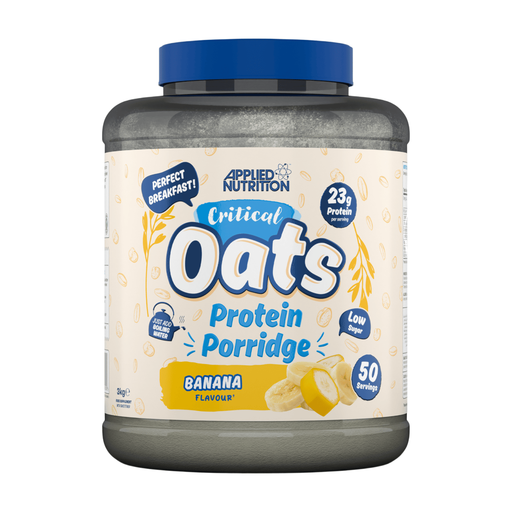
Applied Nutrition Critical Oats Protein Porridge, Banana Flavour, 3kg
A protein-focused porridge option for a quick breakfast or snack, with preparation using hot or cold water or milk.
The stated 60g serving provides 23.04g protein. The listed nutrition panel gives 2.3g sugars per 100g, which is above the UK sugar-free threshold; it contains oats, whey, milk and soy.
It is described as a food supplement and states that it should not replace a varied, balanced diet.
Joybuy
 No image available
Quaker Oat So Simple Peanut Butter Protein Sachets, 8 Pack, 344g
Pre-portioned protein sachets for time-limited breakfasts, with a stated 2½-minute microwave preparation method.
Each serving states 9g plant protein. The dry mix lists sugar as an ingredient and 18g sugars per 100g, so it is not sugar-free.
Contains oats and soy and may contain milk, peanuts and nuts; it must be cooked before consumption and requires water or milk.
Joybuy
Frequently asked questions
Does “sugar-free” mean the same as “no added sugar” on porridge oats?
No. Under UK nutrition-claim rules published on legislation.gov.uk, “sugar-free” may be used only where a product contains no more than 0.5g sugars per 100g or 100ml. A product can have no added sugar but still contain naturally occurring sugars above that threshold: checked Quaker Rolled Porridge Oats list 1.1g sugars per 100g.
Are plain porridge oats high in protein?
Usually not on their own for a high-protein meal. The checked plain products provide about 4.6g to 4.9g protein per roughly 40g serving, while Quaker Oat So Simple Protein Original lists 8.1g per 37.7g dry sachet. Compare dry-product figures with dry-product figures because milk changes prepared nutrition values.
Can I assume a flavoured high-protein porridge is low in sugar?
No. Check each flavour’s ingredient list and dry nutrition panel. The checked Quaker Protein Golden Syrup sachet lists sugar as an ingredient and 7.2g sugars per 43g dry sachet, while the checked Flahavan’s High Protein Plain Sachet also lists sugar among its ingredients.
What allergens should I check before buying protein porridge?
Check both the oat product’s allergen statement and the added protein source. Quaker Protein Original contains soy protein, while Jordans Protein Oats use wheat protein. Mornflake states that its checked Organic Porridge Oats are not suitable for wheat or barley allergy sufferers because of manufacturing methods; choose a specifically labelled gluten-free product where that is required.


