Buying priorities
Labelled high-protein sachets or oats
Choose it when: You want the dry oat product to provide a larger measured protein contribution and can eat the added protein ingredient.
Key trade-off: Compare protein on the same basis: Quaker’s 15g serving includes 190ml of semi-skimmed milk, while its dry sachet contains 8.1g.
Plain oats with your own accompaniment
Choose it when: You want a simple oat base and prefer to decide how protein is added to the finished meal.
Key trade-off: The final protein total depends on the milk, yoghurt or other accompaniment you choose.
Ready-to-heat single-serve pots
Choose it when: Speed and a one-person portion matter more than tailoring the ingredients yourself.
Key trade-off: Chilled porridge needs refrigeration, and the researched Flahavan’s high-protein pot is stated to be available only in Tesco Northern Ireland.
Start by comparing protein on a like-for-like serving basis, then check ingredients and choose the format that fits your breakfast routine.
| Priority |
What to check |
Your needs |
| Comparable protein contribution |
Compare dry portion with dry portion. Check whether a prepared-serving figure includes milk, and note the stated serving weight. |
I want to know what the oat product contributes before choosing milk or toppings. |
| Protein source and allergens |
Read the current ingredients and allergen statement. Check whether added soy, wheat or milk protein is suitable, and look for a gluten-free claim where needed. |
The protein source needs to work with my dietary restrictions, not just my breakfast plan. |
| Convenience and control |
Decide between a measured sachet, a chilled pot and dry oats. Check microwave instructions, refrigeration needs and how much you can customise. |
I need a breakfast format that matches the time I have while leaving the right amount of control over ingredients. |
| Format value |
Compare products in the same preparation state and serving basis. Check current pack size, storage requirements and retailer availability before choosing a format. |
I want to avoid treating a ready-to-heat portion as equivalent to a dry oat pack when they serve different routines. |
Joybuy product options
Joybuy product options for a high-protein porridge breakfast, including formulated protein porridges and plain oat-based products for adding your own accompaniment.
 No image available
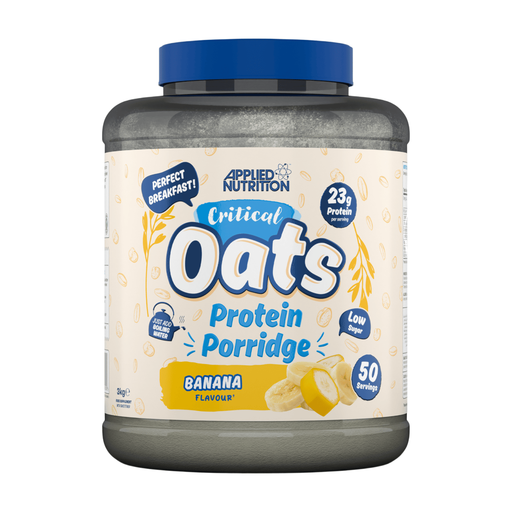
Applied Nutrition Critical Oats Protein Porridge Banana, 3kg
A measured protein-porridge option for adults planning a protein-rich breakfast or snack.
The stated 60g serving provides 23.04g protein and 3g MCT; it can be mixed with hot or cold water or milk.
Presented as a dietary supplement and contains oats, whey, milk and soya. The 3kg pack may not suit a small trial purchase.
Joybuy
 No image available
Quaker Oat So Simple Peanut Butter Protein Sachets, 8 Pack
An individual-sachet option for quick breakfasts with a measured portion.
The dry mix lists 22g protein per 100g and includes 16% soy protein; sachets can be prepared with water or milk in a microwave.
Contains oats and soya and may contain milk, peanuts and nuts. Check the current pack before comparing its stated 9g per-serving figure with other portions.
Joybuy
 No image available
Quaker Oat So Simple Big Bowl Original Sachets, 6 Pack
A single-serve plain-oat route that leaves your milk and protein additions under your control.
Each 38.5g dry sachet provides 4.2g protein and contains 100% wholegrain rolled oats; microwave preparation takes 2½ minutes.
The listed 12g prepared figure includes 245ml semi-skimmed milk. Confirm current allergen and gluten-related suitability from the package if required.
Joybuy
 No image available
Mornflake Mighty Oats Original Oatbran, 800g
An oat-based option for custom breakfasts where you choose the portion and protein accompaniment.
The nutrition table lists 16g protein and 19.4g fibre per 100g; the product is stated to be 100% oatbran.
Check the serving suggestion and preparation method before comparing it with sachets. It is not suitable for wheat or barley allergy sufferers because of stated manufacturing methods.
Joybuy
 No image available
Flahavan's Organic Porridge Oats, 1kg
A conventional plain-oat pack for breakfasts where you add your own protein-rich accompaniment.
It contains 100% organic wholegrain oat flakes and provides 4.5g protein per 40g serving.
The stated protein figure is for the dry oat portion, and the product is not presented as gluten-free. Check the current pack for cooking instructions if quick preparation matters.
Joybuy
Frequently asked questions
Does “high protein” mean a porridge product will meet my individual protein target?
No. Under UK nutrition-claim rules, “high protein” means that at least 20% of the food’s energy value is provided by protein; it is not a personalised daily target. The British Nutrition Foundation notes that UK adults on average already eat more than enough protein, so a front-of-pack claim alone does not define your own needs.
Why does one Quaker protein figure say 8.1g and another say 15g?
They use different bases. The dry sachet contains 8.1g protein, while the listed 15g prepared serving includes 190ml semi-skimmed milk. Compare dry-product figures with dry-product figures, or compare prepared meals only when the liquid and serving size are the same.
Can I assume any oat product is suitable for a gluten-free diet?
No. Choose a product specifically labelled gluten-free if that claim is required for your diet. The Food Standards Agency states that gluten-free foods must contain no more than 20mg/kg gluten, and oats still need to be identified because oat itself can be an allergen.
Which added proteins need checking in these porridge options?
Quaker Protein Original uses soy protein and may contain wheat and barley; Jordans Protein Oats use wheat protein; and Flahavan’s high-protein pot contains milk protein. Read the exact current pack because recipes and allergen information can change.
How should I store a single-serve porridge option?
Storage depends on the format. Quaker’s dry sachet guidance is to keep unused sachets sealed in a cool, dry place, while Waitrose’s chilled ready-to-heat porridge must be kept below 5°C and should not be reheated after cooling.


