For a quick desk-lunch stopgap, compare protein per bar with the serving size, sugars, fibre and allergens rather than choosing by a protein claim alone. Nature Valley UK lists 10.2g protein in its 40g Peanut & Chocolate bar, while TREK lists 9g in its vegan 50g Cocoa Oat bar; the more practical choice depends on the ingredients you can eat and what else you need from lunch. A snack bar should not be assumed to replace a complete meal.
Who is this for?
Desk workers with a delayed lunch
If a bar needs to tide you over until a meal, compare what one bar provides rather than relying on the protein wording on its wrapper. Serving weights differ, so protein and fibre figures need their serving sizes alongside them.
Shoppers choosing plant-based bars
Vegan options can differ in protein, sugars and ingredients. TREK Cocoa Oat and nākd. Cocoa Hazelnut provide distinct oat-based and fruit-and-nut choices; check the exact pack for any additional dietary requirement.
People checking food allergens
Check the ingredients and precautionary allergen statement before comparing protein figures. The products discussed here include bars containing peanuts or soya and bars with milk or nut cross-contact warnings.
What should you check?
Start with the serving you would actually eat, then use the per-100g label to compare bars of different sizes.
| Priority |
What to check |
Your needs |
| Protein per bar |
Read the grams of protein and serving weight for one bar. Check the per-100g figure when comparing different bar sizes. |
If lunch is delayed, I want to know what the bar I will eat provides, not just what the front of the pack calls it. |
| Rest of the nutrition label |
Compare sugars, saturates and salt per bar and per 100g; check fibre and energy per bar too. NHS food-label guidance uses per-100g figures to help compare foods. |
A bar might become a regular desk snack for me, so protein is only one part of the label I want to compare. |
| Ingredients and allergens |
Read the exact flavour’s ingredients and precautionary allergen statement. Check vegan or gluten-free labelling separately from nut, soya and milk warnings. |
I need a bar that fits what I can eat; a vegan or gluten-free label alone does not answer every allergen question. |
| Serving and lunch plans |
Check how many bars are in the pack and the weight of each one. Decide whether a bar is a stopgap or whether you need to arrange a separate meal. |
On a busy workday, I want something easy to keep at my desk without mistaking a snack-sized serving for my whole lunch. |
Common buying mistakes
-
Judging protein by the front of the wrapper
Protein wording does not tell you how many grams are in the bar you will eat. The Nature Valley, TREK and nākd. products discussed here have different serving weights and protein amounts.
Compare protein per bar alongside its weight, then look at the other nutrition figures before choosing a desk-lunch stopgap.
-
Overlooking sugars and saturates
TREK lists 14g sugars in a 50g Cocoa Oat bar, while Eat Natural UK lists 10g sugars in its distinct 40g Peanut & Dark Chocolate bar. These are per-bar figures for different-sized products.
Use both the per-bar and per-100g nutrition panels to compare sugars and saturates. NHS food-label guidance explains the per-100g comparison.
-
Using a dietary label as an allergen shortcut
A vegan or gluten-free description does not settle whether a bar meets a separate nut, soya or milk restriction. TREK’s Cocoa Oat bar, for example, may contain peanuts, nuts and milk.
For an allergy or another necessary avoidance, read the current pack’s ingredients and precautionary statements for the exact flavour.
-
Comparing an old listing with a current pack
Alpen Muesli’s November 2021 product list named protein bars, but a historical listing cannot establish the ingredients or nutrition of a pack being sold now.
Before choosing a multipack, confirm the current flavour, bar size, ingredients and nutrition with the brand or retailer.
Brand and product-line references
Compare the named bars and pack sizes rather than treating a brand’s entire range as nutritionally interchangeable.
Nature Valley
Nature Valley UK lists two relevant but different bars: Protein Peanut & Chocolate and Protein + Fibre Coconut & Almond.
- Its nutrition panels list 10.2g protein and 4.4g fibre per 40g Peanut & Chocolate bar, versus 7.0g protein and 5.9g fibre per 36g Coconut & Almond bar.
- Check the exact ingredients: the researched bars include nut and soya allergens, and Coconut & Almond also contains milk, wheat and barley.
TREK
TREK’s Cocoa Oat is a 50g vegan oat flapjack for shoppers comparing plant-based bars.
- TREK lists 9g protein and 14g sugars per bar and describes the oats as gluten free.
- The product contains soya and may contain peanuts, nuts and milk; check the pack if any of these affect your choice.
Eat Natural
Eat Natural has nut-led protein bars, but similarly named Peanut & Chocolate products must be compared by their exact pack.
- Eat Natural UK lists 7.8g protein per 40g Peanut & Dark Chocolate bar. A separate Costco UK listing states 10g protein per bar for a 45g Peanut & Chocolate product.
- Do not transfer one product’s nutrition figures to the other. The 40g bar contains peanuts and soya and may contain milk and tree nuts.
nākd.
The researched Cocoa Hazelnut protein bar is a fruit-and-nut option listed as vegan, gluten free and dairy free.
- Tesco’s listing gives 7.2g protein, 7.2g fibre and 13g sugars per 45g bar.
- It contains peanuts and hazelnuts and may contain soya and other nuts. Check the pack rather than treating its dietary descriptions as an allergen clearance.
Graze
Graze’s oat flapjacks offer another desk-snack format, but the Oat Boost name alone does not specify protein per bar.
- Tesco lists Cocoa Vanilla Oat Boost as a 30g flapjack serving.
- Check the nutrition panel of the exact product if protein per serving is your main reason for choosing it.
Alpen
Alpen Muesli’s November 2021 product list named Chocolate and Berries Protein Bars.
- Those historical names can help identify the particular product you want to ask a retailer about.
- Confirm a current pack’s availability, recipe and nutrition before comparing it with the bars above.
Joybuy snack bar options
These are protein-bar multipacks for the quick desk-lunch scenario. Compare the stated bar and pack sizes, then check each current pack’s nutrition and allergen information for your needs.
 No image available
Nature Valley Protein Salted Caramel Nut Bars, 4 × 40g
A 40g-bar option for keeping individual snacks at a desk. Check the current pack’s protein and fibre figures alongside its saturated fat and allergen statements; the product information identifies milk, peanuts, almonds and soya.
View on Joybuy
 No image available
Nature Valley Protein Peanut & Chocolate Cereal Bars, 8 × 40g
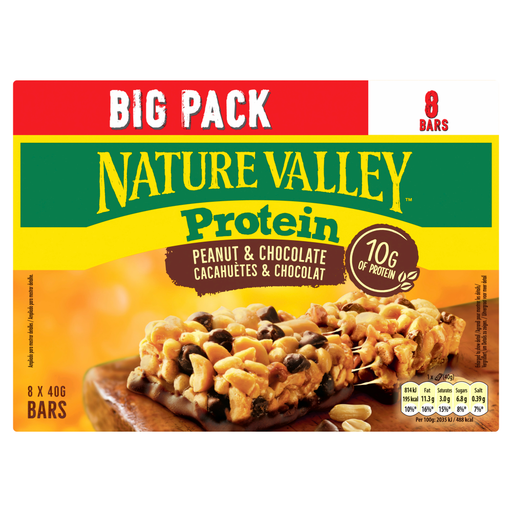
An eight-bar pack for individually portioned desk snacks. Nature Valley UK lists 10.2g protein per 40g Peanut & Chocolate bar; check this pack’s full nutrition panel and its peanut, soya, milk and other nut warnings before choosing it.
View on Joybuy
 No image available
Nature Valley Protein Peanut & Chocolate Bars, 4 × 40g
A four-bar pack of the 40g Peanut & Chocolate variant. Nature Valley UK lists 10.2g protein per bar; if fibre is important to your choice, confirm its figure on this pack. Check the peanut, soya, milk and other nut statements too.
View on Joybuy
 No image available
Grenade Soft Core Double Chocolate Protein Bars, 12 × 50g
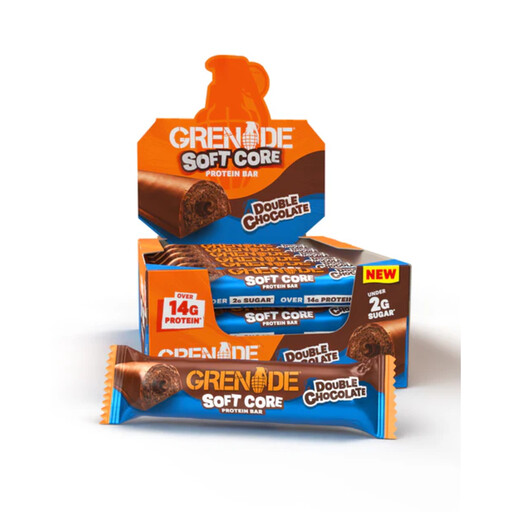
A 50g-bar multipack for comparing a different desk-snack format with the Nature Valley bars above. Check protein, sugars and saturates on the current pack; the product information identifies milk and soya and does not present this variant as vegan or gluten free.
View on Joybuy
 No image available
Grenade Soft Core Golden Caramel Protein Bars, 12 × 50g
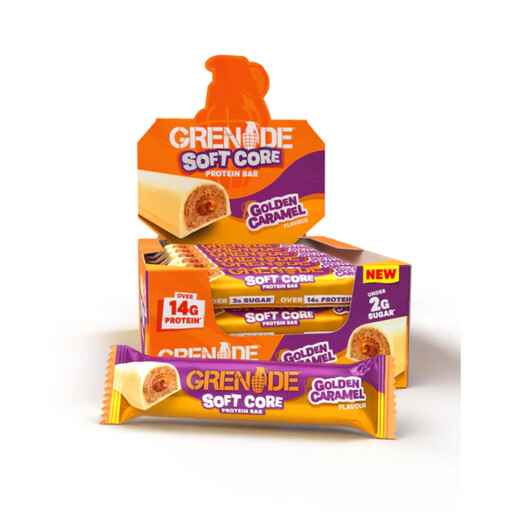
Another 50g-bar multipack, in Golden Caramel rather than Double Chocolate. Compare its own protein, sugars and saturates figures instead of assuming the two flavours match; the product information identifies milk and soya and does not present this variant as vegan or gluten free.
View on Joybuy
Questions about desk-lunch bars
Does a protein label tell me how much protein is in one bar?
No. Read the grams of protein for the stated serving and check whether that serving is one bar. Nature Valley UK lists 10.2g per 40g Peanut & Chocolate bar, while TREK lists 9g per 50g Cocoa Oat bar; the serving size matters when comparing them.
Can a protein bar stand in for my desk lunch?
A protein claim alone does not establish that a snack bar replaces a complete lunch. A bar can be a convenient stopgap when lunch is delayed; look at its serving size and full label, and arrange a separate meal if you need one.
How do I compare sugars and saturates in different-sized bars?
Use the per-100g figures for a like-for-like comparison, then check what you would consume per bar. NHS food-label guidance describes foods with more than 22.5g sugars or more than 5g saturates per 100g as high in those respective nutrients.
Is a vegan or gluten-free bar suitable for someone avoiding nuts or soya?
Not on the strength of those labels alone. TREK’s Cocoa Oat bar contains soya and may contain peanuts and nuts; the researched nākd. Cocoa Hazelnut bar contains peanuts and hazelnuts and may contain soya and other nuts. Read the exact current pack’s allergen statement.
Why check the pack if I have already compared bars online?
The pack is the place to confirm the flavour, serving size, current nutrition panel and allergen statement of the bar you will eat. This is particularly important when product names are similar or you are choosing a multipack.


