Gym-goers eating on the move
A bar is a portable option when a meal is not convenient straight after exercise. Compare its protein per bar with your next meal rather than treating the word “protein” on the wrapper as a complete recovery plan.


Compare protein per bar with what you plan to eat after training, then check the ingredients and per-bar nutrition panel. For exercise lasting longer than an hour, the British Heart Foundation cites 15–30g of protein afterwards; the British Dietetic Association advises carbohydrate-rich food and fluids when quick recovery is needed. A bar can contribute to that intake without necessarily replacing a meal.
A bar is a portable option when a meal is not convenient straight after exercise. Compare its protein per bar with your next meal rather than treating the word “protein” on the wrapper as a complete recovery plan.
Check the claim on the exact flavour and pack. A vegan description does not replace a check of the ingredients and any milk cross-contact statement if you have a milk allergy.
Check whether the exact variant is labelled gluten free, then read its separate allergen information. Gluten-free bars can still contain peanuts, other nuts, soya or milk.
Start with the amount in one bar, then decide whether its ingredients and the rest of its nutrition panel fit the snack you need.
| Priority | What to check | Your needs |
|---|---|---|
| Protein and recovery | Read protein grams per bar and the serving size. If quick recovery matters, consider carbohydrate-rich food and fluids too, as advised by the British Dietetic Association. | I want to know what one bar contributes, especially after a longer session. The British Heart Foundation cites 15–30g of protein after exercise lasting longer than an hour. |
| Diet and allergens | Check the exact variant’s ingredients, highlighted allergens and any “may contain” statement. Assess gluten-free, vegan and dairy-free descriptions separately. | I need a bar that fits my dietary requirements without assuming that a gluten-free or vegan claim answers every allergy question. |
| Whole-bar nutrition | Compare sugars, energy, saturated fat and fibre for the bar you would eat, not across unlike serving sizes. A no-added-sugar claim does not state the total sugars. | I want to judge the whole snack, rather than choose it on a protein or no-added-sugar claim alone. |
| Timing and convenience | Consider when your next meal is and whether you need to recover quickly before another session. The British Dietetic Association advises prompt carbohydrate-rich food and fluids when quick recovery is required. | A bar would be convenient on my way from the gym, but I may also be planning a meal that includes protein and carbohydrate. |
The British Heart Foundation cites 15–30g of protein after exercise lasting longer than an hour. The Nature Valley, TREK Original, Eat Natural and nākd. examples discussed here each list less than 15g per bar; protein alone also does not cover a need for carbohydrate and fluids when quick recovery matters.
Check what the bar contributes alongside your next food or meal, particularly if another training session is approaching.
The named examples come in different bar sizes, so a per-100g figure does not tell you how much protein you will get from one bar.
Compare protein per bar first. Use the same per-bar basis when looking at sugars, energy and fibre.
Tesco Groceries lists nākd. Peanut Butter Protein as having no added sugar, while its nutrition panel states 13g sugars per 45g bar.
Read the total sugars and energy on the per-bar panel rather than relying on a front-of-pack phrase.
Examples in this category contain or may contain peanuts, other nuts, soya or milk. A gluten-free claim addresses a different question from whether those allergens are present.
Read the current pack’s ingredient list and precautionary wording for the exact flavour and pack size you intend to buy.
These examples show why the product and serving size matter more than a brand name alone.
Its Protein range includes nut-based bars, as well as Protein + Fibre variants with different per-bar nutrition.
The Original Oat Protein Flapjack is an oat-based option to compare with smaller nut-based bars.
Peanut Butter Protein is a fruit-and-peanut bar listed as suitable for vegans.
The Dark Chocolate & Peanut Protein Bar is a peanut-and-chocolate option.
Graze Oat Boost flapjacks are an oat-based snack option, rather than a reason to assume a particular protein amount.
The Alpen product documented here is muesli, a breakfast cereal rather than a portable snack bar.
These Joybuy options include nut-based bars, an oat flapjack and a chocolate protein bar. Compare the exact pack’s per-bar nutrition and allergens against what you plan to eat after training.
 No image available
For a portable post-gym snack, Joybuy lists 10.4g protein per 40g bar. Its product information lists peanuts, almonds, soya and milk as allergens; check the current pack before eating.
 No image available
This peanut-and-chocolate cereal bar comes in an eight-bar pack. Check the exact pack’s protein per bar and allergen statement to see how it fits your post-gym snack plans.
 No image available
Choose this format if you prefer a flapjack as your post-gym snack. It is the Salted Caramel variant, not TREK Original; check its own per-bar nutrition and ingredients rather than applying figures from the Original flapjack.
 No image available
This double-chocolate protein bar offers another format for a post-gym snack. Check the individual bar’s nutrition panel and ingredients, particularly if you need to avoid an allergen.
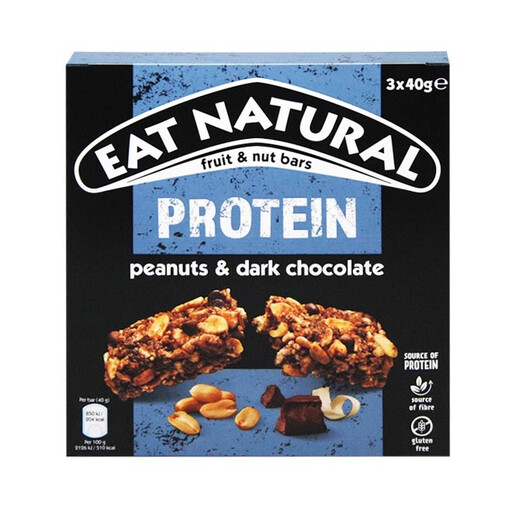 No image available
This three-bar pack is a peanut-and-chocolate snack option. Joybuy lists peanuts, nuts, milk and soya as allergens for this product; check the current pack before eating. Compare its own per-bar panel rather than assuming it matches another Eat Natural variant.
It depends on the session and what else you eat. For exercise lasting longer than an hour, the British Heart Foundation cites 15–30g of protein afterwards; the Nature Valley Salted Caramel Nut, TREK Original, Eat Natural Dark Chocolate & Peanut and nākd. Peanut Butter examples each list less than 15g per bar. Check the bar’s contribution alongside your next food or meal.
Consider both when quick recovery matters. The British Dietetic Association advises starting carbohydrate-rich food and fluids as soon as possible when rapid refuelling is needed, while the British Heart Foundation discusses extra protein after exercise lasting longer than an hour.
Read the ingredient list and any “may contain” statement for the exact current product. The Food Standards Agency says allergens present in prepacked food must be emphasised in its ingredients list; a gluten-free or vegan description does not answer every other allergen question.
No: check the exact product’s precautionary allergen statement. The TREK Original Oat Protein Flapjack listing describes it as a vegan option but warns that it may contain milk, so its vegan positioning alone is not enough for that allergy decision.