People eating lunch on the move
A bar is easy to pack when a lunch break is rushed, but its protein content alone does not tell you whether the rest of the day’s food is varied. The NHS Eatwell Guide looks at balance across a day or week.


Choose a bar by its nutrition per whole bar and whether it is a snack or part of your lunch. TREK lists 15g protein per 55g Choc Caramel bar, while Nature Valley lists 10.4g per 40g Salted Caramel Nut bar; their fibre, sugars, salt and allergens differ too. If a bar stands in for lunch, consider other portable foods alongside it: the NHS Eatwell Guide describes balance across a day or week, not protein alone.
A bar is easy to pack when a lunch break is rushed, but its protein content alone does not tell you whether the rest of the day’s food is varied. The NHS Eatwell Guide looks at balance across a day or week.
Compare protein per bar alongside fibre, sugars and the exact product’s gluten and allergen information. Vegan TREK and nākd. bars in this article have different nutrition panels and precautionary allergen statements.
The bars discussed here variously contain or may contain peanuts, other nuts, soya, milk, gluten-containing cereals or sesame. Check the current pack’s ingredients and may-contain statements for the particular bar.
Start with the whole-bar serving, then compare the other nutrition figures and ingredients that matter to your choice.
| Priority | What to check | Your needs |
|---|---|---|
| Protein per bar | Read the grams of protein and serving size together. TREK lists 15g per 55g Choc Caramel bar; Nature Valley lists 10.4g per 40g Salted Caramel Nut bar. | I want to know what one bar contributes, rather than choosing by the name on the front of the pack. |
| Other nutrition figures | Compare fibre, sugars, energy and salt for the same whole-bar serving. TREK lists 0.68g salt for Choc Caramel; Nature Valley lists 4.3g fibre and 6.4g sugars for Salted Caramel Nut. | A protein figure matters to me, but I also want the rest of the nutrition panel to fit what I’m looking for. |
| Ingredients and allergens | Check declared ingredients, may-contain statements and dietary labels on the exact pack. A vegan or gluten-free description does not replace an allergen check. | I need to confirm whether a bar fits my dietary restrictions before putting it in my bag. |
| Role at lunchtime | Decide whether the bar is a snack or one part of lunch. The NHS Eatwell Guide describes food-group balance across a day or week, rather than requiring every meal to contain every group. | If this is replacing my usual lunch, I want to consider what other portable food I can take with it. |
Protein grams describe one part of a bar’s nutrition, not the variety of foods you eat over the day. The NHS Eatwell Guide frames balance across a day or week.
Read the whole-bar nutrition panel and decide whether you need other portable foods alongside the bar.
For example, TREK lists 15g protein, 2.2g sugars and 0.68g salt per Choc Caramel bar, while its Original Oat flapjack lists 10g protein and 12g sugars per bar. The figures describe different products and serving sizes.
Compare protein, fibre, sugars, energy and salt per whole bar according to the figures that matter to your choice.
A vegan or gluten-free bar can still contain, or carry a may-contain warning for, an allergen relevant to you.
Read both the ingredients and precautionary statements on the current pack, even if you have bought the product before.
Alpen states that several of its historic bar lines are no longer made. An older range name does not identify the nutrition of a current product.
Confirm the exact bar and its current nutrition panel before including it in a protein-per-bar comparison.
These brand examples describe particular bars and ranges, not every product carrying the brand name.
TREK offers vegan protein bars and oat flapjacks with distinct per-bar nutrition figures.
Its Protein Salted Caramel Nut bar is a gluten-free, vegetarian nut-and-cereal option.
The Peanuts & Dark Chocolate Protein Bar is a nut-led option with a stated 40g serving.
The Cocoa Hazelnut Protein Bar is listed as vegan, gluten-free and dairy-free, with no added sugar.
The Cocoa Vanilla Oat Boost is a vegan wholegrain-oat flapjack sold as a 30g serving.
Alpen is associated with cereal and muesli products, including historic bar ranges.
These are protein bars and oat flapjacks to consider for lunch on the go. Compare each exact pack’s nutrition and allergens; a bar can also be one part of a portable lunch.
 No image available
A multipack of 50g bars for keeping a snack to hand on a busy day. Check the current pack’s protein, sugars and allergen information if those determine your choice.
 No image available
This 12-pack contains 50g peanut-butter-flavour protein bars. If you avoid particular ingredients, check the current pack rather than relying on the flavour name or protein-bar description.
 No image available
For a nut-based bar, Nature Valley lists 10.4g protein, 4.3g fibre and 6.4g sugars per 40g bar. It is labelled gluten-free and vegetarian, but contains peanut, soya, almond and milk ingredients.
 No image available
An oat-flapjack format in a pack of three 50g bars. Check this Salted Caramel variant’s nutrition and allergen panel rather than applying figures from TREK’s other flapjacks.
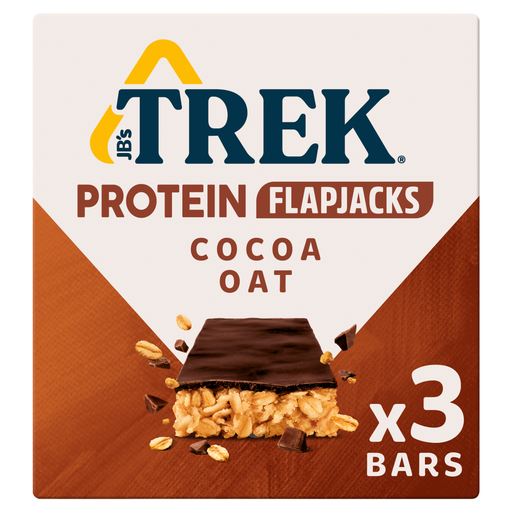 No image available
This pack contains three 50g cocoa oat protein flapjacks. Use the Cocoa Oat pack’s own protein, sugars and allergen details when comparing it with the Salted Caramel variant or a smaller bar.
Do not judge lunch by a bar’s protein figure alone. The NHS Eatwell Guide describes balance across a day or week and includes several food groups, so consider what other portable foods fit alongside the bar if it replaces your usual lunch.
Among the five named bars with comparable whole-bar figures, TREK Choc Caramel lists 15g protein per 55g bar. Nature Valley lists 10.4g per 40g Salted Caramel Nut bar and TREK lists 10g per 50g Original Oat flapjack; compare their other nutrition figures and allergens before choosing.
No. Those descriptions do not replace a check of the exact product’s ingredients and may-contain statements. The bars discussed here variously list peanuts, other nuts, soya, milk, gluten-containing cereals or sesame as ingredients or possible cross-contact allergens.
Use it to compare options, then read the current physical pack before eating. Ingredients and precautionary statements are product-specific, and the pack lets you check the version you actually have.