People wanting a small late-night snack
If you want a bar rather than a substantial supper, compare energy and nutrients for the whole bar you intend to eat. A protein figure alone does not describe the portion.


For a late-night snack, compare the whole per-bar label rather than choosing the largest protein number: portion size, sugars, saturated fat and allergens can change which bar suits you. Nature Valley UK lists about 10g protein in a 40g Peanut & Chocolate bar, while Myprotein UK lists 10.2g in a 50g TREK Original Oat flapjack; check the rest of each label before deciding between the smaller nut bar and the oat-based option.
The useful choice depends on whether portion size, ingredients or dietary restrictions matter most for your evening snack.
If you want a bar rather than a substantial supper, compare energy and nutrients for the whole bar you intend to eat. A protein figure alone does not describe the portion.
An oat-based protein flapjack may be worth considering, but check the current pack for its dietary claims and ingredients. A nut-and-protein bar is not automatically dairy-free.
Read the ingredients and any “may contain” statement on the exact flavour and pack. Protein content and a vegan or gluten-free description cannot replace an allergen check.
Start with the serving you will eat, then compare its nutrition and ingredients against the reason you want a bar late at night.
| Priority | What to check | Your needs |
|---|---|---|
| Protein per bar | Read the grams of protein per bar and the bar weight; use per 100g values when comparing different portion sizes. Nature Valley UK lists about 10g protein per 40g Peanut & Chocolate bar; Myprotein UK lists 10.2g per 50g TREK Original Oat bar. | I want to know how much protein is in the bar I would actually eat, not just whether protein appears on the front of the wrapper. |
| Portion and sugars | Compare energy, sugars and saturated fat per bar as well as per 100g. Nature Valley UK lists 196kcal and about 7g sugars for its Peanut & Chocolate bar; Myprotein UK lists 217kcal and 12.2g sugars for TREK Original Oat. | For a snack close to bedtime, I would rather compare whole portions than assume two bars with similar protein figures are otherwise alike. |
| Fibre and format | Check fibre per bar and whether you prefer a 40g nut bar or a 50g oat flapjack. Nature Valley UK lists around 4g fibre for Peanut & Chocolate; Myprotein UK lists 2.2g for TREK Original Oat. | The texture and portion matter to me alongside the protein number. |
| Diet and allergens | Check the exact pack’s ingredients, dietary claims and “may contain” warning. Do not use a vegan, gluten-free or protein claim as a substitute for reading the allergen information. | I need a bar that fits my dietary restrictions, so I will check the particular flavour and pack before buying. |
| Ingredients near bedtime | Read the ingredients for coffee or added caffeine rather than judging by flavour alone. Oxford Health NHS Foundation Trust advises avoiding caffeinated drinks for at least 5–6 hours before bed, as well as avoiding big meals and sugary snacks late at night. | If I am eating shortly before bed, I want to check what is in the bar and whether its portion suits a snack rather than a full supper. |
The wording does not tell you the grams of protein in the portion you plan to eat or describe its full nutrition panel.
Compare protein, bar weight and energy on the back of the pack. NHS food-label guidance identifies per 100g and, where supplied, per-portion values as ways to compare foods.
Nature Valley UK lists about 10g protein, 196kcal and about 7g sugars per 40g Peanut & Chocolate bar. Myprotein UK lists 10.2g protein, 217kcal and 12.2g sugars per 50g TREK Original Oat bar. Similar protein amounts do not make the portions identical.
Compare sugars and saturated fat for the whole bar you would eat, keeping the different bar weights in view.
A vegan or gluten-free description answers a different question from whether an exact product contains an ingredient you must avoid or carries a “may contain” warning.
Check the current ingredients and allergen statement for the flavour and pack you are buying.
Oxford Health NHS Foundation Trust advises avoiding caffeinated drinks for at least 5–6 hours before bed and avoiding big meals and sugary snacks late at night.
Check for coffee or added caffeine in the ingredients, and consider the size of the portion rather than treating every protein bar as a small snack.
These named product lines illustrate different bar formats; check the current label of any flavour or pack you choose.
Its Protein Peanut & Chocolate bar is a 40g nut-bar example for comparing protein with the rest of a smaller portion.
Original Oat and Biscoff provide two 50g protein-flapjack examples, with different nutrition values and ingredients to check.
Tesco lists Cocoa Hazelnut Protein Bars as a plant-protein option.
Tesco identifies its Protein Honey snack bar as a wholegrain oat flapjack with seeds and honey.
These Joybuy options include Nature Valley nut bars and Grenade Soft Core bars in several flavours and pack sizes. Compare the current per-bar label and ingredients before choosing one for an evening snack.
 No image available
A 40g nut-bar format to consider if you want a single packaged evening snack. Check this Salted Caramel variant’s per-bar nutrition and allergens rather than applying figures from another Nature Valley flavour.
 No image available
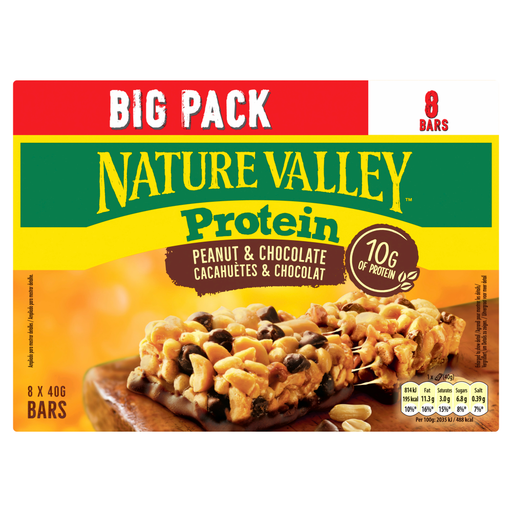
A 40g bar to compare with larger flapjack portions. For the Peanut & Chocolate bar, Nature Valley UK lists around 10g protein, around 4g fibre, 196kcal and about 7g sugars per bar; check the current pack’s nutrition and allergens.
 No image available
A 50g chocolate-flavoured bar format for a portion-by-portion comparison with the nut bars above. Check the Double Chocolate pack’s protein, sugars and allergen information before choosing it for a late-night snack.
 No image available
A 50g caramel-flavoured option if you are comparing bar formats for an evening snack. Use this variant’s own per-bar nutrition and allergen statement; flavour names do not establish its sugar content.
 No image available
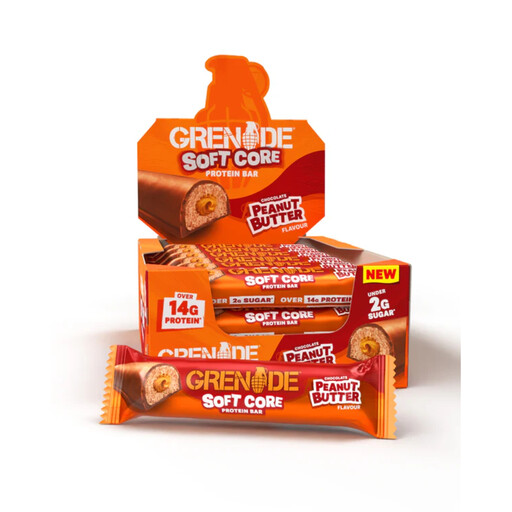
A 50g peanut-butter-flavoured bar to assess against your preferred evening portion. Check the exact pack’s ingredients and allergen warnings, particularly if you must avoid peanuts, milk or soya.
No. Read the grams per bar and its weight to see what your serving contains. Nature Valley UK lists around 10g per 40g Peanut & Chocolate bar, while Myprotein UK lists 10.2g per 50g TREK Original Oat bar.
Compare the whole bar’s energy, sugars, saturated fat, salt and fibre, then check its ingredients and portion size. NHS food-label guidance identifies the core nutrition values shown on labels; a protein figure does not replace those checks.
Yes: check its ingredients rather than assuming the flavour confirms whether caffeine is present. Oxford Health NHS Foundation Trust advises avoiding caffeinated drinks for at least 5–6 hours before bed.
Read the current pack’s ingredients, allergen declaration and any “may contain” warning for the exact flavour. Do not infer allergen suitability from its protein amount or a vegan or gluten-free description.
A bar can be a small snack, but its protein claim alone does not establish that it replaces a full meal. If you are eating close to bed, compare the portion and full label with what you intended to eat; Oxford Health NHS Foundation Trust advises avoiding big meals and sugary snacks late at night.