Families comparing protein per portion
If a crunchy snack is part of the lunch, the labelled protein amount for the portion packed is more useful than a protein-focused name alone. The main lunch item still needs separate consideration.


For a protein-focused packed lunch, compare the amount in the portion you intend to pack: Waitrose & Partners lists 6.6g per 30g serving for its popped tortillas, ASDA lists 10g per 35g serving for The Curators Tangy Cheese chips, and Dolphin Fitness lists 19g per 32g serving for Quest Ranch chips. Those are different portion sizes, so also check the current pack’s allergens and the school’s food policy; NHS lunchbox guidance places the main lunch item, rather than a crisp snack, at the centre of lunch.
If a crunchy snack is part of the lunch, the labelled protein amount for the portion packed is more useful than a protein-focused name alone. The main lunch item still needs separate consideration.
Gluten-free tortilla-style snacks can contain other allergens. The listed Curators Tangy Cheese chips contain soya and milk, while Waitrose & Partners lists a possible sesame presence for its Salt & Vinegar popped tortillas.
A tortilla-style crisp and a filled tortilla wrap serve different roles in a packed lunch. NHS lunchbox guidance suggests basing the main item on a starchy food such as bread, rice, pasta or potatoes.
Start with the portion the pupil is likely to eat, then check the exact pack for allergens and decide how the snack fits alongside the main lunch item.
| Priority | What to check | Your needs |
|---|---|---|
| Protein per portion | Compare protein for the stated serving and the amount you plan to pack; serving sizes differ. Waitrose & Partners lists 6.6g per 30g, ASDA lists 10g per 35g for The Curators Tangy Cheese, and Dolphin Fitness lists 19g per 32g for Quest Ranch. | I want to know what the packed portion contributes, rather than choose on the product name alone. |
| Allergens | Read the current pack for gluten-containing cereals, milk, soya, sesame and precautionary statements. ASDA lists soya and milk for The Curators Tangy Cheese; Dolphin Fitness lists milk for Quest Ranch. | The snack has to fit the pupil’s allergen requirements and the school’s food policy. A gluten-free label does not answer every allergen question. |
| Pack size | Check whether the bag holds more than one stated serving. ASDA’s 85g Curators Tangy Cheese bag gives its protein figure per 35g serving. | If I am packing part of a larger bag, I want the portion to match the amount used for the nutrition comparison. |
| Role in lunch | Plan the main lunch item separately. NHS lunchbox guidance suggests a main item based on foods such as bread, rice, pasta or potatoes. | A crunchy snack can accompany lunch, but I do not want its protein claim to stand in for planning the rest of the meal. |
Tesco Groceries lists 1.5g protein per 25g serving for its Lightly Salted Tortilla Chips, while ASDA lists 10g per 35g serving for The Curators Tangy Cheese Protein Chips. The portions differ, and the product category alone does not tell you the amount packed.
Read the protein figure alongside its serving size, then decide how much of that product will go into the lunchbox.
ASDA labels The Curators Tangy Cheese chips gluten-free but lists soya and milk. Waitrose & Partners lists a possible sesame presence for its Salt & Vinegar popped tortillas.
Check the current pack’s full allergen information and the school’s policy for the pupil concerned.
The Curators Tangy Cheese chips come in an 85g bag, but ASDA gives the 10g protein figure for a 35g serving. Packing the whole bag would not match that serving-size comparison.
Choose the amount to pack before comparing its nutrition information with another product.
A protein figure for tortilla-style crisps describes the snack, not the rest of the packed lunch. NHS lunchbox guidance bases the main item on a starchy food such as bread, rice, pasta or potatoes.
Decide on the main lunch item separately, then consider whether a crunchy snack has a place alongside it.
ASDA lists Tangy Cheese and Classic BBQ lentil tortilla-style chips with 10g protein per 35g serving for each flavour.
Waitrose & Partners lists Salt & Vinegar and Paprika popped tortillas with 6.6g protein per 30g serving.
Marks & Spencer lists Smoked Paprika Popped Red Lentil Tortillas with 24.8g protein per 100g.
Dolphin Fitness lists Quest Ranch Tortilla Protein Chips with 19g protein per 32g serving.
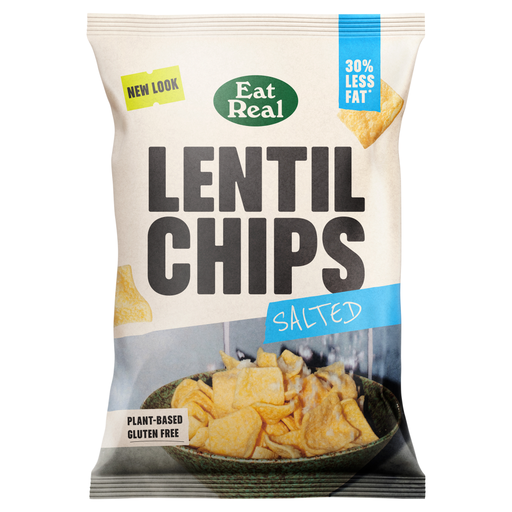
This lentil-chip option offers a crunchy alternative to the tortilla-style snacks discussed above. Check its label for the protein amount in the portion you intend to pack.
 No image available
For a packed lunch, decide how much to take from the 95g bag rather than treating the whole bag as a single portion. Check the current pack for protein per portion and for any soya or celery warnings that matter to the pupil.
The listed products vary substantially. Tesco Groceries gives 1.5g protein per 25g serving for its Lightly Salted Tortilla Chips, while Waitrose & Partners gives 6.6g per 30g serving for its High Protein Salt & Vinegar Popped Tortillas. Compare both the protein figure and the serving size on the packs you are considering.
No. ASDA labels The Curators Tangy Cheese Protein Chips gluten-free, and Dolphin Fitness lists Quest Ranch Tortilla Protein Chips as free from gluten. A similarly named tortilla wrap can be different: Tesco Groceries describes its High Protein Tortillas as wheat wraps. Check the exact product and current pack.
Check the full declaration on the exact pack, not only its gluten wording. ASDA lists soya and milk for The Curators Tangy Cheese chips; Dolphin Fitness lists milk for Quest Ranch; and Waitrose & Partners says its Salt & Vinegar popped tortillas may contain sesame. Also check the school’s policy before packing a snack where allergens are a concern.
A protein figure for a snack does not describe a complete lunch. NHS lunchbox guidance suggests basing the main item on foods such as bread, rice, pasta or potatoes, so plan that item separately before deciding whether to add crisps.
Check the individual school’s packed-lunch and allergy policy. The Department for Education describes England’s School Food Standards as applying to food and drink provided to pupils on school premises; that description is not a substitute for the school’s instructions about food brought from home.