
24/7 Customer Support

Free returns

Same-day & Next-day Delivery

Quality Guaranteed

Unlock Your Welcome Offers: FREE Delivery | Up to 80% OFF | Free 30-day JoyPlus trial
Download the APP
A high-speed hair dryer can reduce morning drying time, but motor speed alone does not guarantee a comfortable or effective appliance. UK shoppers often pay more for impressive specifications, then discover that the dryer is noisy, awkward to hold or poorly suited to their hair type.
The most common buying traps are straightforward:
A high-speed motor, such as a 100,000 or 110,000 RPM brushless motor, can support rapid airflow in a compact body. However, RPM is an internal motor measurement rather than a direct promise of drying time.
Check for additional information such as:
For thick, long or difficult-to-dry hair, a fast-drying hair dryer with strong airflow and a concentrator nozzle may be more useful than a model with a high RPM figure but limited control.
A hair dryer with temperature control should offer more than a simple hot and cold switch. Look for separate speed and temperature settings, a cool-air option and, where available, temperature sensors or constant-temperature modes.
A sensor can help regulate heat output, but it does not remove the need for sensible use. Keep the dryer moving, avoid holding hot air close to the scalp and do not cover the intake or outlet.
People with coloured, fine or fragile hair may prefer lower heat and moderate airflow. Those with dense hair may use higher airflow initially, then switch to gentler heat for finishing and shaping.
A lightweight hair dryer is easier to use for longer hair or detailed styling. Weight distribution matters too: a heavier motor positioned near the handle may feel more comfortable than a lighter-looking dryer that puts strain on the wrist.
Noise is another practical consideration, particularly in shared homes or early mornings. A model listed at around 56–58 dB may be more suitable for households where a quieter hair dryer is important, although perceived sound varies with distance and room acoustics.
For styling flexibility, check whether the appliance includes:
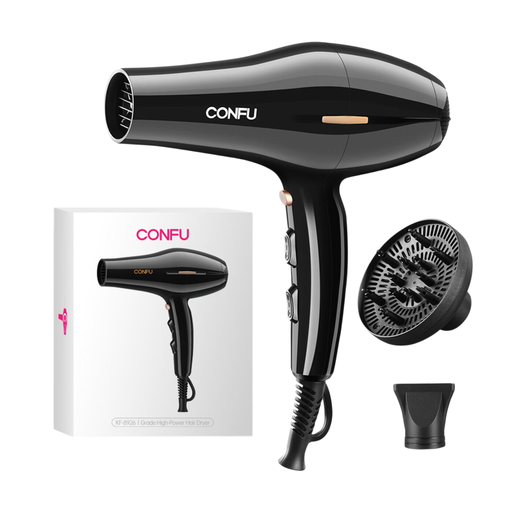
Why This Fits Their Persona: A practical option for shoppers moving from a basic household dryer to a higher-powered model, with separate controls for everyday drying and styling.
It provides six combined wind and temperature modes rather than relying on one high-heat setting. The two air nozzles also offer more targeted styling control.
2300W rated power; six selectable combinations; one-click hot and cold switching; two nozzles supplied.
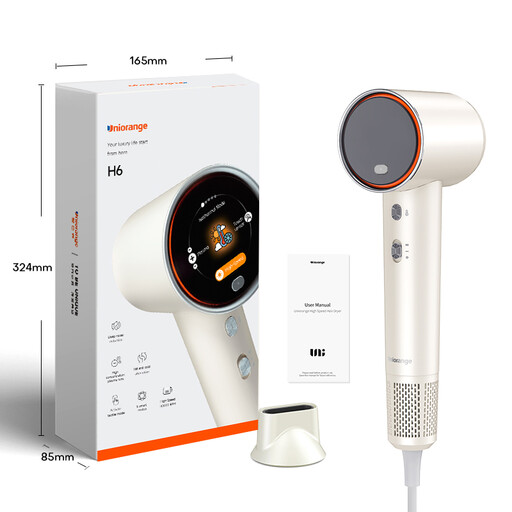
Why This Fits Their Persona: Suits shoppers who want visible controls, high-speed performance and an ionic or plasma hair dryer for regular home styling.
The HD LCD screen shows operating information and gives access to five smart modes, helping you avoid using maximum heat for every session.
110,000 RPM brushless motor; airflow listed at up to 25 m/s; 1600W power; grip sensor; concentrator nozzle.
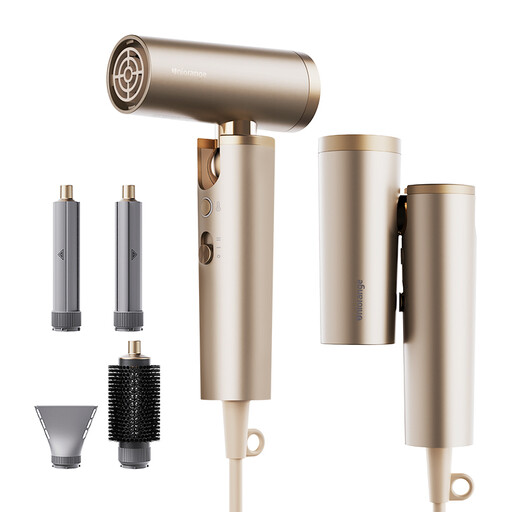
Why This Fits Their Persona: Designed for people who need a compact travel hair dryer that can also handle varied styling routines at home or abroad.
Its foldable construction addresses storage problems, while dual-voltage support is useful when travelling between countries. Check local socket requirements before use.
110,000 motor speed; foldable body; dual-voltage design; four styling attachments; detachable filter and self-cleaning function.
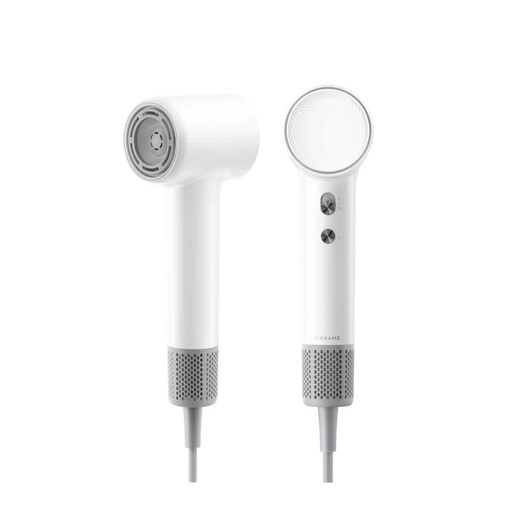
Why This Fits Their Persona: A compact choice for parents, commuters and anyone who wants a low-weight dryer for daily use without a bulky salon-style body.
It lists a 270g weight, five temperature modes and noise of up to 58 dB, making weight and control easier to assess before purchase.
100,000 RPM motor; 270g body; five modes including Child Mode; NTC temperature monitoring; 220–240V UK-ready specification.
Before ordering, compare the full specification rather than a single headline feature:
Use electrical appliances away from baths, showers and basins, never operate them with wet hands and unplug the dryer after use. Allow attachments to cool before removing or storing them.
Not automatically. RPM indicates motor speed, while suitability depends on airflow, temperature settings and attachments. Thick hair may benefit from strong airflow, whereas fine or damaged hair generally needs careful heat selection and constant movement.
An ionic hair dryer or plasma hair dryer may help reduce static and improve the feel of hair during styling. These features are not a substitute for conditioner, suitable heat levels or a concentrator/diffuser matched to your hairstyle. Results vary between users.
Lifespan depends on build quality, frequency of use, filter maintenance and storage. Clean the filter as directed, keep vents clear, avoid wrapping the cord tightly around the body and stop using the appliance if it shows signs of electrical or heat damage. Always follow the manufacturer’s care instructions.