
24/7 Customer Support

Free returns

Same-day & Next-day Delivery

Quality Guaranteed

Unlock Your Welcome Offers: FREE Delivery | Up to 80% OFF | Free 30-day JoyPlus trial
Download the APP
A high-speed hair dryer can reduce time spent drying your hair, but motor speed alone does not determine whether it will suit your routine. A compact 110,000 RPM model may be convenient for a busy morning, while a more traditional 1,800W dryer with a diffuser may offer better control for thick, curly or Afro-textured hair.
The main challenge is separating useful specifications from impressive-sounding claims. Before buying, check how the dryer manages heat, whether its attachments match your hair type and whether its design will remain practical after regular use.
A 110,000 RPM hair dryer may use a compact brushless motor, but RPM is only one part of the airflow system. Fan design, outlet shape, airflow speed, heat control and filter maintenance also affect drying performance.
For example, a dryer with a lower motor speed may still provide strong airflow if it uses an efficient fan and concentrated nozzle. Compare the full specification rather than selecting the largest RPM figure on the product page.
An ionic hair dryer can help reduce static and may make hair feel smoother after drying. However, ion output figures are not a universal measure of results. Very smooth hair may benefit from less ionisation when extra volume is the priority, while frizzy or static-prone hair may benefit from an ionic setting.
Look for adjustable temperature and speed controls so you can change the airflow according to your hair’s condition and desired finish.
A 2,300W dryer may offer strong power, but wattage does not automatically mean shorter drying time or better hair care. A hair dryer with temperature control is more useful than a high wattage figure alone, particularly for fine, coloured or heat-sensitive hair.
Always keep the appliance moving, avoid directing hot air at one area for too long and follow the manufacturer’s instructions for attachments.
Motor speed is useful when comparing modern high-speed models, but also look for a stated airflow speed in metres per second. A fast-drying hair dryer should provide a balance between air volume and controlled direction.
A concentrator is helpful for directing airflow along the hair shaft, while a diffuser spreads air more gently for curls and waves. If you want salon-style shaping at home, check whether the product includes a hair dryer with concentrator attachment.
A practical dryer should provide more than one heat and airflow setting. Two speed levels and three or four temperature options can be enough for everyday use, while five or more combinations offer greater flexibility.
A cool-air or cool-shot setting can help finish a style without relying on continuous heat. Some models also use temperature sensors or constant-temperature systems. These features may help maintain a more consistent outlet temperature, but they do not remove the need for sensible drying technique.
A lightweight hair dryer is easier to hold when drying long or dense hair. Compact models weighing around 270g to 378g can be convenient for travel or daily use, although a smaller body may come with fewer attachments.
If you dry your hair early in the morning or late at night, check the stated noise level. Figures around 56–59dB appear on several compact models, but perceived noise can vary with room acoustics.
A removable or washable filter is also important. Lint and hair can restrict airflow, increase heat and place additional strain on the motor. Clean the filter according to the manual and allow removable parts to dry fully before refitting them.
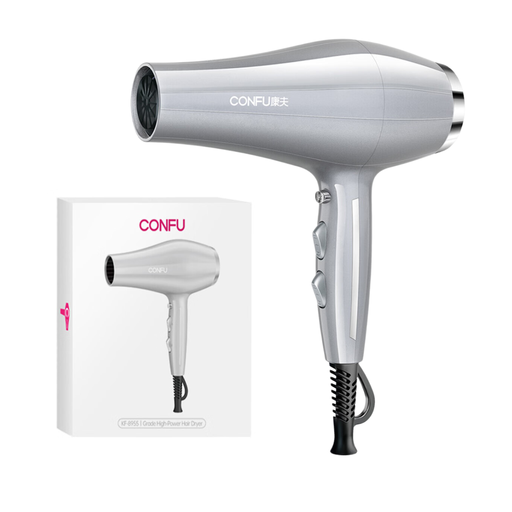
Why This Fits Their Persona: A straightforward option for UK households wanting strong corded performance and adjustable controls without moving to a compact premium design.
Its specification lists both airflow and control details rather than relying only on a motor-speed headline: 21,000 RPM, 21m/s airflow and seven combined modes.
2300W power, a built-in AC motor, overheating protection and constant-temperature technology.
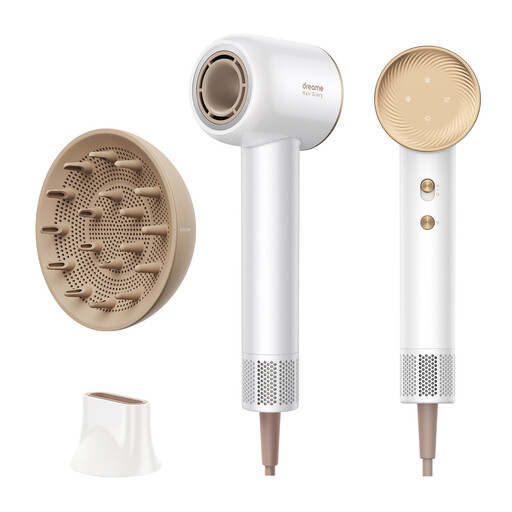
Why This Fits Their Persona: Suitable for shoppers seeking a refined daily dryer with a lightweight body, controlled heat and attachments for both smoothing and curls.
It combines a stated 110,000 RPM motor with two airflow speeds, four temperature settings and NTC temperature control, giving more useful information than RPM alone.
345g body, stated ≤58dB noise level, diffuser and smoothing nozzle included.
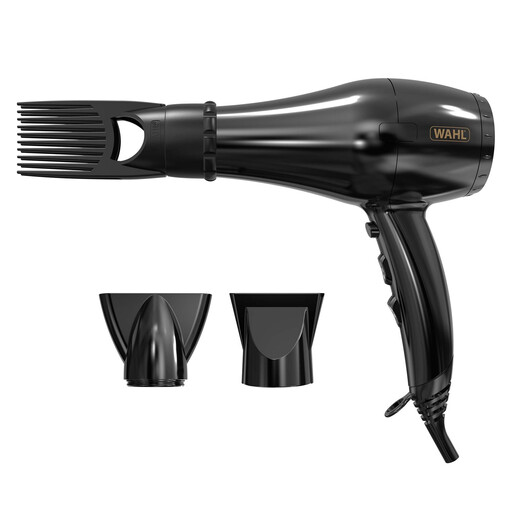
Why This Fits Their Persona: Designed for people looking for a hair dryer for Afro and textured hair, particularly when root access, volume and a longer cable are priorities.
The included pik attachment is designed to direct airflow towards the roots, while separate concentrators support more focused styling.
Ionic conditioning, three heat settings, two speed settings, cool shot and a 3m cable.
We have compiled a complete, real-time list of products that fully satisfy these strict selection criteria and UK safety regulations.
Running cost depends mainly on wattage and how long the appliance operates. A 1,600W dryer used for 10 minutes consumes less electricity than a 2,300W dryer used for the same period, although drying time may differ. Compare the rated power with realistic usage rather than assuming a higher RPM automatically reduces energy consumption.
They can be, provided the dryer offers suitable control and attachments. Choose a model with a diffuser for curls, a pik attachment for root access or adjustable heat for thicker hair. Avoid using the highest heat setting continuously, particularly when an attachment is fitted.
Lifespan varies according to build quality, frequency of use and maintenance. Regularly clean the filter, avoid blocking the vents and stop using the appliance if it becomes unusually hot, emits smoke or makes abnormal noises. Always follow the supplied manual and warranty conditions.