
24/7 Customer Support

Free returns

Same-day & Next-day Delivery

Quality Guaranteed

Unlock Your Welcome Offers: FREE Delivery | Up to 80% OFF | Free 30-day JoyPlus trial
Download the APP
A high-speed hair dryer can reduce morning drying time, but impressive numbers alone do not guarantee a practical purchase. UK shoppers often compare motor speed, wattage and ion counts without checking how the dryer will fit their hair type, bathroom routine or travel plans.
Three common buying pitfalls deserve attention:
The right choice balances airflow, temperature control, weight, attachments and electrical suitability for UK use.
Motor speed is commonly shown in RPM, while airflow may be listed in metres per second or another measurement. These figures describe different aspects of performance, so avoid comparing RPM alone.
A fast-drying hair dryer should combine a suitable motor with a well-designed air outlet. For home use, 1,600–2,300W models are common, but higher wattage is not automatically better. A compact high-speed model may use lower wattage while producing strong concentrated airflow.
For people with thick or long hair, look for:
At least two temperature options are useful, while three heat settings plus a cool shot provide more control for straight, wavy and curly hair. High heat may shorten drying time, but keeping the dryer moving and maintaining distance from the scalp is still important.
For curly or wavy hair, a hair dryer with diffuser attachment can spread airflow and support a gentler drying routine. A hair dryer with concentrator is more suitable for directing air along the hair shaft during smoothing or precision styling.
Check whether the product provides a genuine cold setting or simply a lower heat level. Some models also offer hot-and-cold cycles or temperature sensors, which can be useful when you want to reduce reliance on continuous high heat.
Weight makes a noticeable difference during longer styling sessions. A lightweight hair dryer weighing around 270–380g may be easier to hold, although the listed weight may not include the cable or attachments.
A portable hair dryer should also suit the way you travel:
Always keep electrical appliances away from baths, showers, basins and wet hands. Unplug the dryer after use, particularly in a bathroom, and stop using it if the cord, plug or housing is damaged.
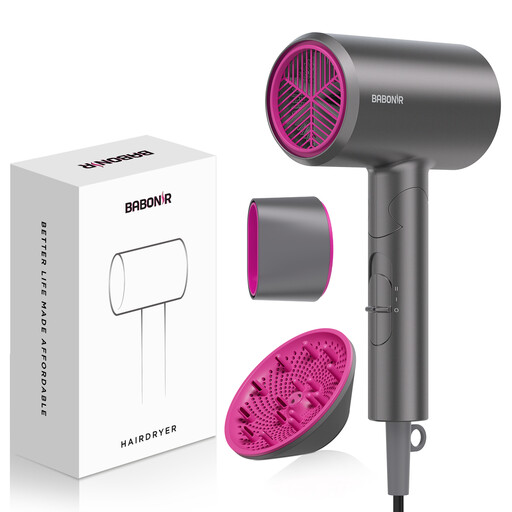
Why This Fits Their Persona: A practical option for everyday home use, short UK trips and shoppers wanting a compact dryer with basic styling flexibility.
It provides adjustable heat and airflow rather than relying on one high setting, with a foldable handle for easier storage.
1,800W power, 330g listed weight, 20,000 RPM motor, diffuser and concentrator included.
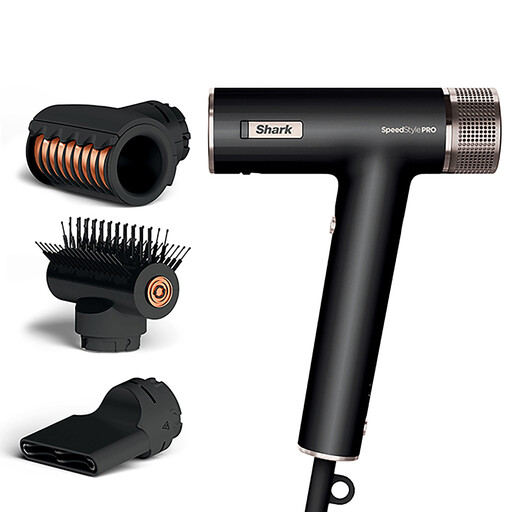
Why This Fits Their Persona: Suitable for shoppers prioritising integrated temperature management and several styling attachments for straight or wavy hair.
Its listed temperature-control system is designed to monitor heat frequently, avoiding a simple one-temperature approach.
Three listed attachments, ionising technology and a 2-year guarantee upon registration in the UK and ROI.
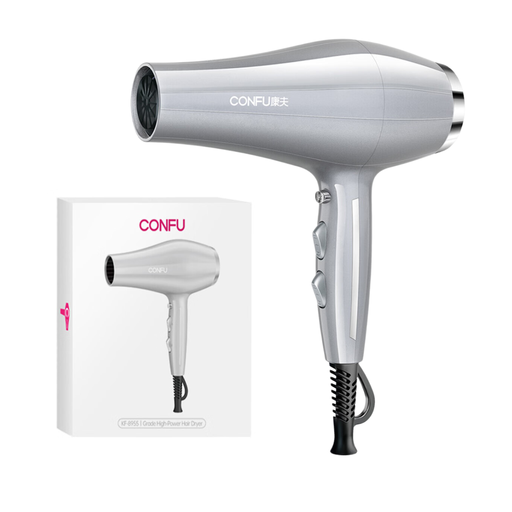
Why This Fits Their Persona: A strong match for households with thick hair or frequent styling routines that value high power and multiple controls.
Seven combined speed and temperature modes give more choice than a basic two-setting dryer, while overheating protection is listed.
2,300W power, 21,000 RPM motor and listed airflow of 21m/s, with constant-temperature control.
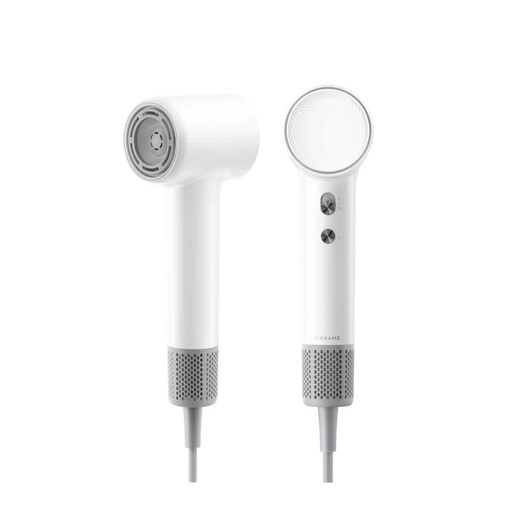
Why This Fits Their Persona: Its small format is convenient for UK commuters, gym bags, hotel stays and anyone who dislikes carrying a full-size dryer.
It prioritises low weight and compact storage while retaining multiple temperature modes, rather than offering portability with only one setting.
270g listed weight, 100,000 RPM motor, five modes, NTC temperature monitoring and a UK-ready 220–240V specification.
A 2,300W dryer uses more electricity per hour than a 1,600W model, although actual cost depends on drying time and your electricity tariff. The practical comparison is:
Power in kilowatts × usage time in hours × unit price = estimated cost.
Clean the intake filter regularly, keep vents unobstructed and allow hot attachments to cool before storage. These simple steps can support consistent airflow and reduce avoidable overheating.
We have compiled a complete, real-time list of products that fully satisfy these strict selection criteria and UK safety regulations.
It can be, provided it includes a diffuser, adjustable airflow and a lower-temperature setting. A diffuser helps distribute air across curls rather than concentrating strong airflow in one area. Avoid brushing or stretching curls aggressively while drying.
Lifespan depends on usage, filter cleaning, motor construction, storage and electrical condition. A dryer used daily in a busy household may experience more wear than one used occasionally. Check the guarantee, replacement filter availability and manufacturer guidance before buying.
An ionic hair dryer may reduce static and help hair feel smoother, but it cannot guarantee a particular finish for every user. Results vary according to hair texture, humidity, products and drying technique. For more control, pair ionic technology with a concentrator, suitable heat setting and steady downward airflow.