
24/7 Customer Support

Free returns

Same-day & Next-day Delivery

Quality Guaranteed

Unlock Your Welcome Offers: FREE Delivery | Up to 80% OFF | Free 30-day JoyPlus trial
Download the APP
A high-speed hair dryer can make morning routines noticeably quicker, but impressive figures alone do not guarantee a suitable purchase. Motor speed, wattage, ion technology and drying claims are often presented without enough context. A dryer that looks powerful on paper may still be noisy, awkward to hold or difficult to control around delicate, coloured or frequently styled hair.
Before choosing a model, watch for three common buying traps.
A 110,000 RPM hair dryer may sound automatically faster than a 21,000 RPM model. However, RPM describes motor rotation rather than the complete drying experience. Airflow speed, fan design, nozzle shape, air pressure and the distance between the dryer and your hair also affect results.
Look for airflow information in metres per second where available, alongside the motor specification. A concentrator nozzle can also improve practical drying by directing air towards a specific section instead of dispersing it.
An ionic hair dryer or negative ion hair dryer is designed to reduce static, which may help hair feel smoother and make frizz easier to manage. A plasma hair dryer may use both positive and negative ions, but ion counts are not directly comparable between brands because testing methods and reporting standards may differ.
Ion technology does not replace sensible heat control. Excessive heat, holding the nozzle too close or repeatedly drying one section can still leave hair feeling dry. Consider ion features as one part of a frizz-control hair dryer, not the sole reason to buy.
An LCD screen, grip sensor or multiple modes can be useful, but only if they suit your routine. A hair dryer with LCD screen may make temperature and mode changes easier to see, while a hands-free design can help users who find it tiring to hold a dryer. Conversely, additional electronics and accessories may add cost, weight or cleaning requirements.
Check the basics first: UK voltage compatibility, plug type, controls, filter access, warranty information and whether the appliance has suitable overheating protection.
Wattage indicates electrical power consumption, not a guaranteed drying speed. For example, the CONFU 8955 lists 2300W, a 21,000 RPM AC motor and airflow of 21m/s. This combination may appeal to users who prioritise strong airflow and several manual settings.
The Uniorange H6 lists a 110,000 RPM brushless motor, airflow of 25m/s and 1600W power. Its lower wattage does not make it directly comparable with the CONFU by wattage alone; the motor and airflow design are different. Treat manufacturer statements such as “five times faster” as product claims rather than a universal result.
A useful dryer should offer enough adjustment for rough drying, styling and finishing. The CONFU provides two wind speeds combined with three temperature settings, creating seven modes. The ZHIBAI S1 lists two speed levels and four temperature options, including hot, warm, cold and circulating air.
A hair dryer with constant temperature control can help prevent the air from continuously becoming hotter during use. The ZHIBAI S1 specifies intelligent temperature control at 57°C, with temperature monitoring stated at 100 times per second. This is a product specification, not a guarantee that all hair will remain undamaged. Keep the dryer moving and use a lower setting when appropriate.
A lightweight hair dryer is easier to use for long or thick hair. The ZHIBAI S1 is listed at 378g and approximately 56dB, making those specifications particularly relevant to users concerned about arm fatigue or household noise.
Filters should be removable or straightforward to clean. Blocked air inlets can reduce airflow and contribute to overheating. Before buying, check whether the filter can be accessed without tools and whether replacement parts are available.
For UK use, confirm that the product is suitable for 220–240V, 50Hz domestic electricity and inspect the supplied plug or adapter details. Never use a mains hair dryer near a bath, shower, sink or other water source. Unplug it after use, allow hot parts to cool and follow the supplied instructions.
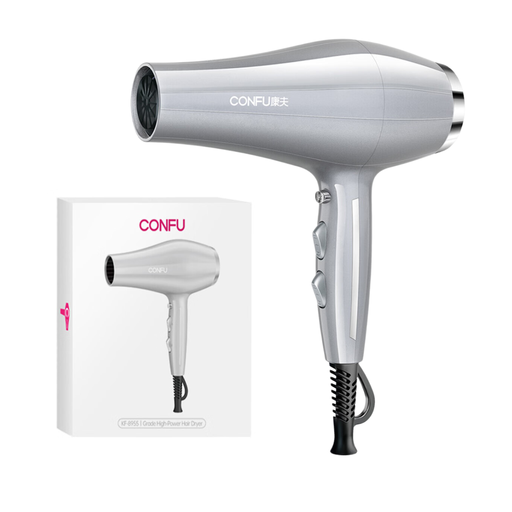
Why This Fits Their Persona: A practical choice for everyday home drying when you want high electrical power, adjustable modes and a familiar handheld format without prioritising connected features.
Its stated airflow of 21m/s gives more useful context than relying on the 21,000 RPM figure alone. Seven combinations also reduce the need to use one intense setting for every hair type.
2300W power; AC motor; two speed controls and three temperature settings; constant-temperature technology is listed.
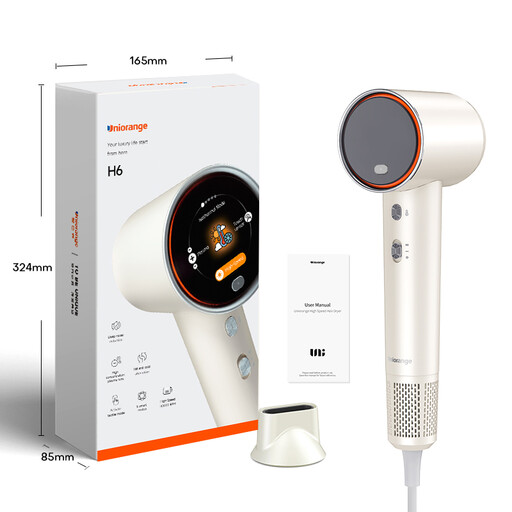
Why This Fits Their Persona: Suits technology-focused shoppers who want a modern interface, high-speed motor and plasma-ion feature in one salon-style appliance.
The HD LCD screen shows the selected mode, while the product listing specifies five smart modes rather than leaving settings unclear. The 25m/s airflow figure provides a practical comparison point.
110,000 RPM brushless motor; 1600W power; listed one-billion plasma ions; grip sensor and concentrator nozzle.
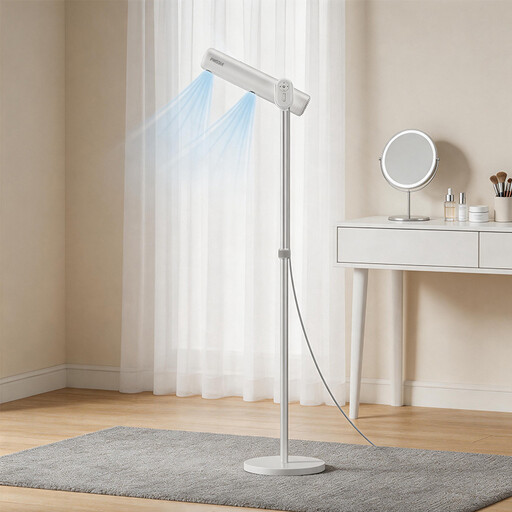
Why This Fits Their Persona: Designed for people who prefer hands-free drying, need to style without holding a conventional dryer or want a distinctive giftable appliance for a home dressing area.
The stand-based format makes its hands-free purpose clear, while dual air outlets are specified for surrounding airflow. It is not a conventional compact travel dryer, so buyers can assess space requirements first.
1500–1700W rated power; five speed settings; 220–240V specification; wireless remote and adjustable stand.
We have compiled a complete, real-time list of products that fully satisfy these strict selection criteria and UK safety regulations.
Not necessarily. Running cost depends mainly on wattage, drying duration and electricity tariff. A lower-wattage model may use less electricity per minute, but a faster drying process can reduce total operating time. Compare both the rated power and the airflow specifications.
They can offer useful lower-temperature and cold-air settings, but no appliance can remove all heat-related risk. Use the lowest effective temperature, keep the dryer at a sensible distance and avoid repeatedly drying the same section. A constant-temperature function may make heat management easier, but follow the manufacturer’s instructions.
Lifespan varies with build quality, usage frequency, filter maintenance and storage. Regularly removing lint and hair from the filter helps maintain airflow. Stop using the appliance if it becomes unusually hot, emits smoke or makes abnormal noises, and consult the supplied safety guidance rather than continuing to operate it.