
24/7 Customer Support

Free returns

Same-day & Next-day Delivery

Quality Guaranteed

Unlock Your Welcome Offers: FREE Delivery | Up to 80% OFF | Free 30-day JoyPlus trial
Download the APP
A high-speed hair dryer can reduce time spent getting ready, but headline figures do not tell the whole story. Motor speed, ion output and drying-time claims are useful only when considered alongside airflow control, heat management, weight and attachments.
For UK households, there are also practical details that can turn an appealing purchase into an inconvenience: an unsuitable plug, difficult filter cleaning, excessive heat or a body that becomes tiring to hold. The following guide explains what to check before choosing a fast-drying hair dryer for everyday use, travel or styling.
A 110,000 RPM hair dryer sounds powerful, but revolutions per minute describe motor speed rather than the amount of air reaching your hair. Airflow speed, measured in metres per second, nozzle design and the motor’s ability to maintain output all affect drying performance.
A lower-RPM model may still be suitable for short or fine hair, particularly if it has a concentrator or diffuser. Compare the complete specification rather than choosing by RPM alone.
An ionic hair dryer is designed to release charged particles that may help reduce static and make hair feel smoother during styling. A plasma ionic hair dryer uses a related ion-generation approach, but claims about repairing damage, treating the scalp or killing microorganisms should not be treated as established results without suitable independent evidence.
The practical question is whether the dryer provides adjustable heat, appropriate airflow and a nozzle that suits your routine. Ion technology can be a useful frizz-control feature, but it does not replace sensible heat use.
A dryer that is fast but heavy may be frustrating for longer hair. Check the listed weight, handle shape, cord length and filter design. Removable filters are particularly useful because blocked air inlets can restrict airflow and contribute to overheating.
Foldable designs are convenient, but inspect how the hinge stores and whether attachments remain secure. For a foldable travel hair dryer, also check voltage compatibility rather than assuming that a compact body means worldwide use.
Wattage indicates electrical power consumption, not a guaranteed drying speed. For comparison, the products in this guide range from 1,400W to 1,800W. High-speed models may list brushless motors, airflow rates such as 25m/s or motor speeds of 110,000 RPM.
Use these figures together:
A lightweight hair dryer around 330–380g can be easier to use with an outstretched arm. However, weight distribution matters too, so a compact body with a balanced handle may feel more comfortable than a lighter but awkward design.
Look for at least two speed settings and several temperature options. Constant-temperature sensors can help regulate outlet heat, but they do not make a dryer risk-free. Keep the nozzle moving, avoid directing hot air at one area for too long and use a cooler setting when shaping or finishing.
A cool-shot function is useful for setting a style. For curly or wavy hair, a hair dryer with diffuser distributes airflow more gently than a bare outlet and can help maintain the shape of loose waves while drying.
A hair dryer with concentrator focuses air for smoothing, straightening and directing roots. A diffuser is more suitable for waves and curls. Multi-stylers may include brushes, curling barrels and flyaway attachments, but more accessories also mean more storage and cleaning requirements.
Before purchasing, ask:
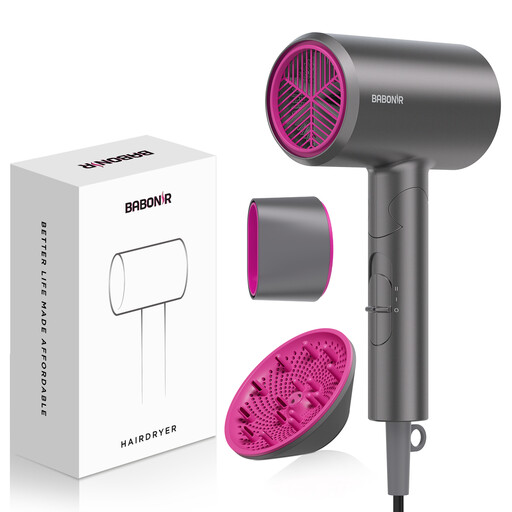
Why This Fits Their Persona: A practical option for everyday home drying and occasional short trips, with a 330g body and folding handle that saves cupboard or suitcase space.
It offers clear controls rather than relying only on a headline motor figure: 3 temperature settings, 2 power settings and a removable concentrator and diffuser.
1800W rated power; listed 20,000 RPM motor and 22m/s airflow; diffuser and concentrator included.
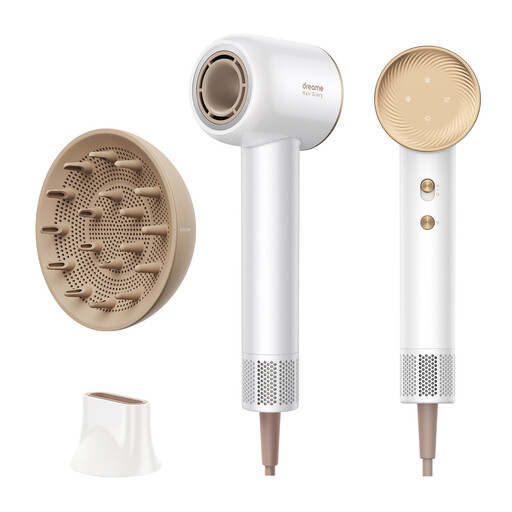
Why This Fits Their Persona: Suits users who want a compact daily dryer with fast airflow, heat adjustment and attachments for both general drying and curl-friendly styling.
Its specification includes more than 110,000 RPM: 70m/s listed airflow, NTC temperature control, 2 speeds and 4 temperature levels.
Listed 345g weight; smoothing nozzle and diffuser supplied; noise level specified at no more than 58dB.
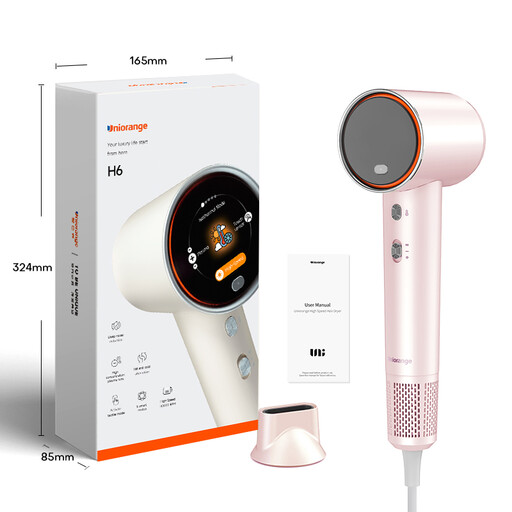
Why This Fits Their Persona: A feature-led choice for frequent users who want visible settings, multiple modes and a high-speed motor in a home styling tool.
The HD LCD screen shows operating information, while 5 smart modes and a grip sensor provide more control than a simple two-switch dryer.
1600W power; listed 110,000 RPM motor and 25m/s airflow; concentrator included.
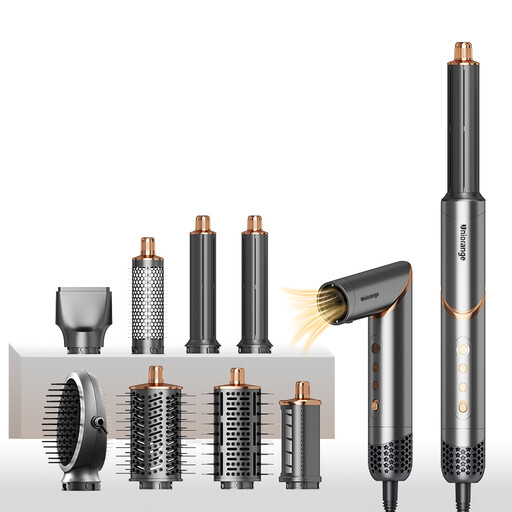
Why This Fits Their Persona: Suitable for households that want one tool for drying, smoothing, adding volume and creating curls rather than storing several separate appliances.
Its 8-piece attachment system makes the styling purpose clear, while 4 heat and 3 speed settings allow adjustment instead of forcing one high-heat mode.
Automatic left and right curling barrels; smoothing comb, brushes, concentrator and anti-flyaway nozzle included.
Before ordering, confirm that the product is supplied for 220–240V UK use and includes a suitable UK plug or approved adapter arrangement. A dual-voltage model, such as the listed H16 portable dryer, may be more convenient for international travel, but the voltage selector must be set correctly.
For everyday electricity costs, compare wattage and operating time. A 1,800W dryer uses more power per minute than a 1,400W model, but a shorter drying session may reduce the difference. The actual cost depends on your tariff and usage duration.
Never use a hair dryer near a bath, shower, sink or wet hands. Unplug it after use, keep air vents clear and allow hot attachments to cool before storage. Clean the filter according to the instructions and stop using the appliance if the cord is damaged or it produces smoke, sparks or an unusual smell.
It can be worthwhile if you have thick or long hair, use a dryer daily or want a compact appliance with controlled airflow. For short or fine hair, a lighter 1,400W–1,800W model with suitable heat settings may provide enough performance without paying for extra motor features.
Ionic systems are designed to reduce static, which may make hair feel smoother and help with visible flyaways. Results vary according to hair type, humidity, products and technique. Use a concentrator for directed smoothing and avoid excessive heat.
There is no universal lifespan. Regular filter cleaning, unobstructed vents and careful cable storage can support reliable operation. A dryer used frequently may experience more wear, so check the warranty, replacement-accessory availability and filter-cleaning instructions before purchase.