
24/7 Customer Support

Free returns

Same-day & Next-day Delivery

Quality Guaranteed

Unlock Your Welcome Offers: FREE Delivery | Up to 80% OFF | Free 30-day JoyPlus trial
Download the APP
A high-speed hair dryer can reduce morning drying time, but headline numbers do not tell the whole story. A 110,000 RPM motor may sound impressive, while a conventional 2,300W model may offer stronger-feeling airflow for certain styling tasks. The right choice depends on motor design, temperature control, attachments, weight and how you normally dry your hair.
Before buying, watch for three common traps:
A brushless motor hair dryer can be compact and efficient, with many modern models rated at 100,000–110,000 RPM. However, also check the stated airflow speed, noise rating and power input.
For example, the Gtech DryOnic lists a 110,000 RPM brushless motor and 1,600W rated power, while the CONFU 8955 uses a 21,000 RPM AC motor and 2,300W power. These figures describe different parts of the appliance, so they should not be compared as if they were the same measurement.
If you have thick, long or textured hair, prioritise consistent airflow and a suitable attachment over RPM alone. A high-speed hair dryer for textured hair should ideally include a diffuser or pik-style attachment, multiple heat levels and enough airflow to reach the roots.
A useful hair dryer with temperature control should offer more than one hot setting. Lower heat can be preferable for fine, coloured or fragile hair, while a cool setting is useful for finishing a style.
Some models provide preset modes, while others combine separate speed and temperature controls. The ZHIBAI S1, for instance, lists four temperature options, two airflow speeds and an intelligent constant-temperature setting of approximately 57°C. The Dreame Super Mini includes cold air, gentle heat, hot air, hot-and-cold cycles and a child mode.
Look for:
These features do not make heat harmless. Keep the dryer moving, avoid holding hot air close to the scalp and follow the supplied instructions.
A lightweight hair dryer can make a noticeable difference if you dry for several minutes or style with a brush. Listed weights range from approximately 270g for the Dreame Super Mini to around 600g for the Gtech DryOnic.
A quiet hair dryer may be more suitable for early mornings, shared homes or children. The ZHIBAI S1 lists approximately 56dB, while the Dreame Super Mini and Dreame Glory Combo list noise levels of up to 58dB. Noise measurements can vary according to testing conditions, so treat them as useful points of comparison rather than a guarantee of silent operation.
Attachments should match your routine:
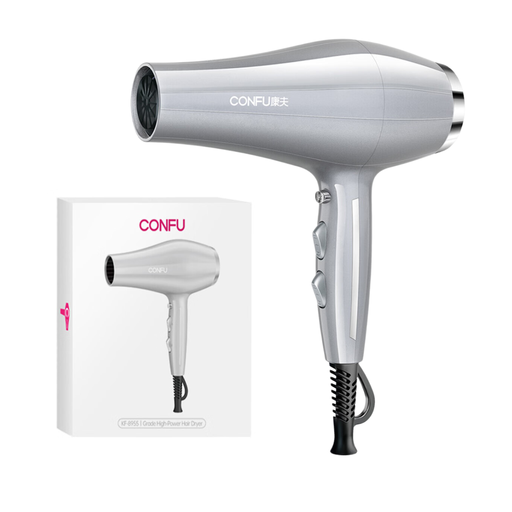
Why This Fits Their Persona: A practical option for everyday home drying, with 2,300W power, a 21,000 RPM AC motor and seven combined speed and temperature modes.
It does not rely on an RPM headline alone; the listing also specifies power, airflow and selectable heat and speed combinations.
2,300W rated power; seven mode combinations; constant-temperature technology and overheat protection listed.
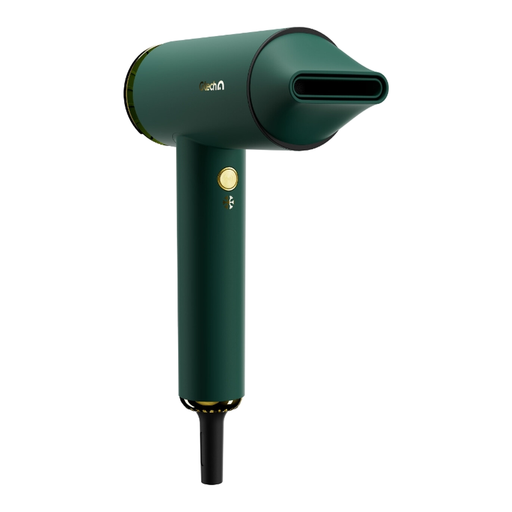
Why This Fits Their Persona: Suits shoppers wanting a compact ionic hair dryer with precise controls, magnetic attachments and a lightweight design for home and travel.
The specification includes four heat levels, four speeds and a stated power rating, rather than presenting ionic technology as the only feature.
110,000 RPM brushless motor; approximately 0.6kg; magnetic concentrator and diffuser; two-year warranty listed.
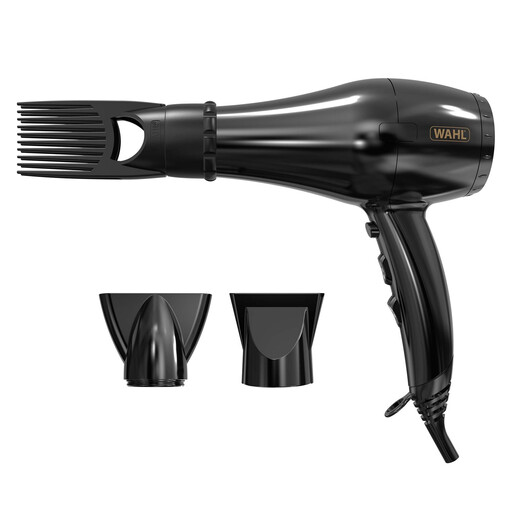
Why This Fits Their Persona: Designed for Afro, curly and textured hair, with a pik attachment intended to direct airflow towards roots and thicker sections.
It focuses on a hair-specific attachment and adjustable heat, rather than assuming a high motor speed suits every texture.
1,800W power; ionic conditioning; pik attachment and two concentrator nozzles; three heat and two speed settings.
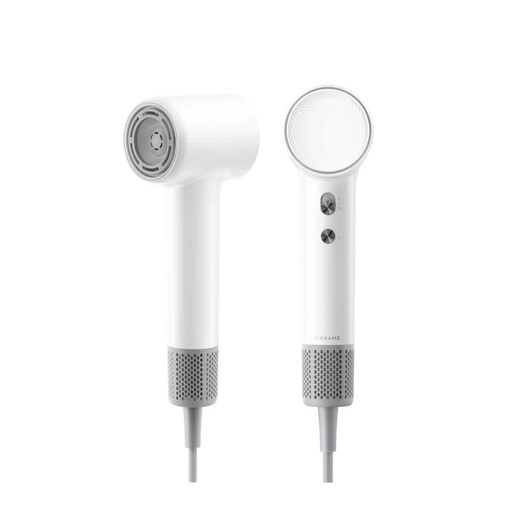
Why This Fits Their Persona: Its 270g body, compact format and UK-ready 220–240V specification suit small bathrooms, overnight bags and regular travel.
The compact design is supported by stated airflow, temperature modes, noise level and voltage information.
100,000 RPM brushless motor; five modes including child mode; stated noise level of up to 58dB.
We have compiled a complete, real-time list of products that fully satisfy these strict selection criteria and UK safety regulations.
Running cost depends mainly on the appliance’s wattage and how long it operates. A 1,600W model used for 10 minutes consumes less electricity than a 2,300W model used for the same period, although drying time can differ. Compare power ratings and your typical drying duration rather than assuming a faster motor automatically costs less.
Not automatically. A 110,000 RPM dryer may provide fast airflow, but textured, curly or very thick hair may benefit more from a diffuser or pik attachment, adjustable heat and controlled airflow. Fine hair may need a gentle mode to avoid excessive heat and tangling.
Lifespan depends on motor quality, cleaning and frequency of use. Keep the air inlet clear, clean the removable filter as instructed and stop using the appliance if it becomes unusually hot, emits smoke or makes abnormal noises. Always follow the manufacturer’s maintenance and safety guidance.