
24/7 Customer Support

Free returns

Same-day & Next-day Delivery

Quality Guaranteed

Unlock Your Welcome Offers: FREE Delivery | Up to 80% OFF | Free 30-day JoyPlus trial
Download the APP
A high-speed hair dryer can reduce morning drying time, but headline figures do not tell the whole story. UK shoppers should look beyond phrases such as “salon-level”, “5X faster” or “billion ions” and check how the dryer will actually fit their hair type, bathroom routine, storage space and styling habits.
A powerful motor is not automatically the right choice. A compact model may suit short hair and travel, while thick, curly or Afro-textured hair may need a suitable pik or diffuser attachment. The right purchase depends on airflow control, heat regulation, handling comfort and safe UK electrical use.
A listing may promote a 110,000 RPM hair dryer, but motor speed alone does not confirm how much air reaches the hair. Airflow speed, nozzle design, temperature control and the shape of the air outlet also matter. Compare published airflow figures where available, but remember that manufacturers may measure them under different conditions.
An ionic hair dryer, plasma dryer or frizz-control hair dryer may help reduce static during styling, but large ion counts should not be treated as a guaranteed cosmetic or health outcome. Hair texture, products used, humidity and technique all affect the finish. Look for practical controls such as a cool setting, adjustable heat and an appropriate diffuser or concentrator.
A 2,300W professional hair dryer can provide strong electrical input, but wattage is not a direct measure of drying speed. Smaller 1,600W models with high-speed brushless motors may produce strong airflow with a lighter body. Check the complete specification rather than choosing the largest number on the box.
For daily home use, compare airflow speed, speed settings and temperature settings together. A model with several combinations gives you more control than one with a single intense setting. Constant-temperature or sensor-controlled systems can help avoid relying on maximum heat, although users should still keep the dryer moving and maintain a sensible distance from the scalp.
The CONFU 8955, for example, lists a 21,000 RPM motor, 21m/s airflow, two wind speeds and three temperature levels, creating seven combinations. By contrast, the Dreame Glory Combo lists a 110,000 RPM motor, up to 70m/s airflow, two speeds and four temperature settings. These figures are useful for comparison, but they are not measured on an identical test basis.
A hair dryer with diffuser is generally more practical for curls, waves and textured hair because it spreads airflow rather than concentrating it on one section. A hair dryer with concentrator nozzle is more suitable for directed smoothing, fringes, straight styles or root shaping.
For Afro and thicker textured hair, a pik attachment can help direct airflow towards the roots. Check attachment guidance carefully: the Wahl PowerPik range states that its OnePik and concentrator attachments should not be used on the highest heat setting.
A lightweight hair dryer can make a noticeable difference during longer styling sessions. The Dreame Super Mini is listed at 270g, while the Dreame Glory Combo lists 345g. A low-noise hair dryer may be more comfortable in a shared home, but published decibel figures are usually approximate and depend on distance and operating mode.
Removable filters are also important. Lint and hair can restrict the inlet, increase heat build-up and reduce airflow. Choose a model with an accessible filter and clean it according to the supplied instructions.
For UK use, confirm that the product is rated for 220–240V and supplied with a suitable UK plug. Never use a hair dryer near a bath, shower, basin or other water source, and unplug it after use.
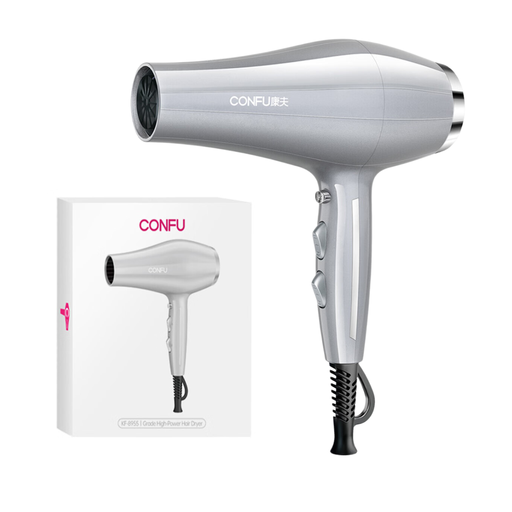
Why This Fits Their Persona: A straightforward home dryer for shoppers who want strong airflow, multiple modes and familiar controls without prioritising smart displays or travel features.
Its specification lists airflow, motor speed, temperature control and overheat protection rather than relying only on a headline motor figure.
2300W power, 21m/s airflow, seven mode combinations and constant-temperature technology.
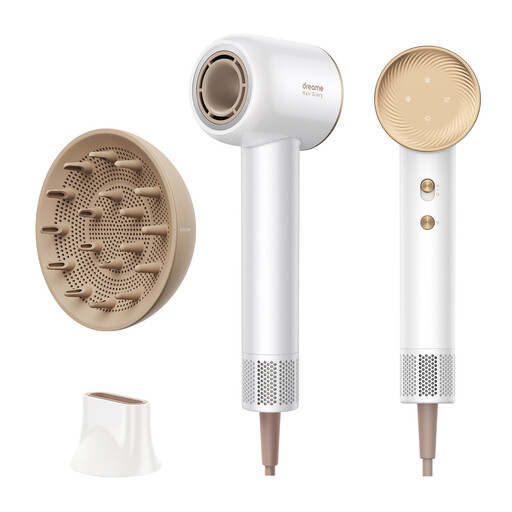
Why This Fits Their Persona: Suitable for regular home styling where low weight, quieter operation and both smoothing and curl-support attachments matter.
It combines the motor rating with listed airflow, weight, noise and temperature-control details, making the specification easier to assess.
345g body, up to 70m/s airflow, 300 million platinum anions per cm³, diffuser and smoothing nozzle.
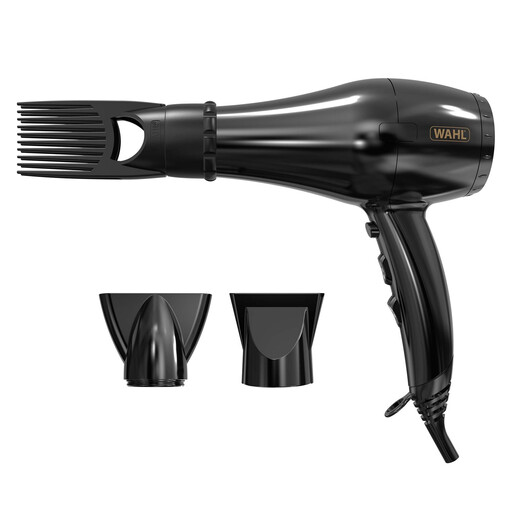
Why This Fits Their Persona: Designed around root access and volume, this option is particularly relevant for Afro, curly and textured hair routines.
The included OnePik attachment provides a dedicated alternative to concentrating intense heat directly on one small area.
1800W motor, ionic technology, three heat settings, two speeds, OnePik attachment and two concentrator nozzles.
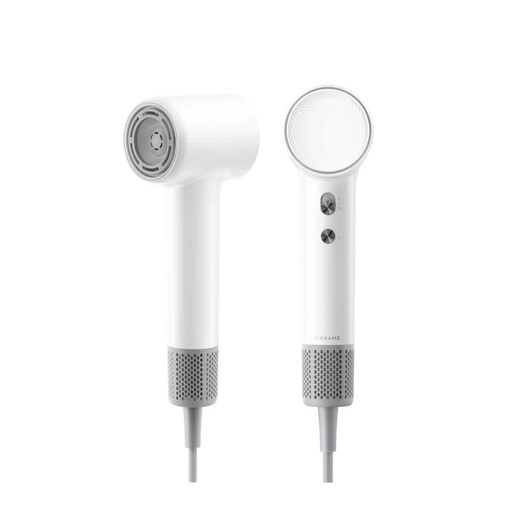
Why This Fits Their Persona: A portable hair dryer for UK commuters, smaller bathrooms and travellers who want a low-weight design with multiple temperature modes.
Its compact size does not remove useful controls: the listed modes include gentle heat, hot air, hot-and-cold cycles and Child Mode.
270g weight, 100,000 RPM motor, listed noise level of ≤58dB, 220–240V UK-ready specification and five modes.
We have compiled a complete, real-time list of products that fully satisfy these strict selection criteria and UK safety regulations.
Running cost depends mainly on wattage and time. A simple calculation is: watts ÷ 1,000 × hours used × your electricity tariff. A 1,600W dryer used for 10 minutes consumes about 0.267kWh. Your actual cost depends on your household electricity rate and how long the appliance operates.
There is no universal lifespan. Motor design, filter cleanliness, frequency of use and storage conditions all affect service life. A removable, regularly cleaned filter can help maintain airflow. Check the manufacturer’s warranty, replacement-part policy and care instructions before buying.
Not automatically. Motor speed is only one specification. For curls, waves, Afro hair or thicker textures, attachment choice and adjustable heat may matter more than RPM. Look for a diffuser or pik attachment, several temperature settings and clear guidance for safe attachment use.