
24/7 Customer Support

Free returns

Same-day & Next-day Delivery

Quality Guaranteed

Unlock Your Welcome Offers: FREE Delivery | Up to 80% OFF | Free 30-day JoyPlus trial
Download the APP
A high-speed hair dryer can reduce time spent drying wet hair, but motor speed alone does not determine whether a model will suit your routine. UK shoppers also need to consider heat control, airflow, weight, noise, attachments and electrical safety.
Marketing can make these appliances seem interchangeable. Three common traps are worth avoiding before you buy.
A high-RPM hair dryer may have a motor rated at 100,000 or 110,000 RPM, while a conventional professional hair dryer may quote a lower figure but provide strong wattage and concentrated airflow. RPM describes motor rotation speed; it does not automatically tell you how much air reaches your hair.
Check for a stated airflow speed, measured in metres per second, as well as motor speed. A useful concentrator nozzle can also make a noticeable difference when directing airflow along the hair shaft.
An ionic hair dryer or negative ion hair dryer may help reduce static electricity, which can make hair appear smoother and less flyaway after drying. However, ion counts are not directly comparable between products unless the measurement method is the same.
Look for practical controls alongside ionic technology. Adjustable heat, a cool setting and a removable filter are often more useful for everyday styling than a large ion figure alone. If you have curly hair, also check whether the box includes a hair dryer with diffuser attachment.
A dryer can be powerful but inconvenient if it is heavy, loud or difficult to clean. A bulky handle may cause arm fatigue, especially when drying thick or long hair. Filters that cannot be removed may also collect lint and hair, restricting airflow over time.
For shared homes, early-morning routines or sleeping children, a quiet hair dryer with a stated decibel level may be more suitable. Remember that quoted noise figures can vary according to testing conditions and distance.
For UK home use, compare airflow speed, wattage and motor type together. A 1,600W high-speed model may deliver efficient airflow without the electrical demand of a 2,300W conventional dryer, but the actual drying experience depends on the fan, nozzle and heat settings.
Brushless motors are used in several compact high-speed models and can support high rotational speeds. AC motors, such as the one specified for the CONFU 8955, are common in traditional professional hair dryer designs. Neither specification should be viewed in isolation.
A temperature-controlled hair dryer should provide more than a single hot setting. Look for multiple heat levels, speed controls and a cool-shot or cool-air mode for finishing.
Some models specify sensor monitoring. The Dreame Glory Combo lists intelligent NTC temperature control with detection 300 times per second, while the Dreame Mini lists five modes including gentle heat, hot air, hot-and-cold cycles and Child Mode. These features offer more control, but they do not remove the need to keep the dryer moving and avoid prolonged heat on one area.
A lightweight hair dryer is easier to hold above the head. The Dreame Mini is listed at 270g, the Dreame Glory Combo at 345g and the ZHIBAI S1 at 378g. Compare whether these weights refer to the main unit only and check the total kit contents.
For UK households, confirm the voltage and plug details before ordering. The Dreame Mini is specified for 220–240V with a UK plug. Travellers should look for dual-voltage operation: the Uniorange H16 lists 100–240V, although a suitable plug adaptor may still be needed in some countries.
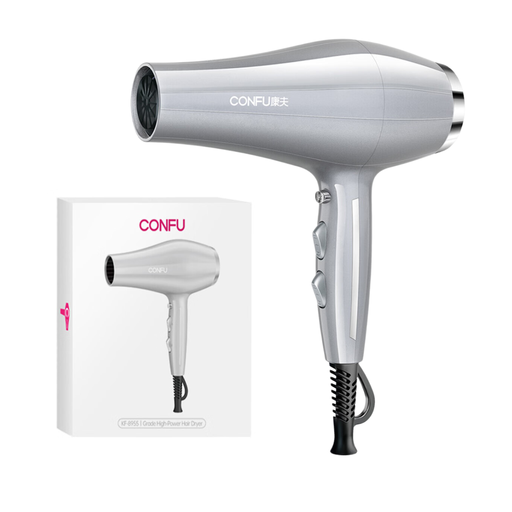
Why This Fits Their Persona: A straightforward option for UK users moving from a basic dryer to a faster model, with familiar controls and strong rated power.
It lists both a 21,000 RPM AC motor and 21m/s airflow, so buyers have more than an RPM figure to consider. Seven combined speed and temperature modes also avoid relying on one very hot setting.
2300W rated power, constant-temperature technology, overheating protection and two wind-speed settings combined with three temperature levels.
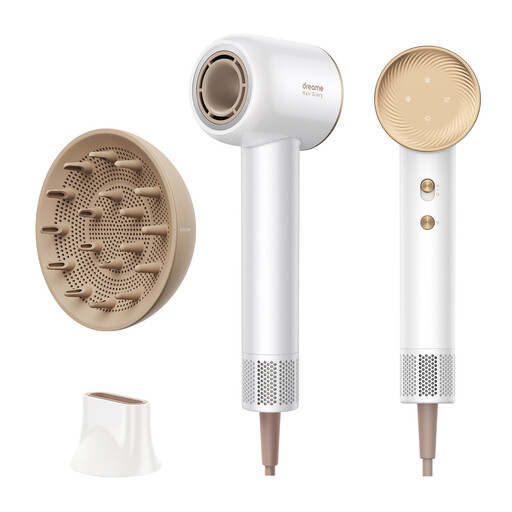
Why This Fits Their Persona: Suits shoppers seeking a compact salon-style routine with low-noise operation and attachments for both smoothing and curls.
Its listed 70m/s airflow is paired with intelligent temperature control rather than marketed only through motor speed. The removable filter also supports routine maintenance.
110,000 RPM brushless motor, 345g main-unit weight, two airflow speeds, four temperature levels, smoothing nozzle and diffuser.
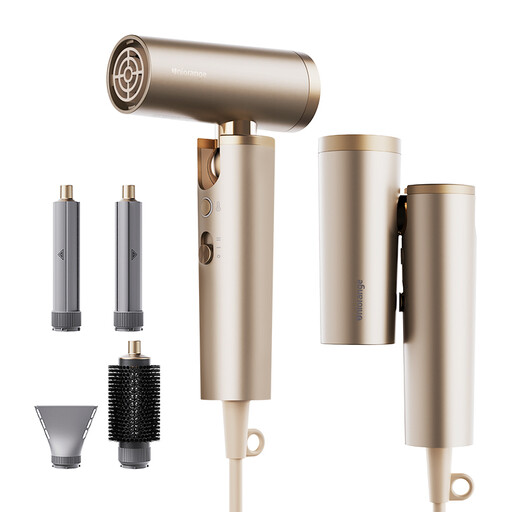
Why This Fits Their Persona: Designed for frequent travellers or small homes where a foldable dryer and versatile styling kit can reduce luggage and storage demands.
The foldable body addresses portability directly, while dual-voltage operation is specified as 100–240V. Buyers should still check destination plug requirements before use.
110,000 RPM motor, detachable filter with self-cleaning mode, fold-flat design and four styling attachments.
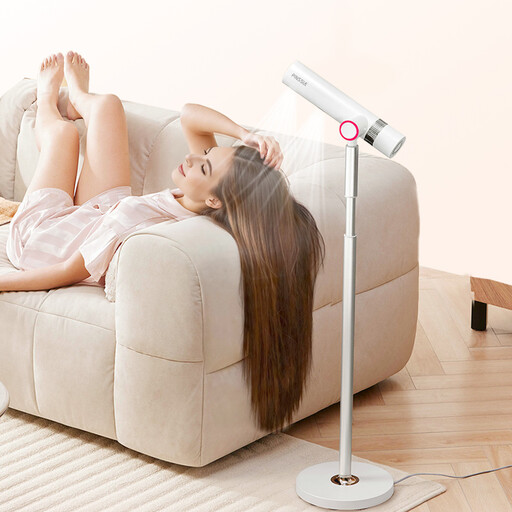
Why This Fits Their Persona: A practical match for users who want hands-free drying, including busy parents or people who find holding a dryer tiring.
The stand, dual outlets and automatic swing are specified features rather than assumptions based on a portable dryer design. A removable rear cover supports cleaning.
120,000 RPM motor, 30° oscillation, five temperature settings, three fan speeds and a listed low-noise figure of 57dB.
Before buying or using a fast-drying hair dryer:
Not necessarily. Running cost depends mainly on wattage, drying time and electricity tariff. A 1,600W model used for less time may consume a similar amount of energy to a 2,300W dryer used for longer. Compare the rated power with your actual routine rather than assuming a lower wattage always costs less.
Lifespan varies according to motor design, usage frequency, filter maintenance and build quality. Keeping the filter free from lint, avoiding blocked vents and storing the dryer dry can help maintain performance. Stop using any appliance that becomes unusually hot, emits smoke or develops abnormal noises.
An ionic hair dryer may help reduce static and flyaways, particularly in dry conditions, but results vary by hair type and styling method. For frizzy or curly hair, prioritise adjustable temperature, a diffuser or concentrator attachment and a cool-air setting alongside any ion feature.