
24/7 Customer Support

Free returns

Same-day & Next-day Delivery

Quality Guaranteed

Unlock Your Welcome Offers: FREE Delivery | Up to 80% OFF | Free 30-day JoyPlus trial
Download the APP
As a Joybuy Product Recommendation Officer, my role is to help you navigate the market and find products that deliver on their promises. When it comes to automotive painting, the quality of your preparation materials is just as important as the paint itself. A flawless finish can be quickly compromised by a poor choice of masking film, leading to costly and time-consuming rework. This guide will help you identify the critical features of a reliable high temperature automotive masking film and avoid common purchasing mistakes.
Many professionals and DIY enthusiasts fall into a few common traps when selecting protective sheeting, often attracted by a low price point or misleading marketing. Understanding these pitfalls is the first step toward a better purchase.
extra thick painters plastic provides a much more robust barrier.pre-taped masking film is a critical component. A low-quality adhesive can fail to create a sharp paint line or, even worse, bake onto the bodywork under heat. This leaves a stubborn, sticky residue that requires aggressive solvents to remove, potentially damaging the very finish you've just applied or the underlying surface.To ensure your masking film is up to the task, focus on these three non-negotiable technical specifications.
This is the single most important factor for automotive applications. A true heat resistant masking film must be able to withstand the temperatures of a paint curing or baking cycle without degrading. Look for a specific temperature rating on the product specifications. For most professional and serious DIY work involving heat lamps or low-bake ovens, a film rated to at least 80°C is the standard. Without this, you are using a product not fit for purpose.
The durability of the film is determined by its material and thickness. Most high-performance films are made from high-density polyethylene (PE) or polypropylene (PP), which offer good resistance to solvents and tearing. While manufacturers don't always state the thickness in microns, look for terms like "upgraded thickness" or "tear-resistant." A thicker film not only prevents accidental rips but also has better "cling" due to static, helping it adhere to the vehicle's contours and stay in place.
A tape and drape for painting system, where the masking tape is pre-attached to the film, is a significant time-saver and ensures a consistent edge. However, the quality of the tape is paramount. The adhesive should be strong enough to create a sharp, clean paint line but be formulated for clean removal after exposure to heat. This combination prevents paint bleed and eliminates the risk of leaving residue on chrome, glass or existing paintwork.
Based on these criteria, we've identified several products from our catalogue that are suited for distinct types of users and projects.
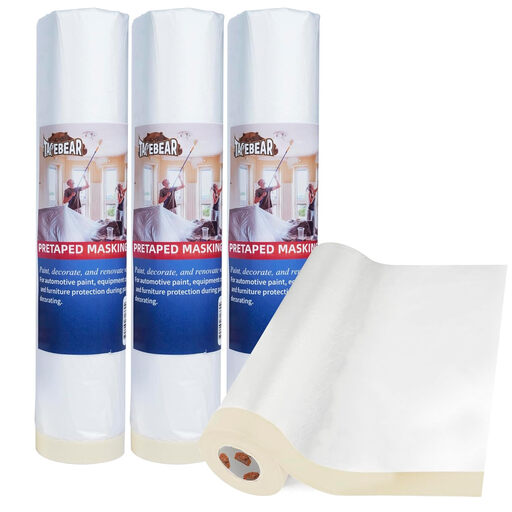
Why This Fits Their Persona: This film is designed for large-scale professional jobs. The 2.6-metre width is sufficient to cover the entire side or roof of most cars and vans in a single pass, saving significant time. The specified heat resistance makes it suitable for professional bake cycles.
It directly counters the "All-Purpose" myth with its stated 80°C temperature resistance. The "upgraded thickness" also addresses the pitfall of using flimsy, tear-prone films on large, complex surfaces.
Combines extra-wide coverage for efficiency with the essential high-temperature performance required for professional paint curing.
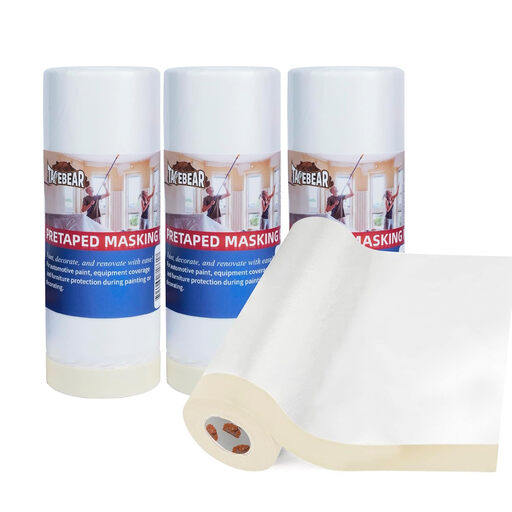
Why This Fits Their Persona: For technicians focusing on smaller areas like bumpers, wings or individual panels, this narrower roll is more economical and easier to handle. It provides the same critical heat resistance and thickness as the larger version, but in a more targeted size.
This film's adhesive is formulated for clean removal after heat exposure, directly addressing the "residue nightmare" pitfall. Its professional-grade specifications ensure it performs reliably for smaller, high-value jobs.
Offers professional-grade 80°C heat resistance and durability in a more manageable and less wasteful size for component-specific work.
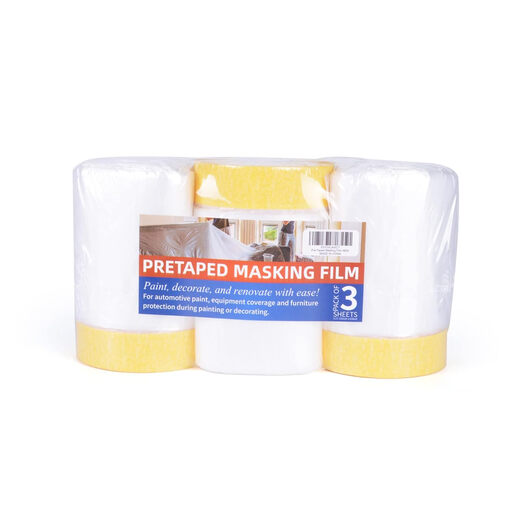
Why This Fits Their Persona: For home renovation or decorating projects where high heat is not a factor, this multi-pack offers great value. The integrated tape and film system is ideal for quickly protecting skirting boards, window frames and furniture from paint splatters.
While not for automotive baking, it is a purpose-built solution that is far superior to basic dust sheets. The tear-resistant film and clean-peel tape prevent the common frustrations of general-purpose decorating protection.
A convenient and cost-effective tape and drape system. The multi-pack format is ideal for completing larger home projects in one go.
We have compiled a complete, real-time list of products that fully satisfy these strict selection criteria and UK safety regulations.
It is strongly advised not to. These films are designed for single-use application to guarantee a perfectly clean, contaminant-free environment for each paint job. Once the film has been applied, heated and removed, its adhesive properties and structural integrity are compromised, increasing the risk of failure on a subsequent job.
The primary and most critical difference is temperature resistance. A proper car paint protection film for use in a bodyshop is specifically engineered to withstand the heat from paint curing ovens or infrared lamps—often up to 80°C—without melting, shrinking or outgassing. Standard painter's plastic found in DIY stores does not have this property and will fail under such conditions.
For a razor-sharp paint line, preparation is key. First, ensure the surface where the tape will be applied is completely clean, dry and free of any wax, grease or dust. After applying the pre-taped masking film, run your finger or a plastic squeegee firmly along the tape edge. This creates a tight seal and prevents paint from wicking underneath.