What to check before buying
Start with the nutrition panel, then make sure the format fits the time and equipment available that morning.
| Priority |
What to check |
Your needs |
| Meaningful fibre content |
Check fibre per 100 g first. Under UK rules set out in Regulation (EC) No 1924/2006, a high-fibre claim requires at least 6 g per 100 g or 3 g per 100 kcal. Then compare fibre per labelled serving. |
I want a consistent way to compare packs rather than relying on broad front-of-pack wording. Fibre per serving shows what the bowl I plan to eat provides. |
| Preparation fit |
For no-cook cereal, check how you plan to serve it. For microwave sachets, confirm the stated bowl, liquid, microwave power and preparation time. |
I need breakfast to match the facilities I will actually have. A cereal bowl can suit a no-cook routine, while porridge is for mornings with preparation access. |
| Sugars and ingredients |
Read the “of which sugars” line per serving and the ingredients list. Check whether dried fruit, nuts, milk, bran, wheat or oats suit the cereal you want. |
I want to know what is in the cereal, not just whether the front says “no added sugar”. Dried fruit can contribute sugars even where none has been added. |
| Allergens and gluten |
Read the current ingredients list, highlighted allergens and any precautionary statement. For coeliac disease, choose only a cereal specifically labelled gluten-free. |
I need to screen for wheat, barley, milk, nuts and possible cross-contact before fibre content becomes relevant. |
Joybuy product options
These Joybuy options cover ready-to-serve cereal, microwave porridge and muesli for quick breakfast routines.
 No image available
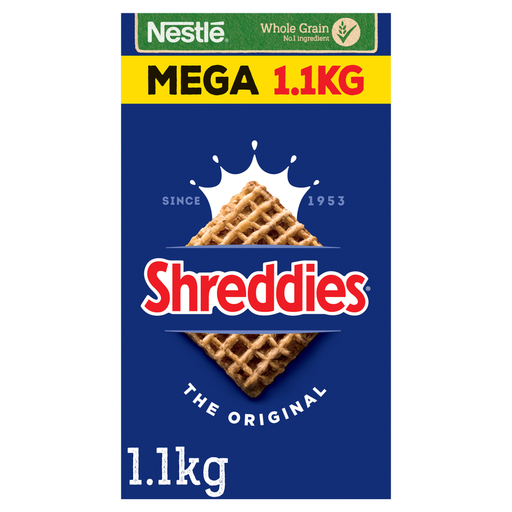
Nestlé Shreddies Original Malted Wheats 1.1kg
A ready-to-serve cereal for a bowl-and-milk breakfast without microwave preparation.
Listed fibre: 12 g per 100 g and 4.8 g per 40 g serving. Contains wheat and barley; may contain peanuts and nuts. Check gluten-free labelling if required.
Joybuy
 No image available
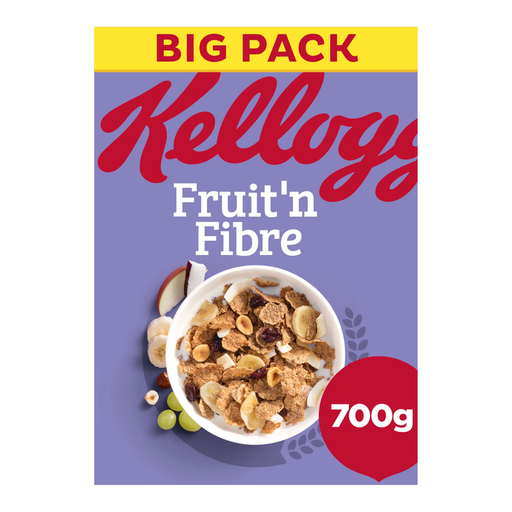
Kellogg’s Fruit ’N Fibre 700g
A no-cook cereal option for breakfast with milk or yoghurt.
Listed fibre: 9.0 g per 100 g and 3.6 g per 40 g serving. The listing states 69% wholewheat with dried fruit and hazelnuts; it contains wheat, barley, almonds and hazelnuts.
Joybuy
 No image available
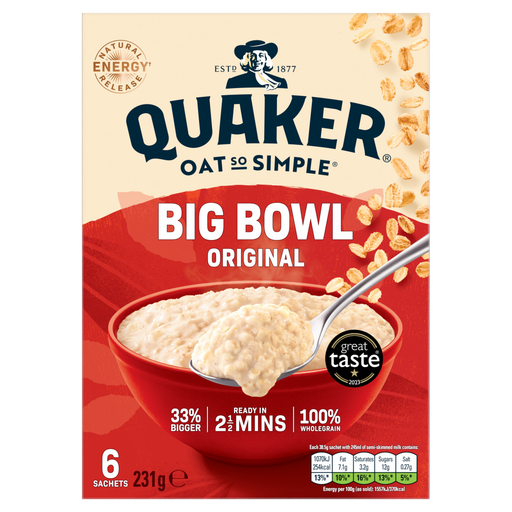
Quaker Oat So Simple Big Bowl Original 6 Pack
A microwave porridge option for routines with a suitable bowl, liquid and around two and a half minutes available.
Listed fibre: 9.0 g per 100 g and 3.5 g per 38.5 g sachet. Made with wholegrain rolled oats; check gluten-free labelling if required.
Joybuy
 No image available
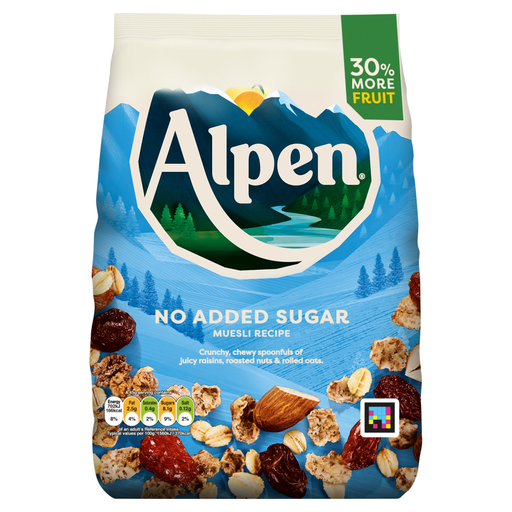
Alpen No Added Sugar Muesli 950g
A no-cook fruit-and-nut muesli for serving with cold milk or yoghurt.
Listed fibre: 8.0 g per 100 g and 3.6 g per 45 g serving. It lists 18 g sugars per 100 g and contains wheat, oats, milk, almonds and hazelnuts.
Joybuy
 No image available
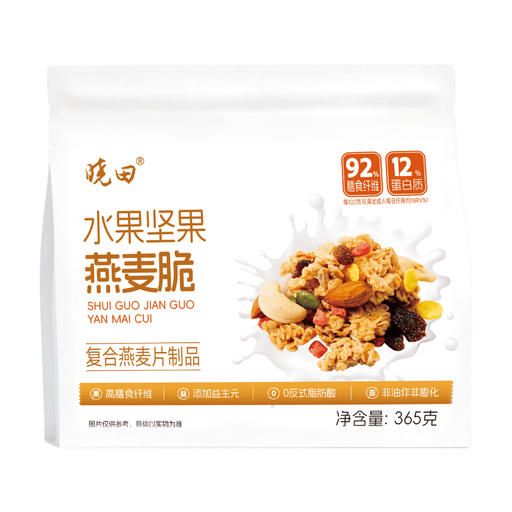
Xiao Tian Fruit & Nut Oat Crunch 365g
A ready-to-eat oat cereal that can be eaten directly or served with milk or yoghurt.
Listed dietary fibre: 22.9 g per 100 g. Contains oats, almonds and cashews, and the listing identifies cereals containing gluten and nuts; check the pack for serving guidance and gluten-free labelling if needed.
Joybuy
Frequently asked questions
What counts as high-fibre breakfast cereal in the UK?
Under Regulation (EC) No 1924/2006, a food may make a high-fibre claim when it contains at least 6 g fibre per 100 g or at least 3 g fibre per 100 kcal. Use the per-100-g value to identify qualifying products, then compare fibre per labelled serving for your planned bowl.
Which high-fibre cereal is quickest without a microwave?
Choose a cereal that needs no cooking, such as plain wholewheat biscuits, plain shredded wholegrain cereal or bran flakes, and then check fibre per serving and ingredients. The NHS includes plain wholewheat biscuits, plain shredded wholegrain cereal and porridge among higher-fibre breakfast examples, but porridge needs preparation.
Does “no added sugar” mean a cereal contains no sugar?
No. Alpen No Added Sugar, for example, lists 8.1 g sugars per 45 g serving despite its no-added-sugar positioning. Compare the “of which sugars” value with the ingredients list, especially when dried fruit is included.
Can I choose ordinary high-fibre cereal if I have coeliac disease?
Only choose a product that is specifically labelled gluten-free and suitable for you. NHS guidance states that people with coeliac disease must avoid gluten for life; ordinary wheat cereals and standard oat products should not be assumed suitable.
Where should I check allergens on cereal in the UK?
Check the ingredients list on the current pack. GOV.UK guidance states that regulated allergens present as ingredients in prepacked food must be clearly labelled there, and manufacturers may also provide precautionary cross-contact information.


