
24/7 Customer Support

Free returns

Same-day & Next-day Delivery

Quality Guaranteed

Unlock Your Welcome Offers: FREE Delivery | Up to 80% OFF | Free 30-day JoyPlus trial
Download the APP
Whether you are revising for exams, organising office paperwork, decorating a journal or buying a practical stocking filler, the right highlighters should make information easier to find without damaging the page. However, colourful packaging does not always indicate useful performance. Tip shape, ink behaviour and storage can make a greater difference than appearance alone.
This guide explains the key points to check before buying, followed by our top recommendations for different users.
Neon highlighters can make key points easy to spot, but very strong shades may overpower small text or show through thin paper. Pastel highlighters offer a softer appearance, although pale ink may be less visible on some printed documents.
For study notes, consider using a simple colour system: one shade for definitions, another for dates and a third for items requiring further revision. Assorted highlighters are useful when the colours are genuinely distinct rather than several near-identical shades.
A chisel tip is designed to provide at least two marking widths, but the actual range differs between products. Some highlighter pens offer a broad stroke for paragraphs and a narrow edge for underlining. Others may be less suitable for detailed annotations.
Check the stated line width before buying. For example, the Deli highlighter provides an approximately 1–5 mm range, while several STABILO options offer two defined widths for broad highlighting and fine marking.
A highlighter left uncapped can dry out quickly, particularly during long study sessions or busy meetings. Some models include anti-dry-out features, but users should still replace the cap securely after use.
Also check the product warnings. Novelty and stackable highlighters may contain small parts and are not suitable for children under three. Water-based ink is a practical feature for everyday stationery, but ink should not be ingested and contact with eyes should be avoided.
For general schoolwork, chisel tip highlighters are versatile because the broad edge covers blocks of text while the narrow edge supports underlining. A 1–5 mm range is useful for switching between these tasks.
Fine-tip or narrow-edge marking can be helpful for journalling, hand lettering and detailed planning. If you mainly highlight textbooks, prioritise a stable broad edge and an ink flow that does not require repeated passes.
Water-based ink is common in stationery highlighters and is suitable for many everyday paper types. Nevertheless, results vary with paper thickness. Test an unfamiliar highlighter on a spare page if you are working in a book, especially where show-through could be a concern.
For office documents, copies and faxes, look for product information that specifically identifies these uses. Recapping the pen after each use helps maintain the ink, while some STABILO models state that they can remain uncapped for up to four hours before regenerating after recapping.
A traditional pack is easy to organise in a desk drawer, while stackable highlighters reduce the number of separate items in a pencil case. Compact pens with clips are convenient for school bags, notebooks and commuting.
Think about how many colours you will actually use. A four-colour pack may be sufficient for basic colour coding, whereas a larger desk set may suit teachers, creative users or households sharing stationery. For gifts, novelty highlighters can add visual appeal without sacrificing everyday function.
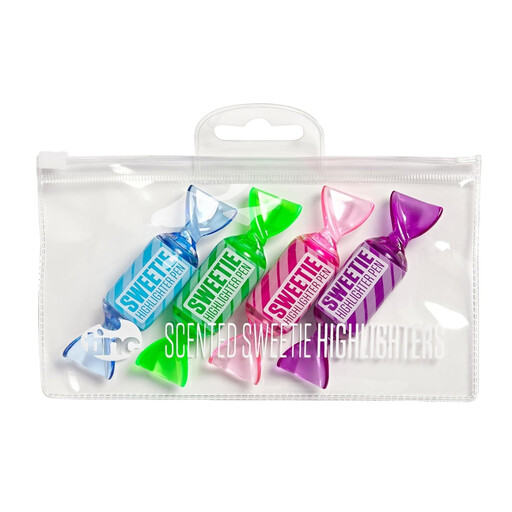
Why This Fits Their Persona: A four-colour set suits pupils, students and first-time stationery buyers who need practical marking tools for school, college or home study without carrying a large collection.
The chisel-tip design supports both broad highlighting and finer underlining, rather than offering appearance without marking flexibility.
Four assorted colours and a wrapped-sweet design make the set suitable for colour coding and gifting.
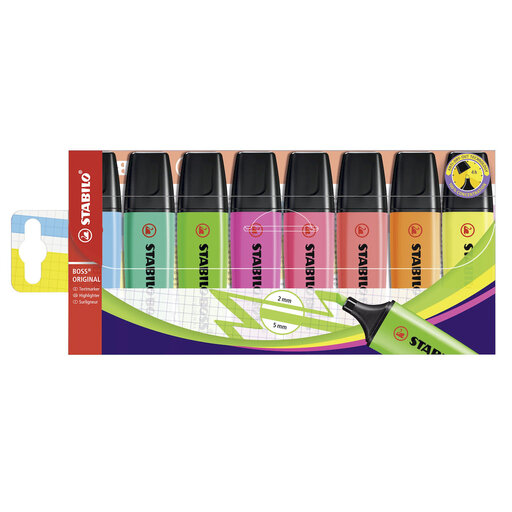
Why This Fits Their Persona: This option suits office workers, teachers and students who want a recognisable format, a broad colour selection and a pen designed for repeated daily use.
Its flat, non-roll shape helps prevent the pen moving across a desk, while the stated anti-dry-out feature addresses accidental uncapped use.
Pack of eight assorted colours, two stated line widths of 2 mm and 5 mm and refillable neon shades.
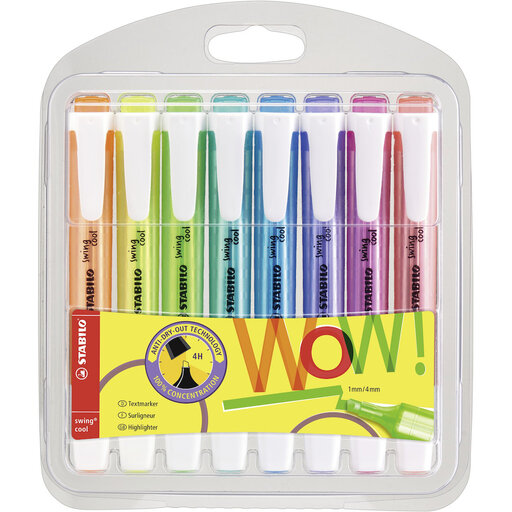
Why This Fits Their Persona: The slim, clipped format is convenient for commuters, university students and office users who regularly move between desks, lectures and meetings.
The practical clip and thin body reduce storage problems, while the stated anti-dry-out technology helps with interrupted work sessions.
Eight assorted colours, a 1 mm and 4 mm wedged tip, water-based ink and a non-slip matt-finish grip zone.
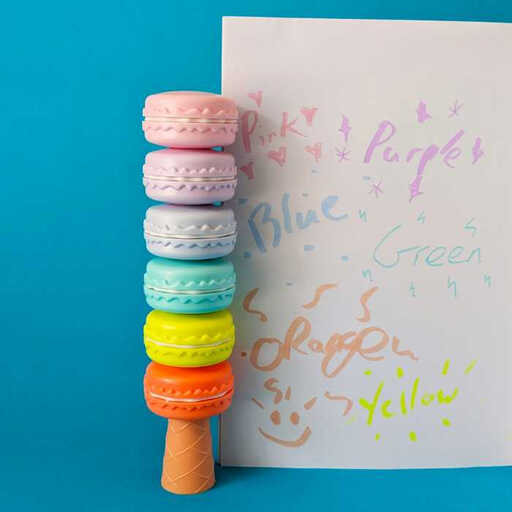
Why This Fits Their Persona: Six stackable sections provide assorted shades in a compact format, making this suitable for journalling, creative planning, stationery collections and small gifts.
The sections click together, helping keep all six colours together instead of allowing separate pens to become scattered in a bag or drawer.
Six assorted bright shades in one compact stack, with a playful macaroon-inspired appearance.
We have compiled a complete, real-time list of products that fully satisfy these strict selection criteria and UK safety regulations.
It depends on the paper and ink coverage. Water-based highlighters are commonly used on standard paper, but bright or heavily applied ink may show through thin pages. Apply a small test mark near the back of the book before highlighting important sections.
Lifespan depends on frequency of use, cap habits and storage. Replace the cap promptly after each use and follow any storage instructions. Models with stated anti-dry-out features may tolerate short periods without a cap, but this does not remove the need for normal care.
Neon highlighters generally provide stronger visual contrast for revision and quick document scanning. Pastel highlighters can be more comfortable for colour-coded notes, planners and journalling where a softer page layout is preferred. The practical choice depends on paper quality, lighting and how much text you need to mark.