
24/7 Customer Support

Free returns

Same-day & Next-day Delivery

Quality Guaranteed

Unlock Your Welcome Offers: FREE Delivery | Up to 80% OFF | Free 30-day JoyPlus trial
Download the APP
Whether you are revising for exams, organising office paperwork, planning lessons or creating a colour-coded journal, the right highlighters can make information easier to scan. However, attractive packaging and large colour ranges do not always mean a marker will suit your everyday needs.
Before buying assorted highlighters, check how the ink behaves, whether the tip matches your writing style and if the product is designed for paper or non-porous surfaces. The following guide explains the main buying pitfalls and highlights practical options for different UK users.
Fluorescent ink can make pages visually busy, while some pastel highlighters may be too subtle for quick revision. Consider whether you need strong contrast for textbooks and photocopies, or softer shades for journaling and planning.
A pack of 4 highlighters can be sufficient for simple colour-coding, but assorted highlighters with a broader shade selection may be more suitable if you use separate colours for definitions, dates, tasks and key points.
A marker may look compact, but the nib determines how easily you can highlight a full sentence or underline a single word. A narrow tip can require repeated strokes across wide text, while a very broad tip may cover more than intended.
Chisel tip highlighters are generally versatile because the flat side creates a wider line and the narrow edge supports underlining. Always check the stated line widths rather than relying on the product photograph.
Standard highlighter pens are made for paper, copies and similar documents. Liquid chalk markers are intended for non-porous surfaces such as glass, slate, ceramic or metal. Using wet-erase ink on unsuitable surfaces can make removal difficult or leave unwanted marks.
For schoolwork and office notes, choose water-based paper ink. For menus, shop notices, mirrors or event signs, look for Pentel chalk markers or other markers specifically labelled for glass and chalkboards.
Water-based ink is commonly used in paper highlighters and is suitable for many notebooks, documents and photocopies. It is sensible to test unfamiliar paper first, particularly thin pages where ink may show through.
Wet-erase or semi-permanent ink is a different option. Pentel’s glass and chalkboard markers are designed for non-porous surfaces and can be wiped with a damp cloth according to the supplied product information. They should not be treated as ordinary paper highlighters.
Look for two stated measurements if you need both highlighting and underlining. For example, the STABILO Swing Cool range has a wedged tip producing 1mm and 4mm lines, while the STABILO BOSS ORIGINAL NatureCOLORS range provides 2mm and 5mm lines.
For signage, a jumbo chisel tip may be more suitable. The Pentel Jumbo marker has a stated 10mm to 15mm tip range, allowing large lettering and broad coverage. This is useful for displays but less practical for annotating small print.
Drying is a common source of wasted stationery. Some highlighters include cap-off protection, but the stated time varies by product. STABILO Swing Cool and Swing Cool Pastel products specify up to four hours of uncapped use, with the pen regenerating after recapping.
Markers with pigment or semi-permanent ink may have different storage requirements. Pentel liquid glass and chalk markers should be stored horizontally with caps secured. Follow the supplied instructions, keep ink away from eyes and avoid giving marker products to very young children where small parts or ink ingestion may be a concern.
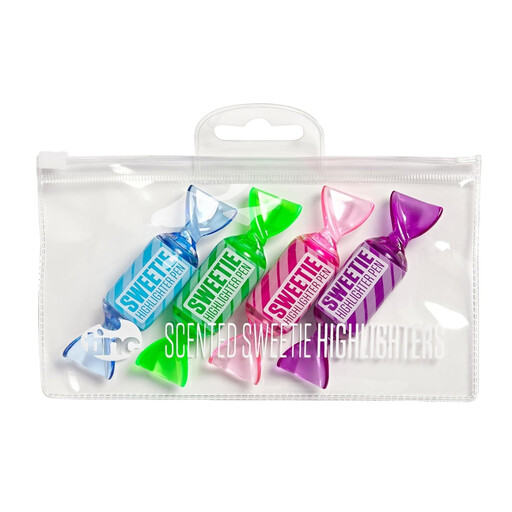
Why This Fits Their Persona: A four-colour set is a straightforward starting point for pupils, students and casual note-takers who want practical stationery with a playful appearance.
The set clearly offers four colours and a chisel-tip format, so buyers can assess the basic selection and line versatility before ordering.
Four bright shades; novelty sweet-inspired barrels; chisel tips support broad highlighting and finer underlining.
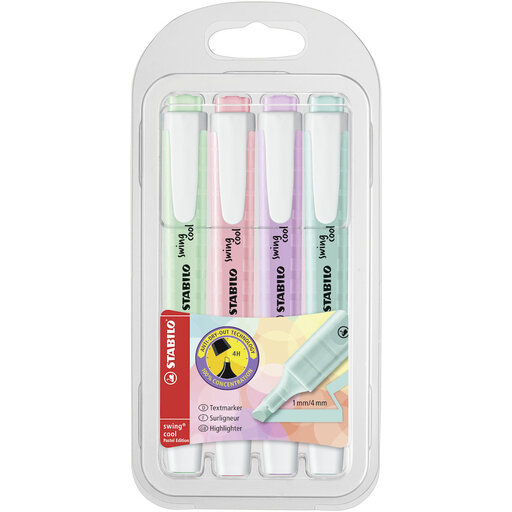
Why This Fits Their Persona: Suitable for office workers, university students and journalers who value compact storage, muted colours and controlled marking.
The product specifies its 1mm and 4mm line widths, water-based ink and up to four hours of uncapped use, making the key performance details clear.
Pastel colour selection; slim body with clip; wedged tip; non-slip matt-finish grip zone.
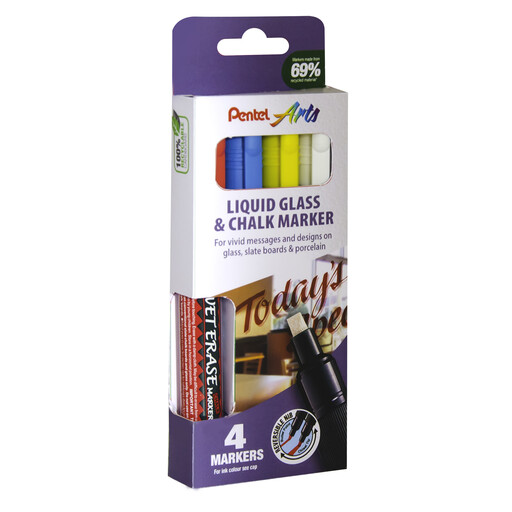
Why This Fits Their Persona: Designed for large notices, menus, event displays and artwork on glass or conventional slate chalkboards rather than ordinary paper notes.
Its stated surface restrictions help prevent the common mistake of buying a chalk marker for paper or unsuitable painted boards.
Jumbo 10mm–15mm chisel tip; semi-permanent ink; suitable for indoor and outdoor use; removable with a damp cloth on appropriate surfaces.
We have compiled a complete, real-time list of products that fully satisfy these strict selection criteria and UK safety regulations.
Lifespan depends on how frequently they are used, how much pressure is applied and whether the cap is replaced properly. A set used occasionally may last considerably longer than one used daily for revision. Anti-dry-out features can reduce accidental drying, but they do not make ink unlimited.
Yes, provided the shade has enough contrast against the page. Pastel highlighters can be useful for colour-coding, planners and journal layouts, while stronger colours may be easier to spot during rapid revision. Test the colour on your textbook or printed notes before using it extensively.
No. Check the product instructions and surface material first. The Pentel Jumbo marker is intended for glass and conventional slate chalkboards and warns against use on vinyl, wood and painted MDF “chalk” boards. When removing ink, use a damp cloth or the method specified by the manufacturer.