
24/7 Customer Support

Free returns

Same-day & Next-day Delivery

Quality Guaranteed

Unlock Your Welcome Offers: FREE Delivery | Up to 80% OFF | Free 30-day JoyPlus trial
Download the APP
Buying a first bicycle can be more complicated than choosing a colour. Parents and gift-buyers often compare age ranges, wheel sizes and accessories, only to discover that a bike is too large, difficult to control or missing an important component.
The Hiland Starry kids' bike range is designed for children roughly aged 2 to 7, with 12, 14 and 16-inch options. However, the correct choice should depend primarily on your child’s height, confidence and inside leg measurement, rather than age alone.
Age recommendations are useful starting points, but children of the same age can have noticeably different heights and leg lengths. A 16-inch kids' bike may suit one four-year-old but be too large for another.
A child should be able to sit comfortably, reach the handlebars without stretching and place their feet securely when learning. Check the stated height range before ordering, then compare it with your child’s measurements.
A children's bike with stabilisers can provide initial stability, but it should not replace correct sizing or supervision. If the frame is too heavy or the saddle cannot be adjusted low enough, stabilisers may only mask an uncomfortable fit.
Stabilisers are listed with the 12 and 14-inch Hiland Starry models. The 16-inch product descriptions supplied for this range list a kickstand and basket among the components, so check the individual product page carefully if stabilisers are essential.
A bell, basket or rear rack can make a bicycle more appealing, but accessories should not distract from the core specification. Check whether an item is included, fitted or simply shown in product imagery. This is particularly important when comparing a kids' bike with basket and a kids' bike with rear rack.
The product listings describe baskets across the Starry models, while the 16-inch descriptions also list a kickstand. Always review the package contents for the exact colour and size selected.
Use these ranges as a practical guide:
There is some overlap between sizes. If your child is near the upper limit of one range, compare the next size as well, but do not buy a larger bike solely to extend its useful life. A bicycle that is difficult to mount or stop may reduce confidence.
The Hiland Starry models use a single-speed drivetrain, which keeps gear operation straightforward for beginners. A single-speed children's bicycle is suitable for relatively level rides around parks, pavements where cycling is permitted and quiet paths, but it offers less flexibility on steeper routes.
The listed braking arrangement combines a front V-brake with a rear coaster brake. This gives children two different braking methods to learn, so parents should explain how each works and practise in a safe, traffic-free area.
Before regular use, inspect the brake levers, cables, coaster action and wheel security. For UK use, buyers should also check the seller’s safety and conformity information and follow the supplied assembly and maintenance instructions.
Each listed Starry model uses a Hi-ten steel frame and wide 1.95-inch tyres. Steel can provide a sturdy frame construction, although the overall bicycle weight matters for a young rider. The listed approximate weights range from 9 kg for the 12-inch model to 11.5 kg for the 16-inch model.
Other practical features include:
After assembly, check that the handlebars, saddle, wheels, brakes and accessories are firmly secured. Tyre pressure and brake operation should be checked regularly, particularly after storage or transport.
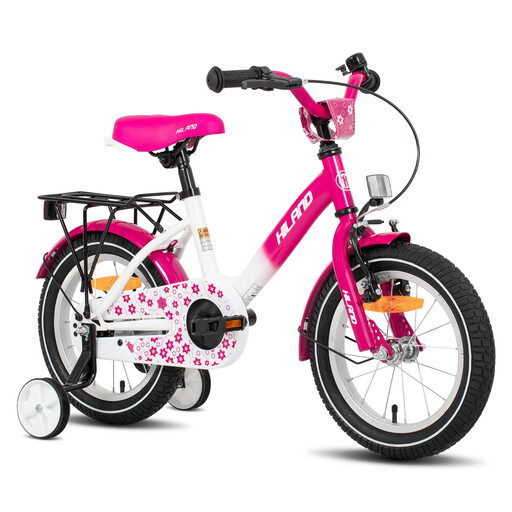
Why This Fits Their Persona: A practical starting point for a smaller child measuring approximately 80–105 cm, especially when a first bike with stabilisers is required for local park rides.
The 12-inch sizing helps avoid buying an oversized bicycle, while the stated stabilisers and single-speed layout keep the initial set-up straightforward.
Approximately 9 kg; includes stabilisers, basket and assembly tools; front V-brake and rear coaster brake.
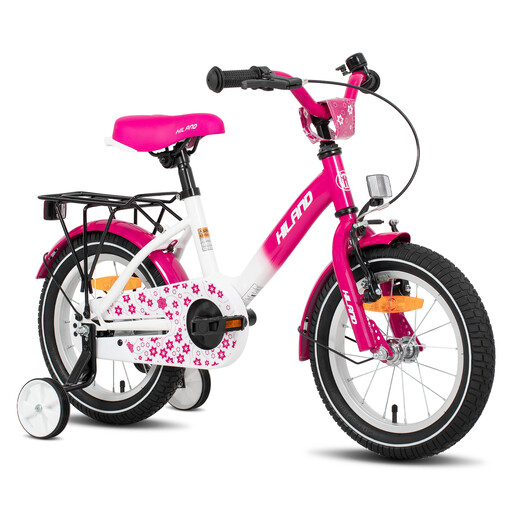
Why This Fits Their Persona: Suitable for buyers who want adjustable fit, protective details and a more substantial intermediate size for a growing child measuring approximately 90–125 cm.
The height range gives a clearer fit reference than age alone, while the adjustable saddle helps accommodate growth without relying on an unnecessarily large frame.
Approximately 10 kg; 1.95-inch tyres, chain cover, handlebar protection and included stabilisers.
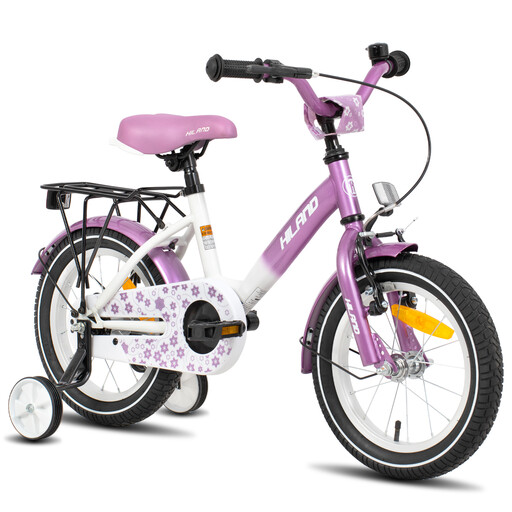
Why This Fits Their Persona: A larger option for confident children around 105–135 cm who need a bicycle for regular family outings and paved park routes.
Its single-speed design avoids unnecessary gear complexity, while the low step-through frame and two brake systems address common beginner usability concerns.
Approximately 11.5 kg; includes kickstand, basket and assembly tools; front V-brake and rear coaster brake.
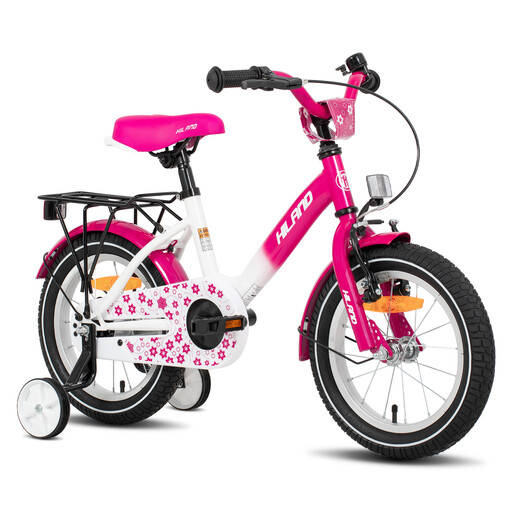
Why This Fits Their Persona: The pink colourway offers a gift-friendly choice for a child who has already reached the 16-inch height range and prefers a bright, decorative frame.
The decorative styling is paired with practical features, including a chain cover, handlebar-end protection and adjustable seating. Confirm the included accessories before purchase.
16-inch wheels; single-speed drivetrain; adjustable saddle; approximately 90% pre-assembled.
We have compiled a complete, real-time list of products that fully satisfy these strict selection criteria and UK safety regulations.
The single-speed drivetrain, wide tyres, low step-through frame and adjustable saddle are suitable features for a beginner bike for children aged 2 to 7. Choose the wheel size according to height and check that the child can reach the controls comfortably.
Service life depends on correct sizing, storage, riding conditions and maintenance. A child may outgrow a bicycle before the frame or components show significant wear. Wipe the frame clean, check tyre pressure and inspect brakes, bolts, saddle and wheels regularly. Stop using the bike if any component is loose, damaged or difficult to operate.
The main ongoing costs are occasional replacement inner tubes, tyres, brake components and safety accessories. Stabilisers may also need adjustment as the child develops. Keeping the bicycle dry, checking fittings and addressing small problems early can help limit avoidable repair costs.