What should you check first?
For one monitor serving historical strategy games and study, settle the screen size and resolution against your desk and computer before deciding how much you value motion or image features.
| Concern | Buying checks | Who this matters to |
|---|
| Maps and workspace |
Compare 2560 × 1440 QHD with 1920 × 1080 Full HD, then check the screen and stand dimensions against your desk. |
When campaign labels and coursework windows compete for space, I want room to navigate both without prioritising the highest refresh rate. Around 42% of consumers put readable maps and workspace first. |
| Compact fit and graphics demand |
Measure usable desk width and depth; check how your computer runs games at the resolution you intend to use. |
If my desk is small or my laptop struggles at QHD, a compact Full HD screen may be the more practical choice. Roughly 33% of consumers make fit or achievable performance their primary concern. |
| Motion and image preferences |
Check adaptive-sync compatibility and per-port refresh limits. If HDR matters, compare the model’s stated certification rather than relying on an HDR label alone. |
I may value smoother camera movement, deeper contrast or a curved view during long campaigns, but only after the screen meets my basic needs. About 25% of consumers put those motion or image preferences first. |
Joybuy monitors for these setups
These monitors offer different ways to equip a student-room desk, from compact Full HD to QHD gaming and a study-oriented WQHD option. Compare each model’s physical fit and connection settings rather than treating the list as a single type of monitor.
 No image available
Samsung Odyssey G6 S27DG612 27-inch QHD OLED 240Hz monitor
Consider this model if you want a 27-inch QHD screen and specifically favour an OLED panel for your campaign setup.
The product title specifies 240Hz and 0.03ms. Check which refresh setting your computer and connection can use, along with the warranty and guidance for prolonged static desktop use.
View on Joybuy
 No image available
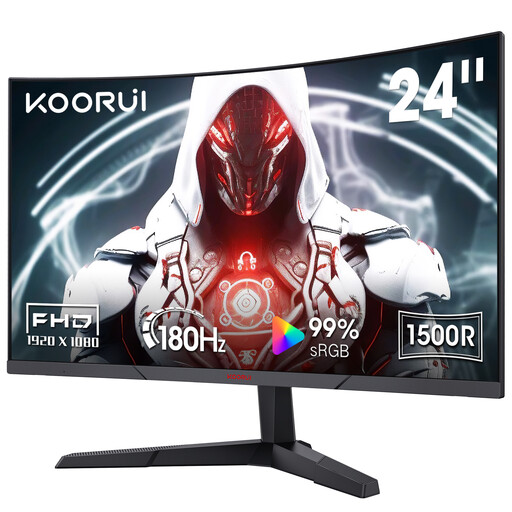
KOORUI MG24A12FV2 24-inch Full HD curved VA monitor
Consider this compact Full HD option if desk fit and your computer’s graphics performance take priority over QHD workspace.
Its title specifies 180Hz, a 1500R curve, adaptive sync, two HDMI ports, DisplayPort, tilt adjustment and VESA compatibility. It has a VA panel rather than the IPS panel of the compact LG example; confirm the refresh rate available through your chosen port.
View on Joybuy
 No image available
HKC G27H2DPro 27-inch QHD Fast IPS 220Hz monitor
Its 27-inch QHD format is worth considering if map detail and room for coursework windows are central to your choice.
The title specifies 2560 × 1440 and 220Hz. Before choosing a connection, check its per-port refresh limits; measure the stand footprint for your desk. Treat any DisplayHDR400 wording as a claim to check against the exact model’s certification.
View on Joybuy
No image available
CRUA 32-inch 1500R curved QHD 165Hz monitor
Consider this larger curved screen only if its complete dimensions work on your student-room desk.
The title specifies 2560 × 1440, 165Hz, adaptive sync and a 100 × 100 mm VESA mount. Its size is described as 32 inches in the title but 31.5 inches in the technical details, so confirm the diagonal and stand footprint. Check the refresh setting available through your chosen connection.
View on Joybuy
 No image available
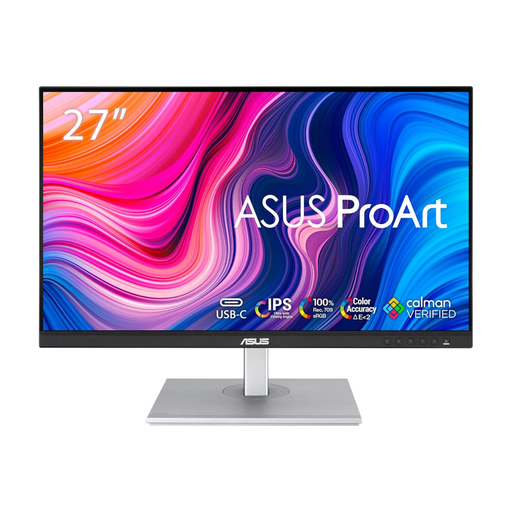
ASUS ProArt PA278CV IPS WQHD monitor
Consider this study-oriented WQHD screen if workspace matters more to you than choosing a monitor primarily for gaming motion.
Check its refresh rate and adaptive-sync compatibility against the games and computer you use, as well as the stand dimensions against your desk.
View on Joybuy
Common questions
Should I choose Full HD, QHD or 4K for historical strategy games?
Match the resolution to your desk and computer before choosing by pixel count alone. QHD gives a 27-inch screen more desktop pixels than Full HD, while a compact Full HD screen remains worth considering if space or graphics performance is tight. 1440p can offer sharper detail without requiring a top-end GPU, and 4K is chiefly relevant with screens of 32 inches or more.
Do historical strategy games require a 240Hz monitor?
No: 240Hz is not a prerequisite for choosing a monitor for these games. Readable resolution, desk fit and the frame rates your computer can deliver should come first; a high refresh rate is useful only to the extent that your setup and games can make use of it.
How do I check adaptive-sync compatibility?
Check the exact monitor model, your graphics hardware and the connection you intend to use. AMD describes FreeSync in relation to compatible Radeon graphics, while NVIDIA describes G-SYNC Compatible displays as validated variable-refresh-rate displays; a high panel refresh rate alone does not establish compatibility or enable the feature.
Does HDR10 on a specification sheet establish HDR performance?
No. VESA advises checking an exact model’s DisplayHDR or DisplayHDR True Black certification tier rather than treating a generic HDR claim as evidence that the display meets those tested requirements.
What energy information should I check when buying a monitor?
For an electronic display covered by the applicable energy-information rules, look for its energy label and product information sheet. GOV.UK’s guidance sets out these requirements for products in scope; check the listing for your delivery location, particularly if you are buying for Northern Ireland.


