Map-and-interface detail seekers
You spend long sessions reading map labels, diplomacy screens, technology trees and unit information. A 4K monitor is worth considering if your PC can run the games you play at that resolution.


For historical strategy games, start with a 27-inch QHD high-refresh monitor if you split your time between reading campaign screens and moving the camera through battles. Choose 27-inch 4K when map and interface detail matter more and your PC can run your games comfortably at that resolution. A 34-inch ultrawide is a different choice for horizontal space: check how your regularly played games handle 21:9 and their interfaces before buying.
You spend long sessions reading map labels, diplomacy screens, technology trees and unit information. A 4K monitor is worth considering if your PC can run the games you play at that resolution.
You want readable strategy interfaces alongside fluid camera movement and real-time battles. A QHD monitor with a higher refresh rate and variable refresh rate is a route to consider.
You want a broad 21:9 view and more horizontal desktop space. Check each regularly played game’s ultrawide and interface behaviour, as well as the monitor’s stand adjustment, before committing.
Choose it when: Reading fine map and interface detail is your priority and your PC meets your games’ requirements at 3840 × 2160.
Accept: 4K places greater demands on the graphics card than QHD and does not provide ultrawide’s physical width.
Choose it when: Your sessions mix campaign decisions with camera movement, battles or other PC games.
Accept: QHD has fewer pixels than 4K; advertised overclocked refresh modes can also have connection requirements.
Choose it when: A wider game presentation and horizontal desktop space take priority.
Accept: Game-by-game 21:9 and interface checks are necessary; stand and audio features vary by model.
| Concern | What to check | Who this matters to |
|---|---|---|
| Map and interface clarity | Compare native resolution with your PC’s performance in your most-played games; check whether text and interface scaling are comfortable. | If I repeatedly read small map labels and information-heavy screens, detail takes priority over the highest refresh rate. Around 36% of consumers put clarity first. |
| Camera movement and battles | Check native versus overclocked refresh rates, the required connection and compatibility with your graphics hardware’s variable refresh rate. | When a campaign shifts into moving views or real-time battles, I want the display to keep up without giving up readable interfaces. Smoothness is the primary concern for around 46% of consumers. |
| Panoramic view and workspace | Confirm 21:9 support and usable interface scaling in each regularly played game; assess desk space and stand adjustment. | If a wider game view and room beside it for campaign notes matter most, I can spend time checking individual games before buying. Around 18% of consumers prioritise that horizontal space. |
A 4K panel does not establish what frame rate your PC will deliver. Firaxis Games publishes a separate Ultra specification for Civilization VII at 4K and 60 FPS, illustrating why the game and graphics card matter alongside the screen.
Compare your GPU with the requirements for your most-played games at your intended resolution and settings before choosing 4K over QHD.
Reaching your preferred settings and frame rate at 4K may call for a graphics-card upgrade.
LG specifies 180Hz native operation for the 27GS85Q-B. Its 200Hz overclocked mode requires a DisplayPort 1.4-capable graphics card and cable.
Compare the native and overclocked modes, then check the graphics output and cable required for the mode you intend to use.
A 21:9 monitor’s resolution alone cannot tell you how a particular strategy game will display its interface. Samsung lists tilt adjustment but no height adjustment or built-in speakers for the Odyssey G5 LC34G55TWWPXXU.
Check 21:9 support and interface comfort for your regular games, then assess desk positioning and how you will handle audio.
Depending on your setup, positioning or audio may require a monitor arm, speakers or headphones.
A product page can remain visible when the item is unavailable; the cited Joybuy listing for the Samsung Odyssey G5 LC34G55TWWPXXU identifies the model but states that it is no longer available.
Check the current product page, exact model, seller and warranty information immediately before ordering.
Dell’s UK S2725QS and S2725DC illustrate two 27-inch routes for gaming and everyday desktop use.
The 27GS85Q-B is a 27-inch QHD IPS option for players considering a gaming-focused, high-refresh display.
The curved Odyssey G5 LC34G55TWWPXXU represents the 34-inch, 21:9 route for buyers seeking horizontal space.
AOC’s UK Q27G4XF is another 27-inch QHD IPS route with a height-adjustable stand.
These choices include 27-inch 4K monitors for detail-focused play and 27-inch QHD monitors for players weighing interface readability against higher refresh rates. Check the modes your PC and connections can use; a monitor’s stated refresh rate is not an in-game frame-rate promise.
 No image available
Consider this 27-inch Nano IPS model if map and interface detail are your priority but you also want a dual-mode gaming monitor.
The product title specifies 4K UHD, 240Hz/480Hz dual mode, FreeSync Premium Pro, DisplayPort 2.1 and HDMI 2.1. Confirm the resolution, connection and PC performance needed for the mode you plan to use.
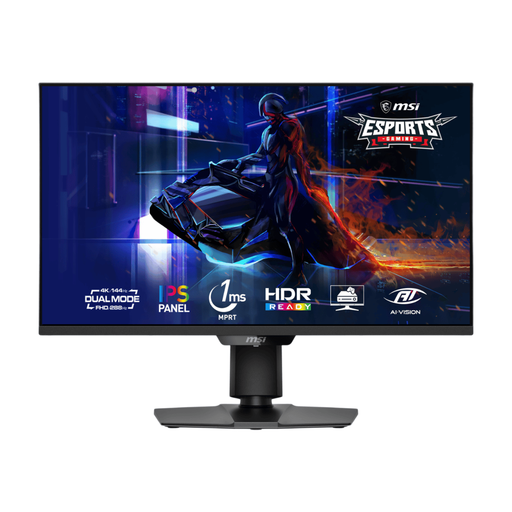 No image available
This is a 4K choice for players who put map and interface detail first and also want an alternative lower-resolution mode.
The product title lists UHD at 144Hz, FHD at 288Hz and Adaptive Sync. Check the connection and your GPU’s performance at the settings you intend to use.
 No image available
The 27-inch IPS 4K format is relevant if reading detailed maps and interfaces is your main reason to change monitors.
The product title advertises dual mode with a maximum of 360Hz. Confirm which resolution and connection apply to the mode you want, and check how your PC runs your games at 4K.
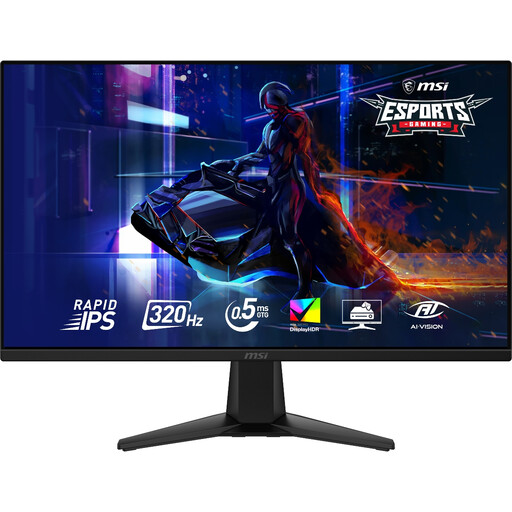 No image available
Consider this QHD model if you want a 2560 × 1440 strategy-game interface while also prioritising a high stated refresh rate.
The product title specifies Rapid IPS, 320Hz and Adaptive-Sync. Check whether the tilt-only stand suits your desk and whether your PC can deliver the game performance you want.
 No image available
This QHD option suits players balancing readable strategy-game screens with camera movement and battles.
The product title specifies a 180Hz refresh rate and Adaptive Sync. Check your intended connection: the product information identifies up to 180Hz over DisplayPort and up to 144Hz over HDMI. Also check whether tilt-only stand adjustment meets your needs.
No: choose 4K if finer map and interface detail is your priority and your PC runs your games acceptably at 3840 × 2160. Firaxis Games publishes a separate Ultra specification for Civilization VII at 4K and 60 FPS, so check the requirements of the titles and settings you actually use; QHD remains an option when you also value higher refresh rates.
It can be worthwhile for map scrolling, camera movement and games with real-time battles, even though a higher refresh rate is not necessary to take a turn. Decide how much of your play involves movement, then check whether your PC and chosen connection can use the monitor’s stated mode.
Check the requirements of the exact mode you intend to use, including your graphics output and cable. LG, for example, specifies a DisplayPort 1.4-capable graphics card and DisplayPort 1.4 cable for the 27GS85Q-B’s 200Hz overclocked mode; that condition does not apply automatically to other monitors or modes.
Check the retailer’s take-back arrangements and your local authority’s household-electrical recycling options rather than putting the monitor in ordinary waste. GOV.UK identifies the Waste Electrical and Electronic Equipment Regulations 2013, as amended, as the legislation underpinning UK electrical-waste rules.