An A3 multifunction printer makes sense when the historical maps are stable, lie fully on its confirmed scanning surface and the shared desk has room for the machine. The U.S. National Archives and Records Administration warns against feeding fragile, weak, bent or valuable papers through an automatic document feeder; use overhead imaging or specialist digitisation when an original cannot be placed safely on the scanner.
Who is this for?
Custodians of stable, loose maps
You need a shared printer and scanner for originals that can lie flat and fit completely on the scanning surface. The U.S. National Archives and Records Administration identifies flatbed scanning as suitable for stable single sheets.
Shared-desk office users
Several people need access to one machine for everyday documents, with occasional map scanning. Epson lists Wi-Fi, Wi-Fi Direct and Ethernet for the ET-16685; Brother lists wired and wireless connectivity for the MFC-J6955DW.
Custodians of fragile or oversized maps
You need to protect the original before considering scanning speed. Fragile, bent, bound or oversized maps may call for overhead imaging or specialist handling rather than a document feeder or a scanner lid.
What matters when choosing?
A3 multifunction printer
Choose when: Stable, loose maps fit the confirmed scanning surface and several people also need printing or copying.
Trade-off: Allow desk space for the machine, and keep delicate originals out of its document feeder.
Compact A4 device
Choose when: Every map fits fully on the confirmed scanning surface and a smaller desk-side device meets the office needs.
Trade-off: An A4 scanning surface cannot capture an A3 map in one complete scan.
Overhead imaging or specialist digitisation
Choose when: Maps are fragile, distorted, bound or too large to place safely on a scanner.
Trade-off: This requires separate equipment or specialist handling instead of using the desk-side printer.
| Concern |
What to check |
Who this matters to |
| Original safety |
Assess each map’s condition before deciding between a suitable flatbed and overhead capture. Do not feed fragile originals through an automatic document feeder. |
If a map is weak, bent or valuable, I need to protect it even if scanning takes longer. Roughly 36% of consumers put safe handling first. |
| Complete capture |
Measure the largest map and confirm the exact model’s usable scan-surface dimensions; A3 printing alone does not establish flatbed scan size. |
I want a stable map captured in one pass rather than repeatedly moving it to scan sections. Around 29% of consumers make complete capture their primary concern. |
| Shared workflow |
Check the connection methods each user needs and whether paper handling suits routine documents, keeping map handling separate. |
When several people use the desk, I need access to the printer and scanner without relying on one workstation. Roughly 21% of consumers prioritise the shared workflow. |
| Printing supplies |
Compare the stated ink system and replacement supplies for the office’s ordinary printing needs, separately from map-scanning suitability. |
If everyday printing is the machine’s main job, I want its supplies to suit that workload while scanning maps only when it is safe. Around 14% of consumers put printing supplies first. |
Mistakes to avoid
-
Putting every paper map through the document feeder
The U.S. National Archives and Records Administration warns that fragile, weak, bent or valuable papers can jam and tear in an automatic-feed scanner.
Check each original’s condition. Reserve the feeder for suitable routine documents; use a flatbed only when the map is stable and lies safely on it, or choose overhead capture.
-
Assuming A3 printing means the map fits on the scanner
Print size and usable flatbed scan area are different specifications. An original that extends beyond the surface cannot be captured there in one complete scan.
Measure the largest map, then check the flatbed dimensions in the exact model’s current specifications before ordering.
Scanning a stable map in sections also adds handling and image-stitching work.
Relevant brands to consider
Epson
Epson’s EcoTank Pro ET-16685 is an A3-capable option for a shared office: Epson specifies printing up to A3+, scanning and copying up to A3, plus Wi-Fi, Wi-Fi Direct and Ethernet.
- Its stated scan size and network connections are relevant when stable maps and everyday office work share a device.
- Confirm the usable flatbed area for your maps; its document feeder is not a safe route for fragile originals.
Brother
Brother positions the MFC-J6955DW for A3 office printing, scanning, copying and faxing, with wired Ethernet and wireless connectivity.
- Brother specifies automatic two-sided A3 functions and two 250-sheet paper trays for routine office work.
- Check the flatbed scan area separately; automatic feeding must not be assumed safe for historical maps.
Canon
Canon’s MAXIFY GX7050 provides an A4 office-device comparison, with print, copy, scan and fax functions listed by Canon UK Store.
- Canon lists refillable ink and a 600-sheet paper capacity for ordinary office printing.
- Consider an A4 scanning device for this task only if every map fits its confirmed scanning surface.
Joybuy products for shared-desk use
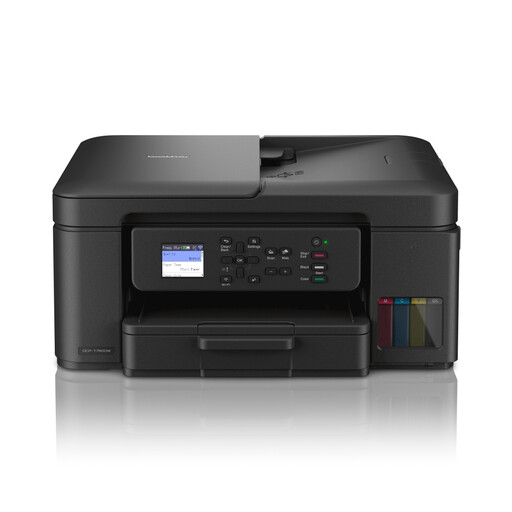
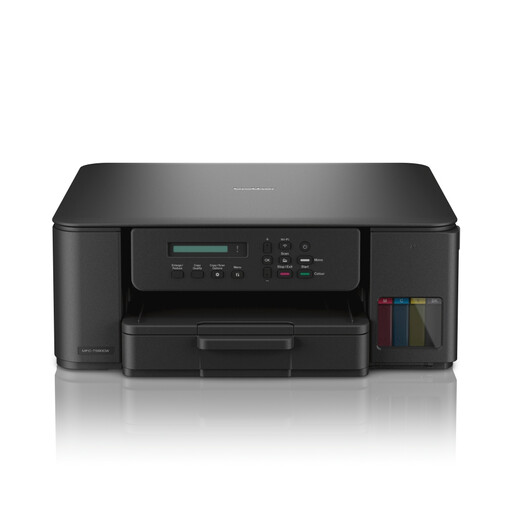
These wireless ink-tank models are choices for shared-desk printing and scanning. Before using either for a historical map, confirm that the original is stable and fits safely on the model’s usable scanning surface.
 No image available
Brother DCP-T780DW 3-in-1 wireless ink-tank printer
Consider this wireless 3-in-1 model for a shared desk if its confirmed scanning surface can accommodate your stable, loose maps. Check the usable flatbed dimensions against the largest original, and keep fragile maps out of any automatic document feeder.
View on Joybuy
 No image available
Brother DCP-T580DW 3-in-1 wireless ink-tank printer
Consider this wireless 3-in-1 model where ordinary shared-desk work accompanies occasional scanning of stable maps. Confirm its usable flatbed dimensions before choosing it for a particular original; use overhead imaging if that original cannot lie safely on the surface.
View on Joybuy
Frequently asked questions
Can I put a fragile historical map through the document feeder?
No: the U.S. National Archives and Records Administration warns that automatic-feed scanners can jam and tear fragile, weak, bent or valuable papers. A flatbed is an option only for a stable original that fits safely; otherwise consider overhead imaging or specialist digitisation.
Do historical maps require an A3 multifunction printer?
An A3 multifunction printer is worth considering when stable, loose maps fit its confirmed scanning surface and the desk also needs its office functions. Smaller originals may fit an A4 device; oversized, bound or fragile maps may need overhead capture instead.
What should colleagues check before sharing one printer-scanner?
Check that the model has the network connections the users need and that its routine-document handling suits their work. Epson lists Wi-Fi, Wi-Fi Direct and Ethernet for the ET-16685, while Brother lists wired Ethernet and wireless connectivity for the MFC-J6955DW; neither feature makes a feeder suitable for fragile maps.
How should I dispose of an old multifunction printer in the UK?
Check electrical-waste arrangements rather than putting the printer in ordinary rubbish. GOV.UK explains that waste electrical and electronic equipment is regulated to reduce disposal by incineration or landfill; ask your local authority or retailer which collection or take-back options apply.


