Cold-room hobbyists
If the spare room is cool or only heated while it is in use, the appliance’s stated operating-temperature range matters. EcoAir and Meaco both describe desiccant models intended for lower-temperature use.


For a spare-room hobby space that is unheated or often below about 10°C, consider a desiccant dehumidifier; Meaco identifies that temperature as a reason to choose desiccant technology. A compressor model is a reasonable route for a normally heated room, but compare its performance under relevant temperature conditions. Neither type fixes leaks, building damp or inadequate ventilation.
If the spare room is cool or only heated while it is in use, the appliance’s stated operating-temperature range matters. EcoAir and Meaco both describe desiccant models intended for lower-temperature use.
For a normally heated hobby room, the choice may centre on controllable humidity and noise while the room is occupied. Which? compares dehumidifier extraction at normal room temperature as well as in colder spaces.
Recurring wet patches, mould or heavy condensation call for attention to the moisture source as well as the appliance. Government ventilation guidance and Rushcliffe Borough Council’s damp guidance identify issues that humidity control alone may not resolve.
Establish how cold the room gets before comparing extraction ratings; then consider how the appliance will fit around hobby activities and any recurring moisture.
| Concern | What to check | Who this matters to |
|---|---|---|
| Cold-room operation | Check the exact model’s operating-temperature range. Meaco favours desiccant technology below about 10°C; EcoAir specifies a 1–40°C range for its DD3 Slimline. | If my hobby room cools down between uses, I need a model suited to that temperature rather than a larger headline extraction figure. Around 36% of consumers would put cold-room suitability first. |
| Comfort during use | Compare noise at the setting you would use and look for adjustable humidity control. Compare extraction and energy use under relevant room conditions, not wattage alone. | When I work in a heated spare room, fan noise and repeated adjustments can interrupt what I am doing. For around 29% of consumers, quiet, controllable operation is the primary concern. |
| Recurring moisture | Check tank capacity, full-tank shut-off and whether continuous drainage is practical. Investigate persistent wet patches or leaks separately. | If the tank fills repeatedly, I need an emptying or drainage arrangement I can manage without overlooking the cause of the damp. Around 21% of consumers would prioritise this need. |
| Space and moving the unit | Measure the available footprint and manual-required airflow clearance; check weight, carrying features and tank access. | If the room also holds hobby equipment or guests, I need somewhere practical to place and move the appliance. Compact, flexible placement comes first for around 14% of consumers. |
An appliance can manage room moisture while a leak, rain penetration or ventilation problem continues. Rushcliffe Borough Council identifies several possible causes of damp.
Investigate recurring wet patches and mould, check for leaks, and keep appropriate ventilation usable. In a rented home, report continuing damp to the landlord or managing agent.
Extraction figures depend on the conditions in which they are stated; they do not establish how much water a model will remove from a cold spare room. Which? tests at both normal and colder room temperatures.
Check the room’s likely temperature and the exact model’s operating range before comparing extraction, noise and controls.
Frequent emptying may make long runs inconvenient, while continuous drainage depends on a workable appliance position and hose route.
Check tank capacity, full-tank shut-off, the drainage connection and what the exact model includes.
A compatible drainage hose may need to be obtained separately.
A dehumidifier does not exchange indoor air with outdoor air. Government home ventilation guidance describes ventilation as removing stale air and moisture.
Keep the property’s ventilation measures usable where appropriate and follow their operating instructions alongside humidity control.
Its DD8L desiccant model is a reference point when a spare room falls below about 10°C.
Its range offers desiccant and compressor routes for rooms with different temperature conditions.
Its domestic range includes simple humidistat models and larger models with additional controls.
Its DEXD216RF compressor model provides published specifications to compare for a normally heated room.
These models offer desiccant choices for a cool hobby room and other dehumidifier choices with stated tank or drainage features. For any model, check its temperature suitability and the space available before deciding.
 No image available
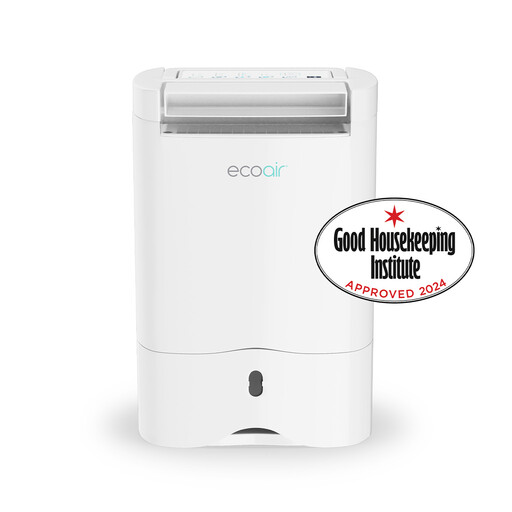
Consider this model when the hobby room is intermittently heated: EcoAir specifies an operating range of 1–40°C for the DD3 Slimline.
The title states 10 L/day extraction and a 3 L tank; EcoAir also lists a continuous-drainage option. Check noise at the setting you intend to use and whether the required hose is included.
 No image available
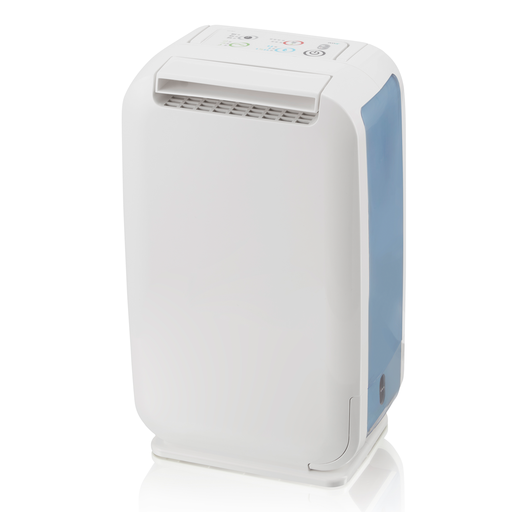
This desiccant model is worth considering if you need to move the appliance into a cool spare room for occasional use.
Its stated extraction figure is 6 L/day, and the title specifies a 1.8 L tank and carry design. Check its exact operating-temperature range and measured noise before choosing it for the room.
 No image available
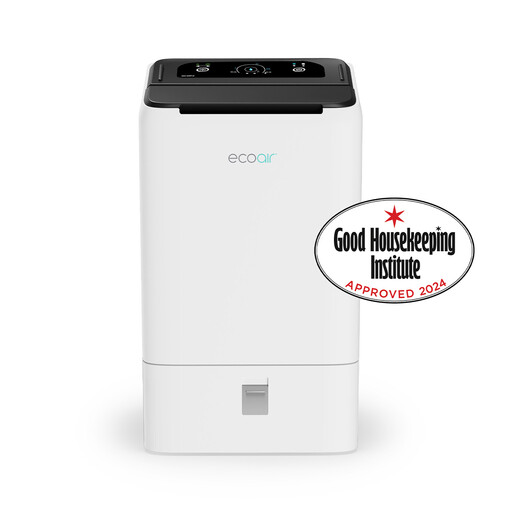
Consider this desiccant model if you expect to move the appliance as the hobby room’s use changes.
The title states 9 L/day extraction, a lightweight design and laundry mode. Check the exact operating-temperature range, tank capacity and noise for your intended use.
 No image available
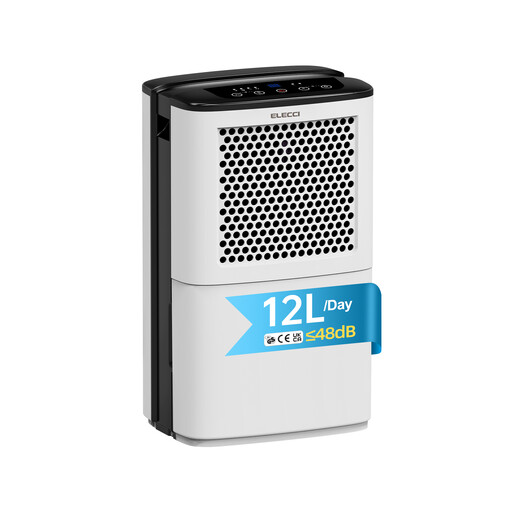
Consider this model if placing a drain hose and managing the tank are priorities for your spare room.
Its title specifies a 3.8 L tank, continuous drainage and an intended room size of 25 m². Confirm the operating-temperature range and noise for the room, particularly if it gets cold.
 No image available
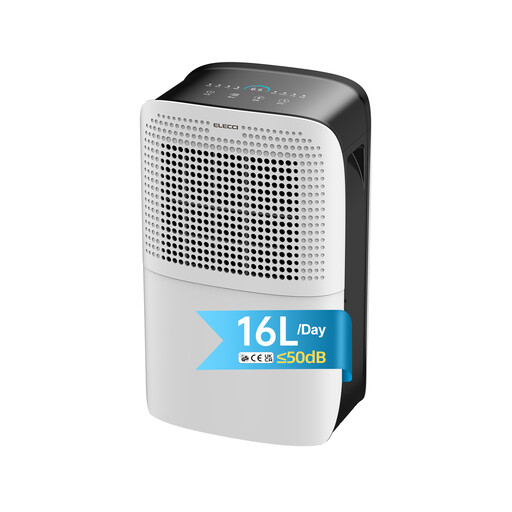
Consider this model if your room has a practical drainage route and you want adjustable operation during longer sessions.
Its title specifies a 3.1 L tank, four modes, a 24-hour timer and an intended room size of 32 m². The 16 L/day figure alone does not establish extraction in a cool spare room; check the model’s temperature range and noise.
Consider desiccant if the room is unheated or often below about 10°C; Meaco recommends that technology for applications below that temperature. A compressor model is a reasonable option for a normally heated room, but compare extraction under relevant conditions rather than relying on the headline litres-per-day figure.
A dehumidifier can manage airborne moisture, but it will not repair the cause of a damp wall. Government and Rushcliffe Borough Council guidance identify ventilation problems and sources of water ingress among issues that need separate attention.
Continuous drainage is useful when the tank would need frequent emptying and the appliance can be placed beside a suitable drainage route. Check the exact connection and package contents: De'Longhi lists a supplied pipe for its DEXD216RF, while EcoAir lists an optional drainage arrangement for the DD3 Slimline.
Report continuing damp and mould to the landlord or managing agent and ask for the underlying cause to be investigated. An appliance may help manage room humidity, but recurring wet patches or mould should not be treated as an appliance-selection problem alone.